Explore the effects of heat on pharmaceutical stability, including degradation mechanisms like oxidation and hydrolysis, and practical storage solutions.
Understanding the Impact of Heat on Pharmaceutical Stability
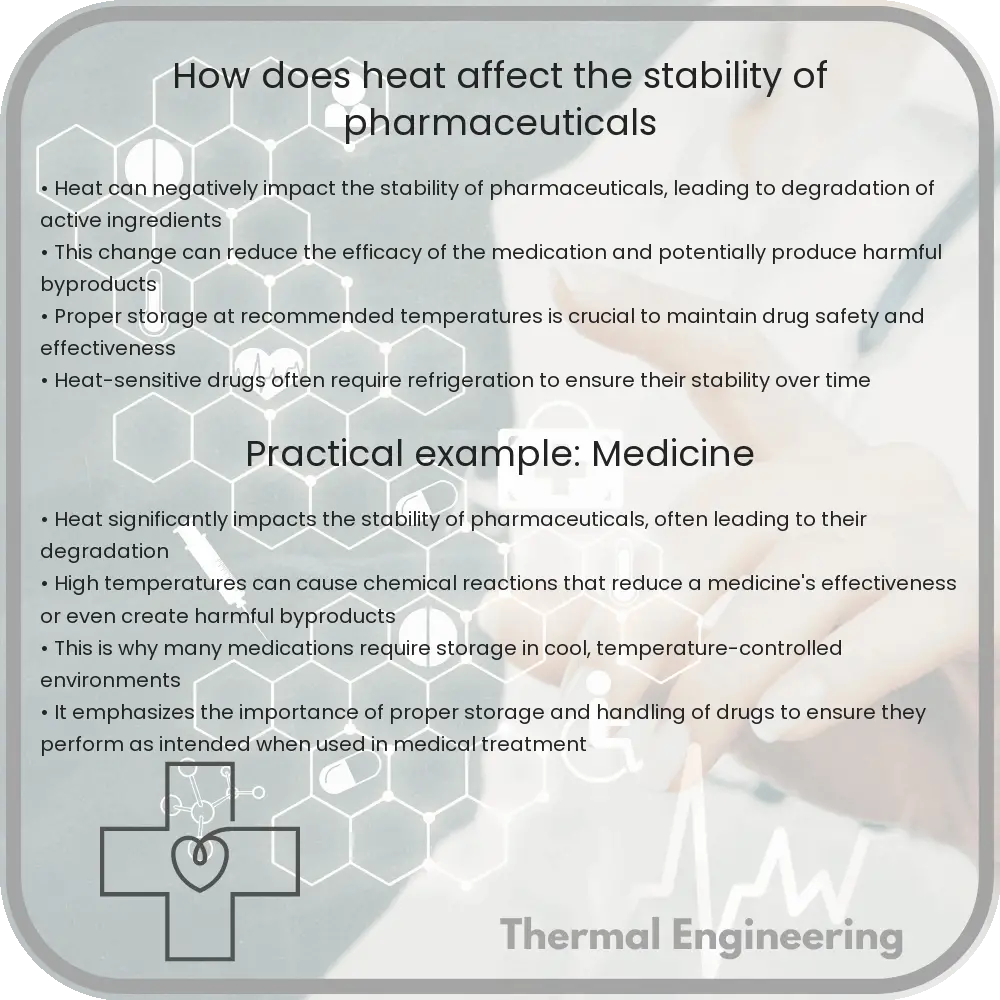
Heat can significantly impact the stability and effectiveness of pharmaceuticals, affecting their safety and efficacy. Pharmaceutical stability refers to how well a drug maintains its identity, strength, quality, and purity throughout its shelf life. Heat exposure accelerates various chemical reactions and physical changes that can lead to the degradation of active pharmaceutical ingredients (APIs) and excipients. This article explores the key mechanisms of heat-induced degradation and practical implications for the storage and handling of pharmaceutical products.
Thermal Degradation Mechanisms
Increased temperatures can trigger several mechanisms that result in the degradation of pharmaceuticals, including:
- Oxidation: Heat can increase the rate of oxidation reactions, where the drug molecules react with oxygen, leading to the formation of impurities and degradation products.
- Hydrolysis: This process involves the breakdown of drug molecules in the presence of water, which is accelerated by heat. Hydrolysis can affect both the drug’s effectiveness and its physical properties.
- Photodegradation: Although primarily driven by light, heat can enhance the rate of photodegradation by increasing the energy states of the molecular structures within pharmaceuticals.
- Physical Changes: Heat can cause physical alterations such as melting, evaporation, and changes in crystallinity, which can affect the drug’s bioavailability and stability.
Effects of Heat on Drug Stability
Exposure to high temperatures can lead to various undesirable outcomes in pharmaceuticals:
- Loss of Potency: As the active ingredients degrade, the drug may become less effective, requiring larger doses to achieve the desired therapeutic effect.
- Formation of Toxic Degradation Products: Degradation can lead to the formation of toxic compounds, posing serious health risks upon ingestion.
- Physical Alterations: Changes in the physical structure can affect the dissolution rate and absorption of the drug in the body, impacting its effectiveness and safety.
The Arrhenius equation helps to understand and quantify the rate of chemical reactions as a function of temperature:
k = A * e-Ea/(R*T)
Where:
- k: Reaction rate constant
- A: Pre-exponential factor, a constant that considers the number of collisions
- Ea: Activation energy required for the reaction (typically in joules per mole)
- R: Universal gas constant (8.314 J/(mol*K))
- T: Absolute temperature (in Kelvin)
This equation illustrates how even a small increase in temperature can significantly accelerate the rate of degradation.
Practical Measures for Managing Heat Exposure
To mitigate the effects of heat on pharmaceuticals, both during storage and transportation, several strategies can be implemented:
- Temperature Control: Maintaining drugs in a controlled environment, generally between 15°C and 25°C, to minimize heat exposure.
- Stability Testing: Conducting thermal stability testing during drug development helps in understanding how heat exposure affects a drug’s shelf life and helps in designing appropriate formulation and packaging.
- Proper Packaging: Using materials that offer thermal insulation and protection against temperature fluctuations.
- Educational Efforts: Informing healthcare workers and patients about the importance of proper storage conditions for medications.
Understanding the impact of heat on pharmaceutical stability is crucial for ensuring that medications remain safe and effective throughout their intended shelf life. By implementing stringent control processes and educating those involved in the handling, storage, and use of pharmaceutical products, it is possible to maintain medication efficacy and prevent adverse health outcomes resulting from degraded products.