Explore the versatile world of hydraulic turbines, key in converting water flow into renewable energy.
Understanding Hydraulic Turbines: Harnessing Renewable Energy
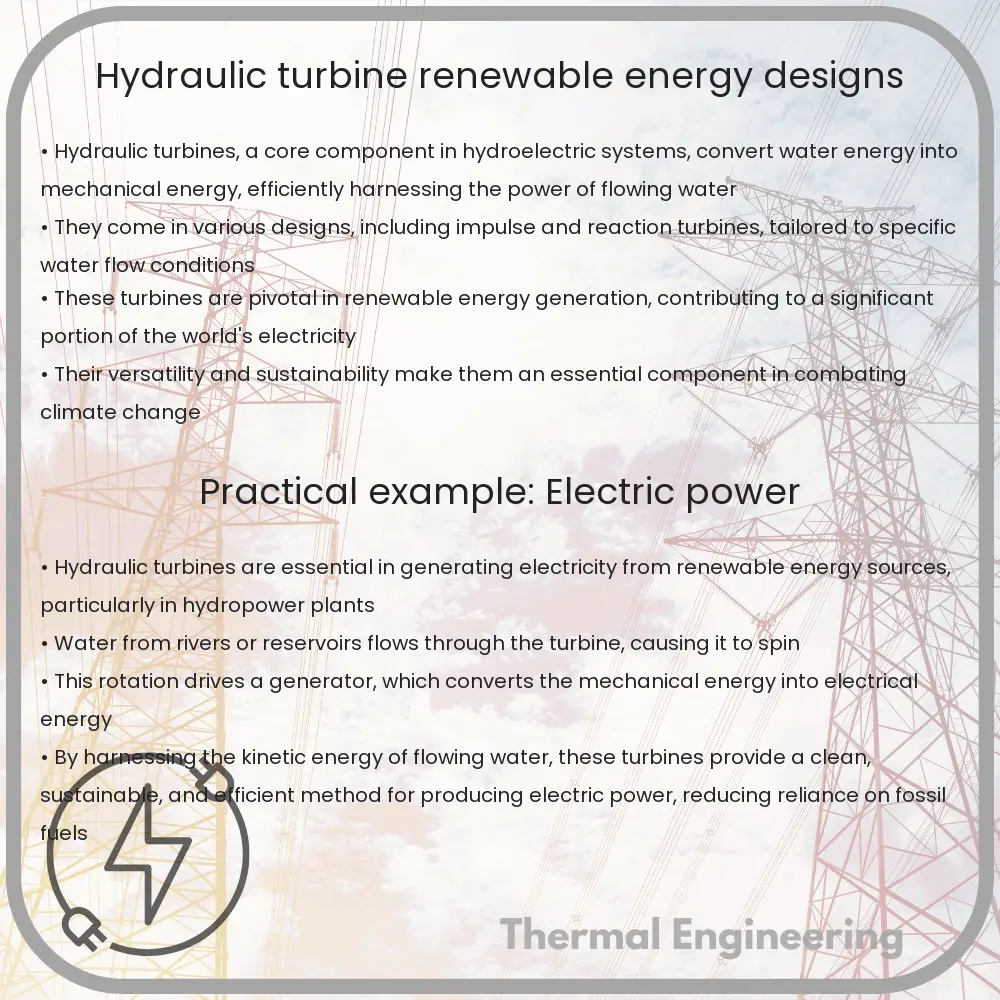
Hydraulic turbines are at the heart of hydroelectric power plants, converting the kinetic energy of flowing water into mechanical energy, which is then transformed into electricity through a generator. This technology is a cornerstone of renewable energy generation, playing a crucial role in the global energy mix by providing a clean, sustainable, and reliable source of power.
Types of Hydraulic Turbines
There are several types of hydraulic turbines, each designed to operate efficiently at specific water flow conditions and head heights (the height from which water falls). The key types include:
- Pelton Turbine: Best suited for high-head, low-flow applications, the Pelton turbine features a series of spoon-shaped buckets mounted around a wheel. Water jets strike the buckets, transforming the momentum of water into rotational motion.
- Francis Turbine: A reaction turbine that operates in medium to high-head and medium to high-flow conditions. It features a runner with fixed blades to guide water through a circular path, efficiently extracting energy.
- Kaplan Turbine: Ideal for low-head and high-flow situations, the Kaplan turbine boasts adjustable blades, allowing it to maintain efficiency across varying flow rates. The turbine’s design enables it to extract energy as water passes axially through the blades.
Design Considerations for Hydraulic Turbines
Designing a hydraulic turbine involves multiple considerations to ensure efficiency, reliability, and longevity. Some of the primary factors include:
- Material Selection: Turbines must be constructed from materials that can withstand the harsh conditions of water flow, including corrosion and erosion, while also supporting the mechanical stresses of rotation.
- Hydraulic Efficiency: The design should maximize the conversion of water kinetic energy to mechanical energy. This involves optimizing the shape and configuration of the turbine blades and the water flow channels.
- Environmental Impact: The design and placement of turbines must minimize impact on local ecosystems, especially aquatic life. This includes implementing fish-friendly turbine designs when necessary.
Environmental Impact and Future of Hydraulic Turbines
Hydraulic turbines offer a significantly lower carbon footprint compared to fossil fuels, making them a pivotal technology in the transition to sustainable energy. Their role extends beyond energy generation, including flood management, water supply, and irrigation services.
Advancements in turbine technology continue to improve their efficiency and environmental compatibility. Innovations like variable-speed turbines and improved materials contribute to enhancing the performance and extend the operational life of these machines. Furthermore, research into minimizing environmental disruption ensures that the hydraulic turbines of the future will be even more eco-friendly.
In conclusion, hydraulic turbines represent a critical technology in renewable energy. By understanding their operation, types, design considerations, and environmental impact, we can appreciate the sophistication and importance of these engineering marvels in our quest for sustainable energy solutions.