Explore the properties and applications of common heat sink materials such as aluminum, copper, zinc, and graphite in electronics.
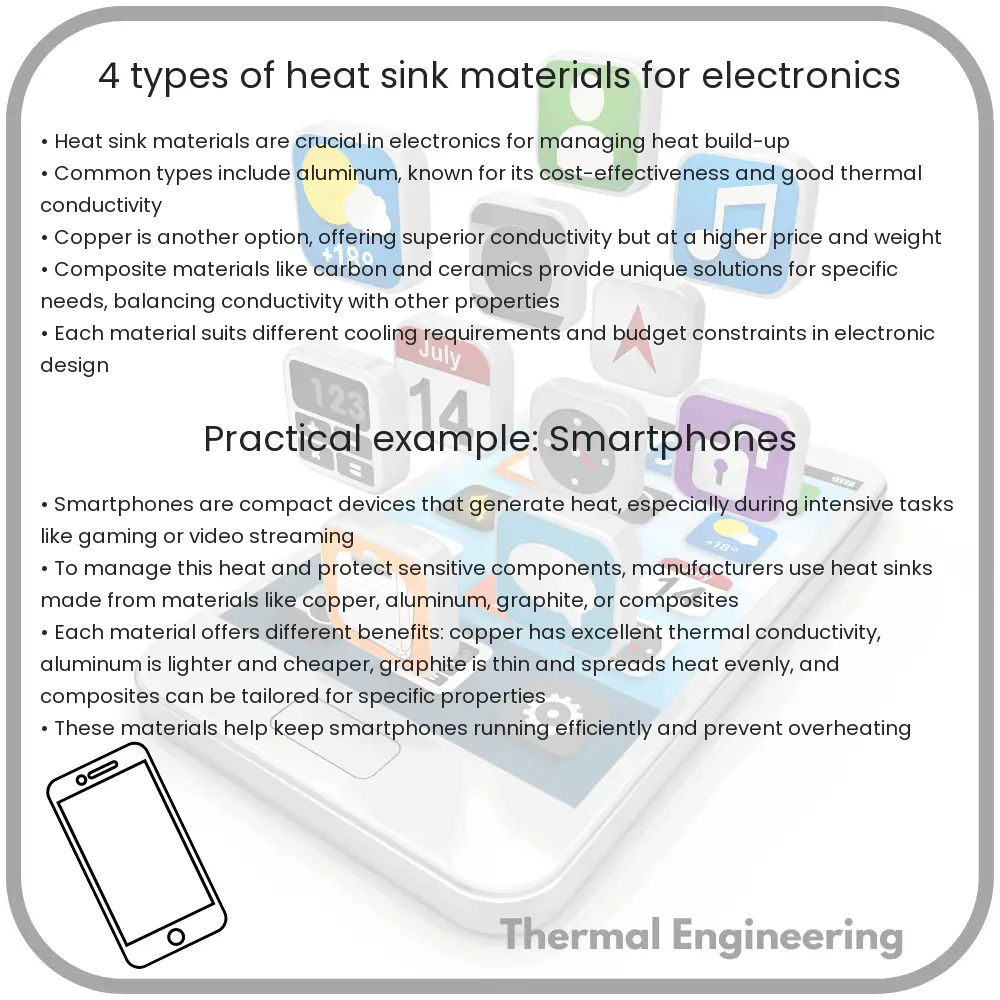
Understanding Heat Sink Materials in Electronics
Heat sinks play a crucial role in maintaining the operational efficiency of electronic devices by dissipating excess heat. The material used in the construction of a heat sink significantly affects its performance. Here’s a look at the four most common types of heat sink materials and their distinct characteristics.
1. Aluminum
Aluminum is perhaps the most widely used material for heat sinks due to its good thermal conductivity and lightweight properties. It has a thermal conductivity of approximately 235 W/m*K, making it an excellent choice for a wide range of electronic applications. Aluminum heat sinks are typically manufactured using extrusion, casting, or machining processes.
- Advantages: Lightweight, corrosion-resistant, and relatively inexpensive.
- Applications: Used in CPUs, GPUs, and power transistors.
2. Copper
Copper has superior thermal conductivity than aluminum, rated at about 400 W/m*K. This makes it an excellent material for heat sinks that require rapid heat dissipation. Despite its effectiveness, copper is heavier and more expensive than aluminum, which can limit its use in some applications.
- Advantages: Excellent thermal conductivity and antimicrobial properties.
- Applications: High heat flux applications and precision cooling devices.
3. Zinc
Zinc heat sinks are less common but are used where cost, durability, and additional weight are not a major concern. Zinc’s thermal conductivity is significantly lower than aluminum and copper, around 120 W/m*K, but it offers excellent corrosion resistance, making it suitable for harsh environments.
- Advantages: Corrosion resistance and good damping properties.
- Applications: Typically found in automotive and consumer electronics subjected to harsh conditions.
4. Graphite
Graphite is a newer material in the field of heat sink technology, known for its unique anisotropic thermal properties. While it can have a thermal conductivity as high as 1950-4000 W/m*K along the basal plane, perpendicular to the plane it is much lower. This directional conductivity can be harnessed effectively in applications requiring heat spreading capabilities.
- Advantages: Lighter than copper and aluminum, excellent thermal conductivity in specific directions.
- Applications: LED lighting, power amplifiers, and high-frequency electronics where weight and space are critical.
Conclusion
Choosing the right heat sink material is pivotal in designing efficient electronic devices. Each material offers a balance of thermal performance, weight, and cost, affecting the electronic device’s overall performance and durability. Engineers must consider these factors when selecting a material for their heat sink applications to ensure optimal performance and longevity of electronic components.