Learn about ethylene gas’s applications as a fruit ripening agent and its crucial roles in various thermal industrial processes.
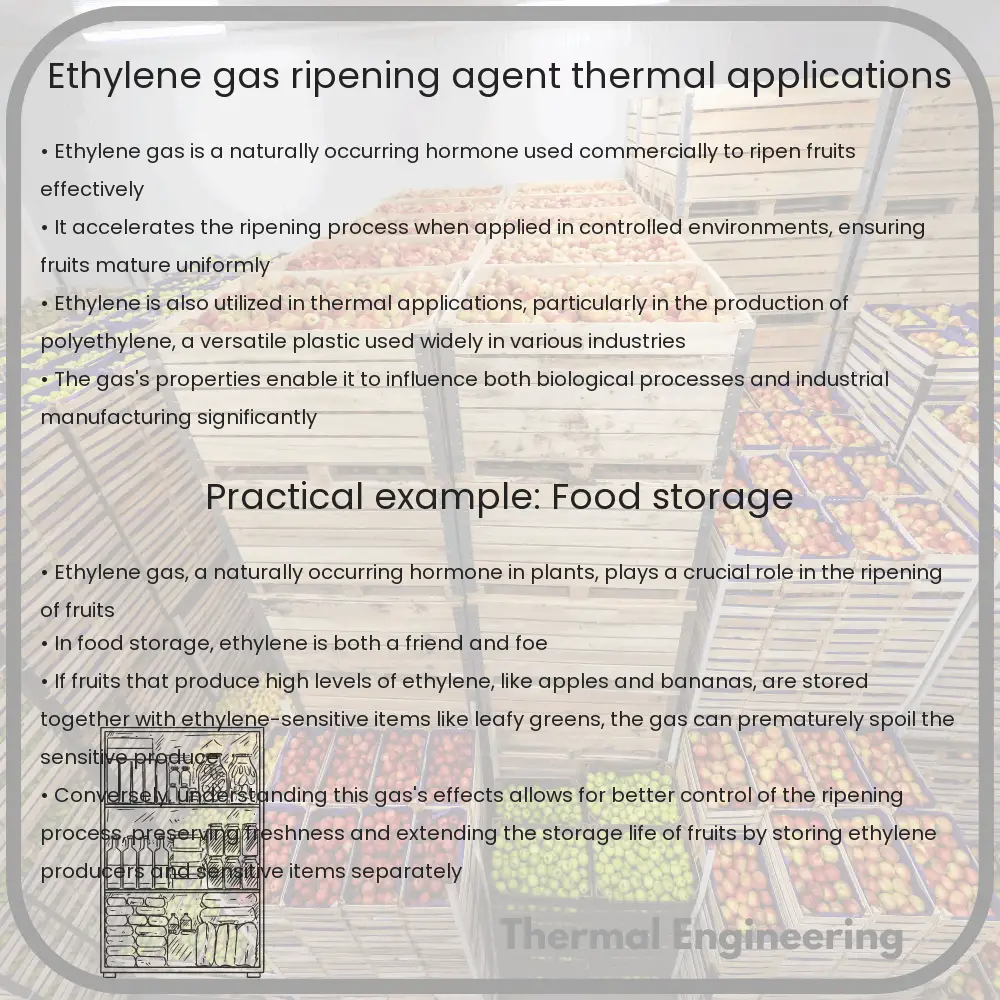
Ethylene Gas: The Ripening Agent and Its Thermal Applications
Ethylene gas (C2H4) is a colorless, flammable gas with a faintly sweet odor, widely recognized for its role in the ripening process of fruits. Beyond agriculture, ethylene gas finds significant roles in various thermal applications, underlining its versatility and importance in diverse industrial sectors.
Role of Ethylene as a Ripening Agent
Ethylene serves as a natural plant hormone that is primarily involved in the ripening of fruits. This hydrocarbon gas is produced in small amounts by most fruits and acts as a key signaling molecule to initiate the ripening process. When fruits release ethylene in confined spaces, the concentration of the gas increases, accelerating the ripening process.
- Synthesis and Release: Ethylene is synthesized from methionine in fruit tissues. The biosynthesis involves an enzyme called ACC synthase that facilitates the conversion of S-adenosylmethionine (SAM) to 1-aminocyclopropane-1-carboxylic acid (ACC), which is then converted to ethylene.
- Commercial Use: Commercially, ethylene gas is widely used to regulate fruit ripening in storage facilities and during transportation. For example, bananas are harvested green and later exposed to ethylene gas to induce ripening, achieving uniform color and texture.
- Action Mechanism: The gas works by affecting various physiological pathways that modify texture, softness, color, and other characteristics of fruit, essentially making them ready for consumption.
Thermal Applications of Ethylene
Ethylene is not only crucial in agriculture but also plays a vital role in various thermal applications in the industrial sector. Its high calorific value and flammability make it a valuable candidate for combustion-related processes.
- Production of Heat: Ethylene is used as a fuel in some industrial heating processes where high temperatures are required. Its combustion generates significant amounts of heat, which can be utilized in energy production and heating applications.
- Steam Cracking: One of the most significant industrial applications of ethylene involves its use in steam cracking, a petrochemical process that breaks down large hydrocarbons into smaller ones, primarily yielding ethylene and other alkenes. This process involves the heating of hydrocarbons in the presence of steam at high temperatures.
- Ethylene Oxide Production: The thermal oxidative reaction of ethylene leads to the production of ethylene oxide, a key intermediate used in the manufacture of several important chemicals and solvents, including ethylene glycol.
The dual role of ethylene as a ripening agent and a component in thermal applications showcases its importance across various domains — from food technology to industrial manufacturing. Understanding ethylene’s properties and uses can lead to optimized applications and innovations in these fields.
As ethylene continues to be studied and utilized, its impact on both agriculture and industry is expected to grow, influencing procedures and technologies used worldwide.