Learn how hydraulic accumulators store energy, manage pressure, and increase efficiency in hydraulic systems through their innovative design and operation.
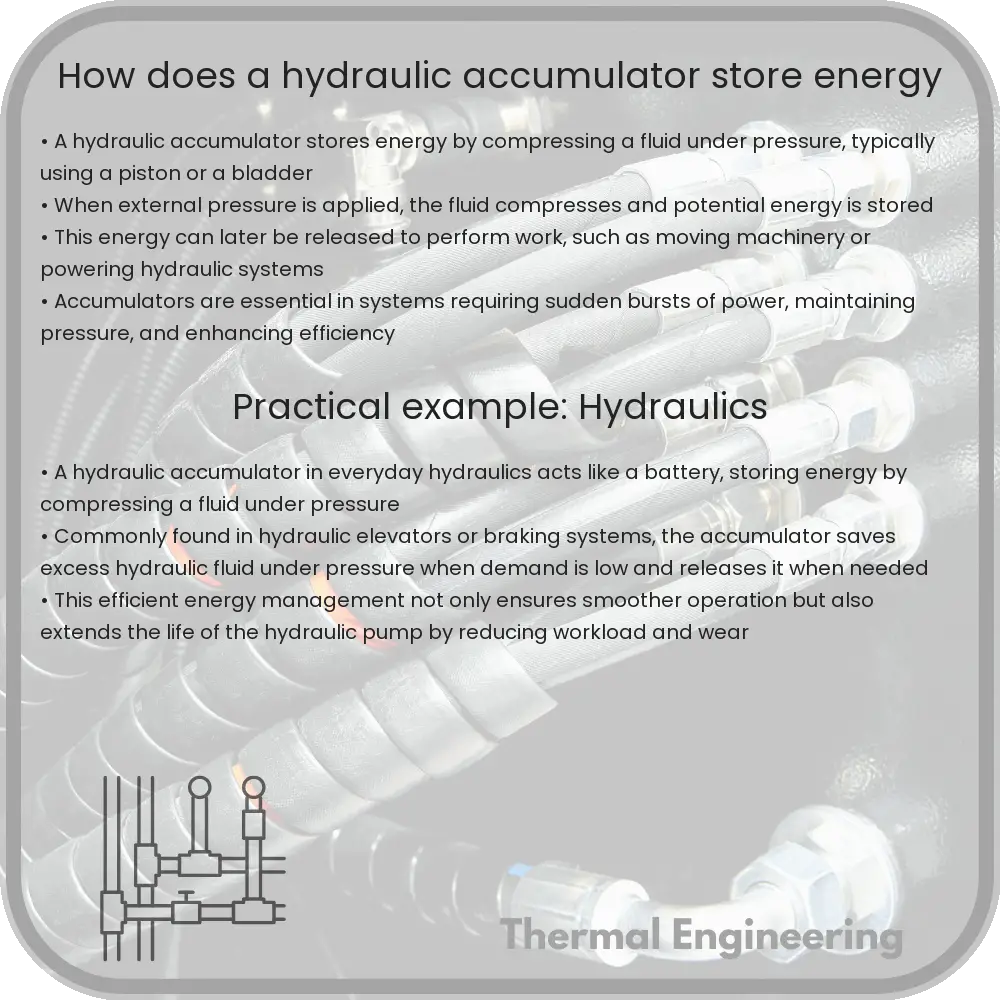
Understanding How a Hydraulic Accumulator Stores Energy
A hydraulic accumulator is a vital component used in hydraulic systems, serving the primary function of storing energy by using a compressible gas (usually nitrogen). This form of energy storage not only enhances the efficiency of the hydraulic system but also provides essential functions such as shock absorption, maintaining pressure, and compensating for leaks. In this article, we will explore the mechanics of how a hydraulic accumulator stores energy and the principles behind its operation.
Components and Types of Hydraulic Accumulators
Before diving into the energy storage process, it’s important to understand the basic components of a hydraulic accumulator. Typically, it consists of a cylindrical chamber which is divided into two parts: one side filled with hydraulic fluid and the other with gas (usually nitrogen). The two most common types of accumulators are:
- Bladder Type: Involves a rubber bladder that separates the gas from the hydraulic fluid.
- Piston Type: Uses a piston as a moveable barrier to separate the fluid from the gas.
Each type of accumulator works under the same basic principle but may have different applications and efficiency based on the specific requirements of the hydraulic system.
The Physics of Energy Storage
The fundamental principle behind a hydraulic accumulator is the conversion of potential energy into kinetic energy and vice versa. Here’s how the process works in steps:
- Charging the Accumulator: When hydraulic fluid enters the accumulator, it pushes the piston or compresses the bladder, which in turn compresses the gas in the gas chamber.
- Energy Storage: The compression of the gas stores potential energy in the accumulator. The amount of energy stored is dependent on the pressure and volume of the gas according to the relation E = (1/2) * P * V, where E is energy, P is pressure, and V is volume.
- Energy Release: When the hydraulic system requires energy, the compressed gas expands, pushing the hydraulic fluid back into the system and thus converting the stored potential energy back into kinetic energy.
This cycle allows the hydraulic accumulator not just to store energy, but also to act as a shock absorber, dampening any pulses that occur from the pumps or external forces, thus protecting the system and ensuring stable operation.
Benefits of Using Hydraulic Accumulators
Beyond just energy storage, hydraulic accumulators provide several benefits to hydraulic systems, including:
- Improved Efficiency: By storing excess hydraulic energy, accumulators can provide additional power without extra fuel or power consumption, especially during peak load times.
- Emergency Power Source: In case of power failure, the stored energy in the accumulator can be used to safely shut down the system or maintain system operation until power is restored.
- Longevity and Maintenance: Accumulators help reduce wear and tear on hydraulic pumps by smoothing out pulsations and spikes in pressure, potentially reducing maintenance costs and extending the lifespan of the system.
Conclusion
The hydraulic accumulator is an ingenious and essential component in modern hydraulic systems. Understanding how it stores energy illuminates not only a key aspect of system efficiency and safety but also highlights the seamless application of basic physical principles in engineering solutions. Whether in industrial machinery, aerospace, automotive systems, or renewable energy technologies, hydraulic accumulators play a critical role in enhancing system performance and reliability.
By appreciating the simple yet effective mechanism of hydraulic accumulators, we get a glimpse into the practical applications of physics in engineering that directly impact various aspects of technology and industry.