Explore the critical effects of temperature on battery efficiency, safety, and lifespan across various devices.
Understanding the Impact of Heat on Battery Performance
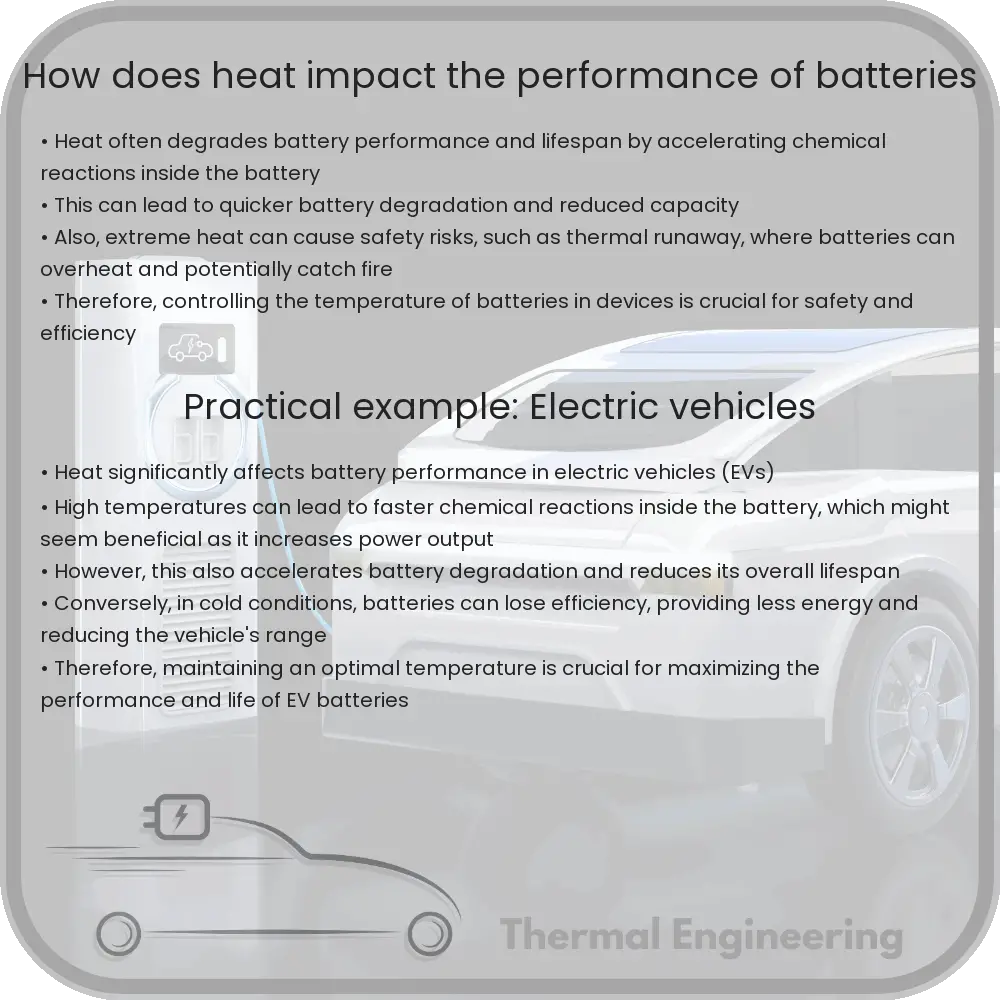
Temperature is a critical factor affecting the performance, safety, and lifespan of batteries. This influence is particularly significant in devices ranging from smartphones to electric vehicles. Understanding how heat impacts battery performance can aid in optimizing battery usage and prolonging its operational life.
How Temperature Affects Batteries
Temperature impacts batteries in multiple ways, primarily through its effect on the chemical reactions that occur within. Here’s a closer look:
- Increased Reaction Rates: At higher temperatures, chemical reaction rates within a battery typically increase. While this might initially enhance performance (e.g., better conductivity and higher power output), it can also lead to faster degradation of the battery components.
- Reduced Energy Efficiency: Excessive temperatures cause increased internal resistance and, consequently, higher energy losses in the form of heat. This not only stresses the battery but also reduces its overall efficiency.
- Material Expansion: Thermal expansion of battery materials at high temperatures can lead to structural damage or even failure. For instance, the separator between electrodes can degrade, potentially causing short circuits.
Optimal Temperature Range
Most batteries, including lithium-ion (Li-ion) types prevalent in many electronic devices, have an optimal operating temperature range, typically between 20°C to 25°C (68°F to 77°F). Operating a battery outside of this range can significantly impair its effectiveness and durability.
- Above Optimal Range: Temperatures exceeding this range can lead to increased self-discharge rates, a phenomenon where a battery loses charge more rapidly without being used. Prolonged exposure to high temperatures can also catalyze irreversible reactions, shortening the battery’s lifetime.
- Below Optimal Range: At low temperatures, the internal resistance of the battery increases, which reduces the efficiency of energy delivery. Batteries might exhibit sluggish performance and reduced capacity under such conditions.
Thermal Management in Battery Engineering
To mitigate the adverse effects of temperature extremes, effective thermal management systems are crucial in battery design, especially for applications requiring high power and energy density, such as electric vehicles.
- Cooling Systems: Active cooling systems are employed to keep batteries within their optimal temperature range. These systems can range from air-cooled mechanisms to more complex liquid cooling solutions.
- Phase Change Materials (PCMs): PCMs absorb, store, and release heat as they change from solid to liquid and vice versa. This can help regulate the temperature within battery packs, allowing them to operate more efficiently.
- Isolation and Ventilation: Properly designed battery compartments ensure good isolation and ventilation, preventing excess heat from external sources and facilitating the dissipation of internal heat.
In conclusion, understanding and managing the thermal effects on batteries is essential for enhancing their performance and longevity. Thermal management technologies continue to evolve, playing a pivotal role in the development of more reliable and efficient battery systems. With advancements in battery technologies and thermal management, future batteries are likely to withstand a wider range of environmental conditions, providing more robust and resilient power sources for all types of devices.