Learn how thermal sterilization uses heat to eliminate bacteria and other microorganisms in healthcare, food safety, and more.
Understanding Thermal Sterilization: How It Kills Bacteria
Thermal sterilization is a critical process used in various industries like healthcare, food processing, and pharmaceuticals to maintain sterility and safety standards. By understanding the science behind thermal sterilization, we can appreciate how it effectively eliminates harmful bacteria and other microorganisms.
What is Thermal Sterilization?
Thermal sterilization refers to the process of using heat to destroy bacteria, viruses, fungi, and spores. It can be achieved through various methods, including moist heat (using steam under pressure) and dry heat (using hot air or an open flame).
Moist Heat Sterilization
- Autoclaving: The most common method, autoclaving employs steam at high pressures and temperatures (typically 121 degrees Celsius for about 15 to 20 minutes, depending on the load), ensuring rapid heat penetration and sterilization.
- Pasteurization: Used primarily in food processing, pasteurization involves heating substances like milk below boiling to kill pathogenic microbes and reduce enzymatic activity, prolonging its shelf life.
Dry Heat Sterilization
- Hot Air Oven: Dry heat sterilization involves using an oven heated to 160-170 degrees Celsius for approximately 2 hours. It is less effective at penetrating materials, so longer times and higher temperatures are required compared to moist heat.
- Direct Flaming: Used for sterilizing small metal or glass objects by exposing them to a flame until they are red hot, thereby incinerating microorganisms.
How Does Heat Kill Bacteria?
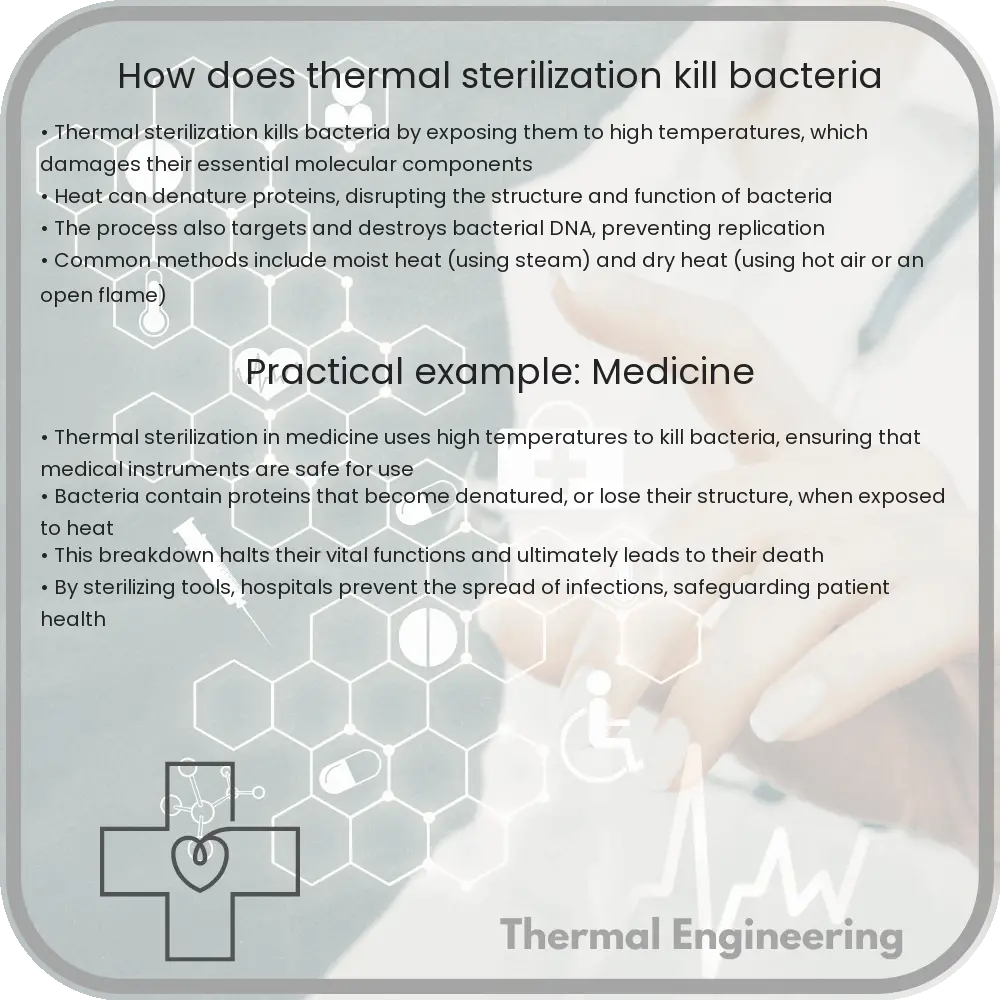
Heat kills bacteria through a combination of denaturing proteins, disrupting membranes, and dehydrating cells. Here’s a deeper look into each mechanism:
- Denaturing Proteins: Proteins are essential for the survival and functioning of all cells. Heat causes these proteins to denature or lose their structure, rendering them non-functional. Once a protein’s structure is lost, the cell cannot carry out vital life-sustaining functions, leading to its death. Enzymes, which are types of proteins that act as catalysts for biochemical reactions, are also denatured, halting the metabolism of the cell.
- Disrupting Membranes: Cellular membranes maintain the internal environment of a cell. Heat destabilizes these membranes, causing them to become permeable or even break apart. This disruption not only allows crucial cellular components to leak out but also leads to an uncontrolled flow of harmful substances into the cell, further damaging it.
- Dehydrating Cells: Heat can also remove water from cells through evaporation. Since water is vital for various cellular processes, its loss can lead to cellular malfunction and death.
Applications and Importance
Thermal sterilization is indispensable in settings where the sterility of instruments, containers, and consumables is crucial:
- Healthcare: Surgical instruments, syringes, and prosthetics are sterilized to prevent infections and ensure patient safety.
- Food Industry: Thermal processing helps eliminate potentially harmful bacteria from food products, ensuring they are safe for consumption and extending their shelf life.
- Scientific Research: Sterile environments are crucial for many types of biological and chemical research to avoid contamination that could skew results.
In conclusion, thermal sterilization is a proven, effective method for controlling microbial contamination. Its ability to destroy harmful organisms by altering protein structures, disrupting cell membranes, and dehydrating cells makes it a cornerstone in maintaining hygiene and safety standards across various industries.