Learn how waste heat recovery enhances efficiency and sustainability by capturing unused thermal energy from industrial processes, power plants, and more.
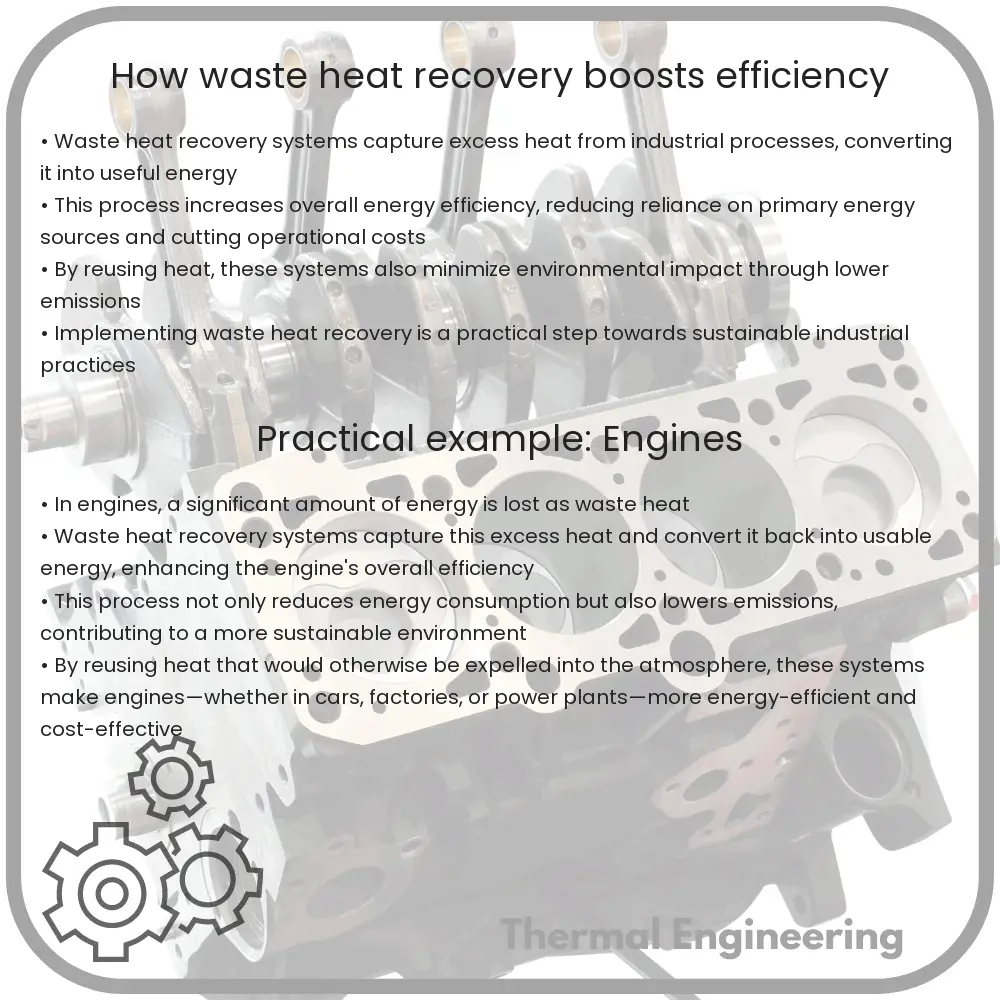
Understanding Waste Heat Recovery and Its Impact on Efficiency
Waste heat recovery is a technology used in various engineering processes to capture and reuse heat that would otherwise be lost. This technology plays a significant role in enhancing the energy efficiency of systems, such as power plants, factories, and even vehicles, contributing to reduced energy consumption and lower environmental impacts.
What is Waste Heat Recovery?
Waste heat recovery refers to the process of capturing excess heat that is produced by machinery, equipment, or industrial processes, which would typically be dispersed into the environment. Instead of wasting this heat, recovery systems convert it into electricity, steam, hot water, or other forms of useful energy. This process not only adds to the energy efficiency of a system but also helps in reducing operational costs and carbon dioxide emissions.
Key Components of a Waste Heat Recovery System
- Heat Exchanger: A critical component that transfers heat from waste streams (e.g., exhaust gases) to a working fluid or to the air.
- Turbine or Generator: Used to convert the recovered thermal energy into electrical power.
- Cooling System: Helps in maintaining the optimum temperature of the system to ensure efficient functionality.
- Pump or Compressor: Facilitates the movement of the working fluid through the system.
Applications of Waste Heat Recovery
- Industrial Processes: High-temperature processes in manufacturing generate significant amounts of heat, which can be captured and reused for preheating, steam generation, or electricity.
- Power Plants: Traditional power plants can significantly increase their efficiency by recovering waste heat from exhaust gases to produce additional power without extra fuel consumption.
- Automotive: Modern vehicles, especially hybrid and electric, utilize waste heat recovery systems to improve overall energy utilization.
- Commercial Buildings: Use of waste heat from air conditioning systems or appliances to heat water or spaces, reducing the energy footprint of buildings.
Benefits of Waste Heat Recovery
Integrating waste heat recovery into existing systems offers multiple benefits:
- Improved Energy Efficiency: By using the otherwise wasted heat, the total efficiency of the system can be increased, often significantly.
- Cost Savings: Reductions in energy consumption result in lowered operational costs over time.
- Environmental Impact: Minimizing the release of excess heat and reducing fossil fuel usage contribute to lowering greenhouse gas emissions.
- Enhanced System Lifespan: Lower operating temperatures can lead to reduced wear and tear on system components.
Challenges and Considerations
While waste heat recovery has substantial benefits, there are challenges to consider:
- Initial Investment: High upfront costs for the installation of recovery systems can be a barrier.
- System Complexity: Integrating a new subsystem can increase the complexity of the existing setup, potentially requiring more maintenance and oversight.
- Scale and Suitability: Not all processes produce enough waste heat to justify the cost of recovery, making it suitable primarily for industries or operations where large amounts of heat are regularly produced.
Conclusion
Waste heat recovery represents a compelling opportunity to boost the efficiency of a wide array of systems, from massive industrial operations to everyday residential use. Although it requires an upfront investment and careful integration, the long-term benefits of saved energy costs and reduced environmental impacts make waste heat recovery an attractive proposition for a sustainable future. Encouraging wider adoption and implementation of waste heat recovery technologies is essential for achieving greater energy efficiency and sustainability in various sectors around the world.