Learn about thermal insulators like fiberglass, foam, and reflective materials used in building construction to enhance energy efficiency.
Understanding Thermal Insulators in Building Construction
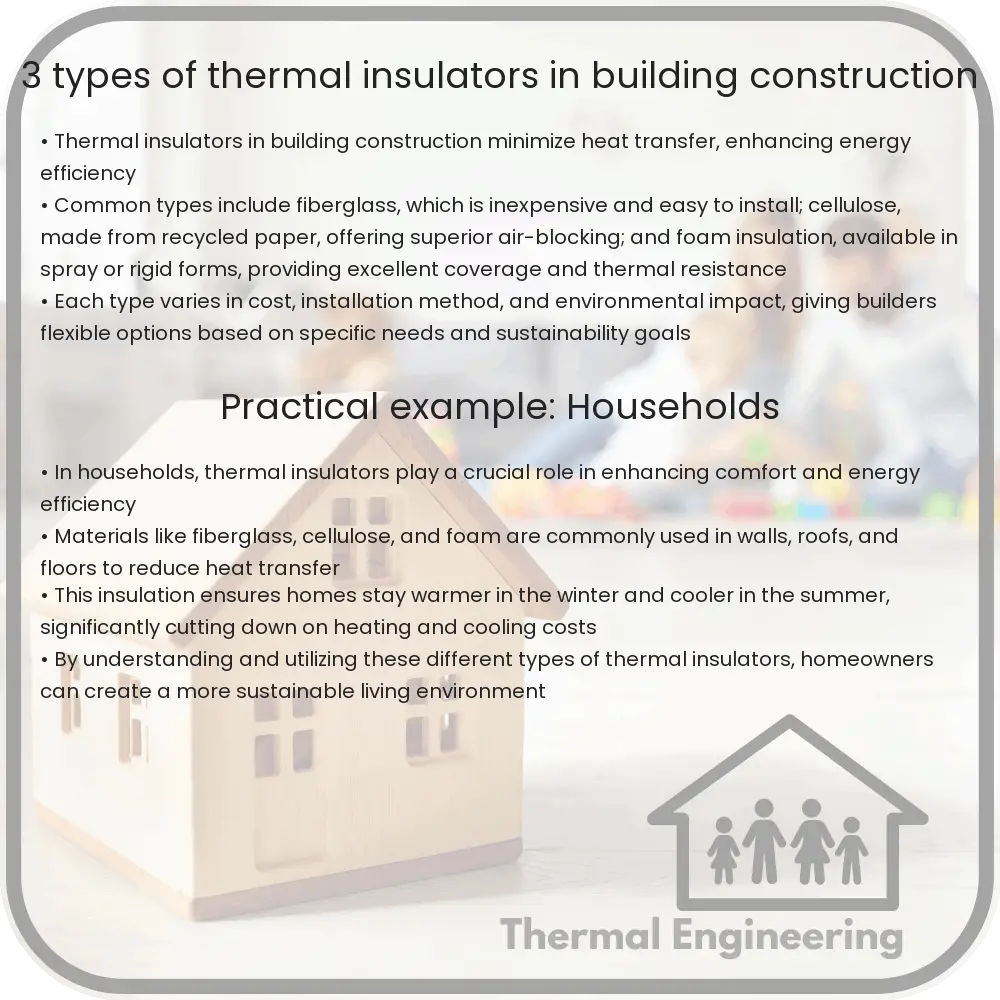
Thermal insulation is a critical component in building construction, aimed at reducing the heat transfer between outside and inside of a building. Effective thermal insulation not only makes buildings more comfortable but also dramatically reduces energy consumption and lowers heating and cooling costs. This article explores three common types of thermal insulators used in building construction – fiberglass, foam, and reflective insulators.
1. Fiberglass Insulation
Fiberglass is one of the most commonly used insulation materials. It is made from fine strands of glass fibers and is available in blanket (batts and rolls), loose-fill, and rigid board forms. Here are some key advantages of fiberglass insulation:
- Cost-Effective: Fiberglass is generally cheaper than other forms of insulation, making it a popular choice for those on a budget.
- Thermal Performance: It has a high thermal resistance (R-value), typically ranging from R-2.9 to R-3.8 per inch of thickness.
- Fire Resistant: Fiberglass is naturally fire resistant, a crucial advantage in building construction.
However, installing fiberglass requires careful handling to avoid irritation of the skin, eyes, and respiratory system. Additionally, it must be properly installed to avoid gaps, which can significantly diminish its insulating effectiveness.
2. Foam Insulation
Foam insulation includes materials like polystyrene, polyisocyanurate (polyiso), and polyurethane. Foam insulation can be sprayed, fitted as rigid boards, or molded to fit specific applications. Its versatility makes it suitable for a range of applications, from walls and roofs to around windows and doors. Benefits of foam insulation include:
- High R-value: Foam typically offers a higher R-value per inch than fiberglass, translating to better thermal resistance.
- Air Sealing: When applied as spray foam, it expands to fill up cracks and voids, helping to seal leaks and reduce air infiltration.
- Moisture Barrier: Certain types of foam insulation also act as moisture barriers, thereby reducing the risks of mold and water damage.
However, foam insulation is generally more expensive than fiberglass and may require professional installation, particularly when sprayed.
3. Reflective Insulation
Reflective insulation (or radiant barrier insulation) is designed to reflect heat away from the building, making it particularly effective in hot climates. It is typically made from aluminum foil laminated onto paper or plastic and is particularly effective for attics, roofs, and walls facing the sun. Here are several advantages:
- Reflect Heat: Highly effective at reflecting radiant heat, reducing cooling costs in warm climates.
- Lightweight: This type of insulation is light and easy to install, often requiring no more than staples, tape, or glue.
- Durable: Moisture does not affect the performance of reflective insulation, which contributes to its durability.
Reflective insulation is less effective in colder climates and typically needs to be combined with other forms of insulation that provide effective thermal resistance.
Conclusion
The choice of thermal insulation depends greatly on the climate, the specific requirements of the building, and budget constraints. Fiberglass, foam, and reflective insulations all offer unique benefits and can be effective in different scenarios. Proper installation and consideration of environmental factors are crucial to maximize the effectiveness of any insulation material. By understanding the properties and appropriate uses of these materials, builders can make informed choices that enhance the energy efficiency and comfort of buildings.