Learn about thermoelectric materials like Bismuth Telluride and Silicon-Germanium alloys used for energy-efficient power generation.
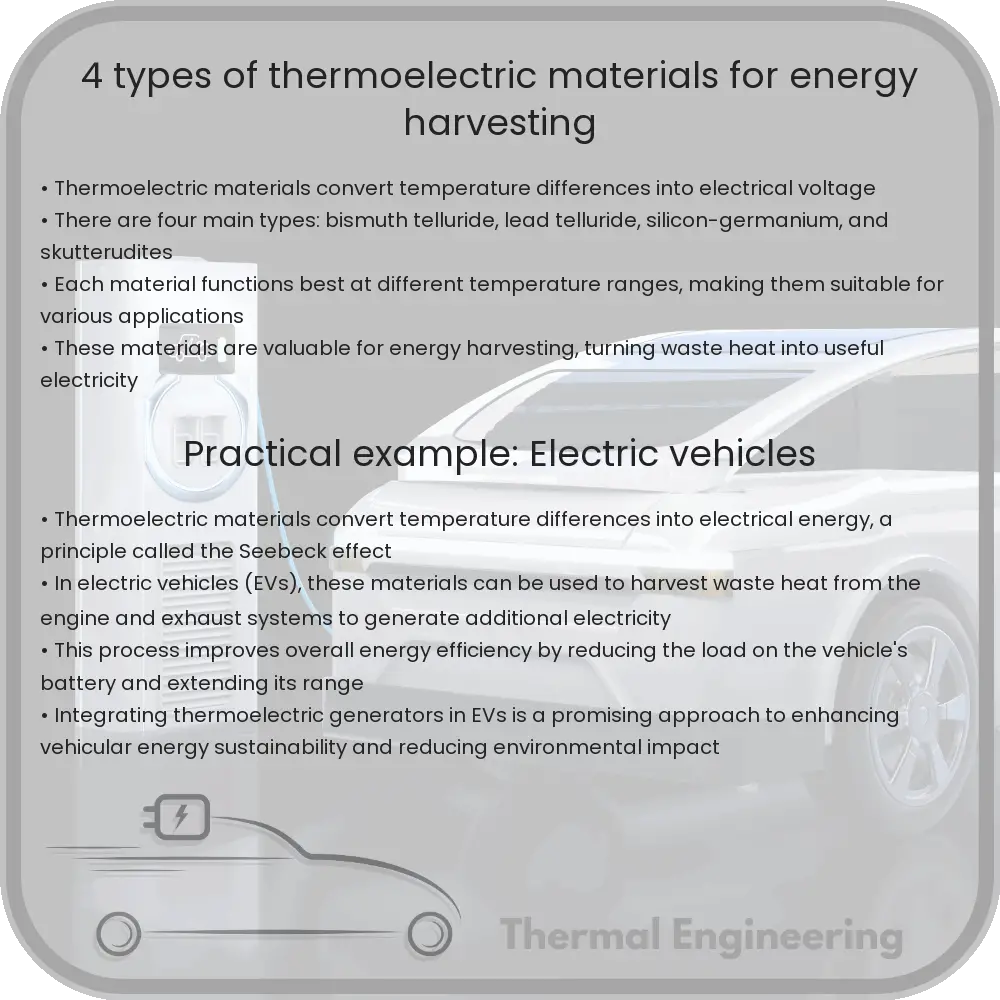
Introduction to Thermoelectric Materials for Energy Harvesting
Energy harvesting through thermoelectric materials is becoming an increasingly popular method for converting thermal energy into electrical energy, directly. This technology exploits the Seebeck effect where a temperature difference between two different materials can generate an electric current. Thermoelectric materials offer a promising way to utilize waste heat from industrial processes or natural sources to generate power without moving parts, contributing to their durability and minimal maintenance requirements. Here, we explore four types of thermoelectric materials commonly used in energy harvesting.
1. Bismuth Telluride (Bi2Te3)
Bismuth telluride is perhaps the most widely used thermoelectric material in moderate temperature ranges (approximately between 250-450 K). It exhibits excellent thermoelectric properties near room temperature, making it ideal for applications like portable refrigerators or power generation from body heat in wearable technology. Bi2Te3 is primarily used in the form of n-type and p-type semiconductors, creating a pair necessary for constructing a functional thermoelectric device.
2. Lead Telluride (PbTe)
Lead telluride operates effectively at higher temperatures (up to 700 K). This material is particularly attractive for power generation applications because of its excellent thermoelectric performance at elevated temperatures. PbTe’s ability to convert waste heat from car exhausts or industrial processes into electric power can significantly increase the energy efficiency of these systems. Additionally, its performance can be further enhanced with doping or nanostructuring, which modifies its electronic and thermal properties to boost its efficiency.
3. Skutterudites
Skutterudites are a class of thermoelectric materials that include some very effective cobalt arsenides, often doped with rare earth elements. These compounds are known for their low thermal conductivity and excellent electron transport properties, which make them suitable for applications at both medium and high temperatures. The unique structure of skutterudites allows for the inclusion of heavy atoms in the voids of their crystal lattice, reducing lattice thermal conductivity without deteriorating the electrical properties—an essential factor for achieving high thermoelectric efficiency.
4. Silicon-Germanium (SiGe) Alloys
Silicon-Germanium alloys are especially prevalent in aerospace applications where extreme temperatures (up to about 1300 K) are common. While SiGe has a lower thermoelectric conversion efficiency compared to other materials mentioned, its robustness at high temperatures and good mechanical properties make it a valuable choice for thermoelectric generators in space exploration vehicles. Moreover, being made from elements that are abundant and less environmentally toxic than tellurium or lead, SiGe alloys are a more sustainable option for long-term thermoelectric applications.
Conclusion
Whether it’s for greener energy alternatives or advanced technological applications, thermoelectric materials like Bismuth Telluride, Lead Telluride, Skutterudites, and Silicon-Germanium alloys are integral to progressing energy harvesting technologies. By converting waste heat into usable electricity, these materials help pave the way for more energy-efficient systems across various industries.