Learn about heat transfer fluids key to enhancing solar thermal systems’ efficiency, exploring types like water, synthetic oils, and more.
Understanding Heat Transfer Fluids in Solar Energy Systems
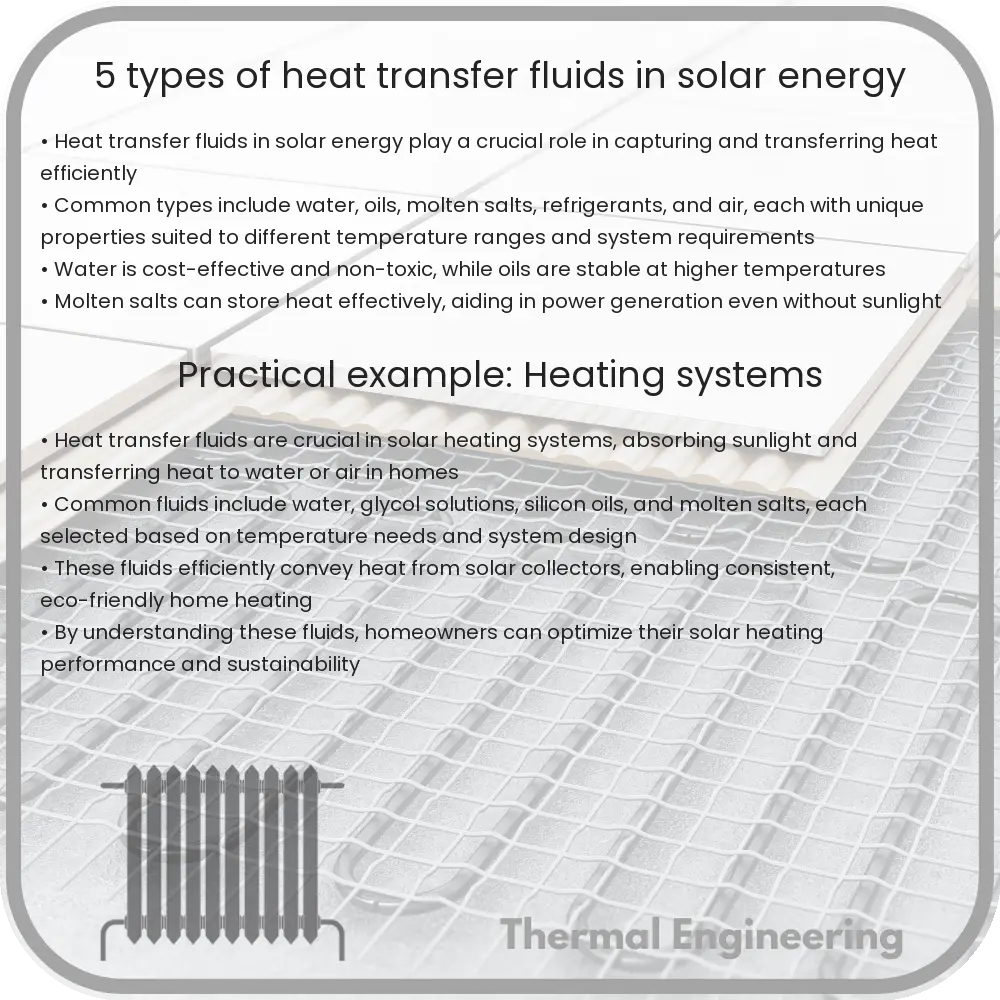
Heat transfer fluids (HTFs) play a pivotal role in the efficiency and functionality of solar thermal systems. These fluids are responsible for absorbing, transporting, and storing solar heat. Their properties affect the system’s performance, including its efficiency, operational temperature range, and maintenance requirements. Below, we’ll explore five common types of heat transfer fluids used in solar energy systems and discuss their characteristics and applications.
1. Water
Water is one of the most commonly used heat transfer fluids due to its excellent heat transfer properties, affordability, and availability. It has a high specific heat capacity, which allows it to absorb and transport significant amounts of heat. Water is typically used in low to medium-temperature solar thermal systems. However, it can be prone to freezing in cold climates and may cause corrosion in certain types of metal pipes or storage systems.
2. Synthetic Oils
Synthetic oils, also known as thermal oils, are engineered to have high boiling points and remain stable at high temperatures. They are primarily used in high-temperature solar thermal applications, such as in concentrating solar power (CSP) systems. Synthetic oils can typically operate up to 400°C without degrading, making them suitable for systems that require a wide range of operating temperatures. However, these oils are more expensive than water and can be a fire hazard at elevated temperatures.
3. Glycol Mixtures
Ethylene glycol or propylene glycol mixed with water serves as an effective heat transfer fluid, especially in climates prone to freezing conditions. Glycol mixtures prevent the fluid from freezing, allowing the solar thermal system to operate in colder environments. These mixtures also have inherent anti-corrosive properties, which can protect the system’s components. However, glycol has a lower heat capacity than water, which can slightly reduce the system’s overall efficiency.
4. Molten Salts
Molten salts are commonly used in CSP systems and can operate at temperatures of 600°C or higher. The most commonly used molten salts are mixtures of sodium nitrate and potassium nitrate, which have good thermal storage properties and can retain heat for extended periods. This ability makes them ideal for 24-hour solar power generation. The main challenges with molten salts include their corrosiveness and the need for high maintenance to manage this issue.
5. Phase Change Materials (PCMs)
Phase Change Materials are substances that absorb and release thermal energy during the process of melting and freezing. PCMs can be integrated into solar thermal systems to enhance heat storage capacity. When incorporated correctly, they help maintain a consistent supply of thermal energy, even when solar radiation varies. Common PCMs include paraffin wax and salt hydrates. The choice of PCM typically depends on its melting point, which should match the operational temperature range of the specific solar system.
Conclusion
Choosing the right heat transfer fluid is crucial for the optimal performance of solar thermal systems. Each type of HTF has its specific advantages and limitations based on factors such as operating temperature, heat capacity, and geographical climate conditions. By understanding these characteristics, engineers can design more efficient, durable, and cost-effective solar energy systems.