Understanding five key types of thermal interface materials (TIMs) used to improve heat management in electronics.
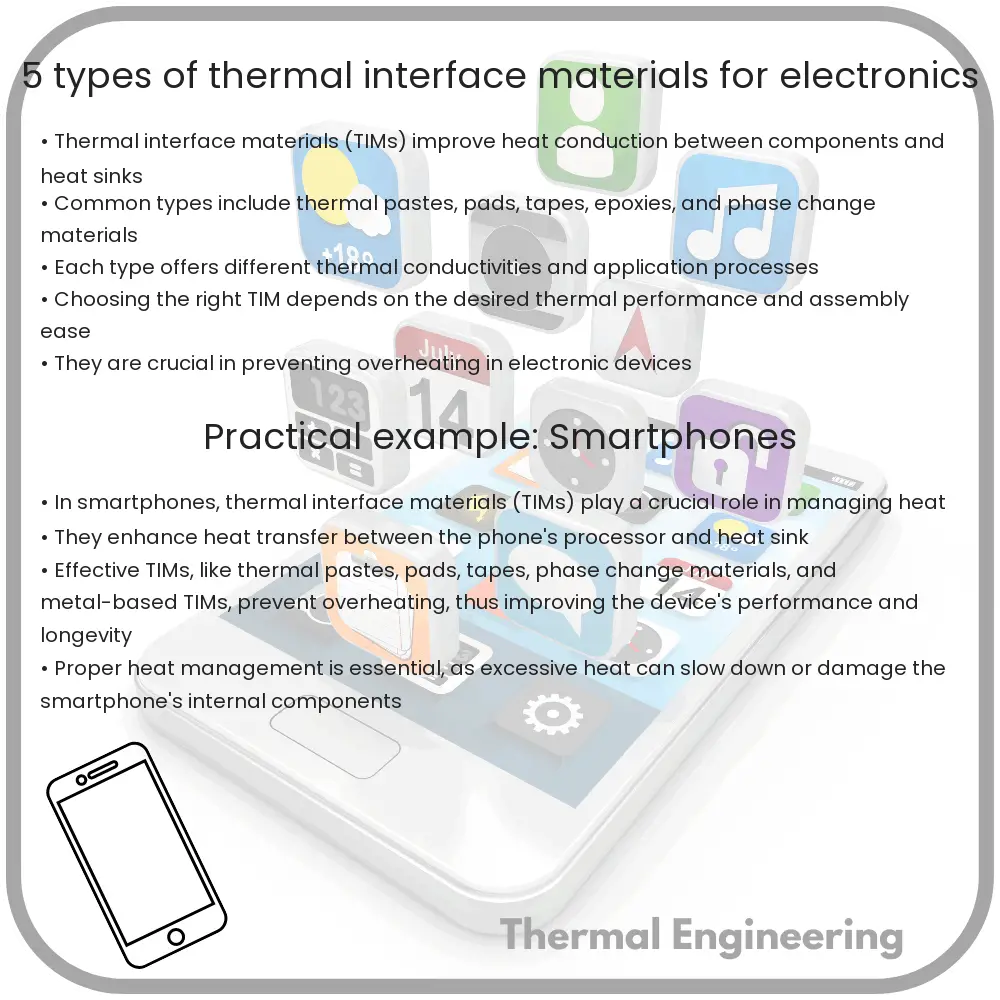
5 Types of Thermal Interface Materials for Electronics
Thermal interface materials (TIMs) are crucial in electronics to enhance the thermal performance of electronic packages. They serve to improve the heat conduction between components, such as between a heat source (like a CPU) and a heat sink. Efficient heat management is essential for maintaining the reliability and performance of electronic devices. This article explores five common types of thermal interface materials used in electronics.
1. Thermal Greases
Thermal greases, also known as thermal pastes, are commonly used due to their ease of application and effective thermal conductivity. These greases are composed of a suspension of thermal conductive particles, such as zinc oxide or aluminum, in a silicone or synthetic oil base. The key advantage of thermal greases is their ability to fill even the smallest air gaps between surfaces, reducing thermal impedance significantly. However, their long-term stability and tendency to pump out under temperature cycling are potential drawbacks.
2. Thermal Pads
Thermal pads are pre-cut pieces of soft material that can conform to surface irregularities under pressure. Made typically from silicone or polyimide materials embedded with conductive fillers, these pads are easier and cleaner to install compared to greases. While they may not achieve the same level of conductivity as greases, their consistent application and lack of mess make them a popular choice, especially in mass production environments.
3. Phase Change Materials
Phase change materials (PCMs) are designed to remain solid at room temperature, becoming soft and better filling the gaps at higher temperatures, around the operational temperatures of most electronic devices. This characteristic allows PCMs to combine the ease of handling seen in pads with thermal performance approaching that of greases. They are typically made from a mixture of waxes and thermally conductive fillers.
4. Metal-Based TIMs
Metal-based TIMs include soft metals such as indium, silver, or aluminum that can deform to fill surface irregularities. These materials offer outstanding thermal conductivity. For instance, indium, despite its higher cost, is particularly favored for its compliance, high conductivity (approximately 86 W/(m*K)), and low thermal resistance. Metal TIMs are especially useful in high-power applications where minimal thermal resistance is critical.
5. Liquid Metal TIMs
Liquid metal TIMs consist of metallic alloys that are liquid at room temperature. Gallium-based alloys, for example, are popular due to their excellent thermal conductivity and low viscosity, allowing them to spread thinly and effectively between surfaces. However, their reactive nature with aluminum and other metals can be a limitation in certain applications. Despite this, their superior performance makes them ideal for high heat flux situations, such as in high-performance CPUs and GPUs.
Each type of TIM has its specific advantages and application considerations. The choice of material largely depends on factors such as desired thermal conductivity, application process, durability, and cost-effectiveness. By understanding these materials better, engineers can make more informed decisions to enhance the thermal management of electronic devices, ultimately improving their performance and longevity.