Understanding fluid transport mechanisms in biological systems for nutrient uptake, waste removal, and cellular function.
Introduction to Fluid Transport in Biological Systems
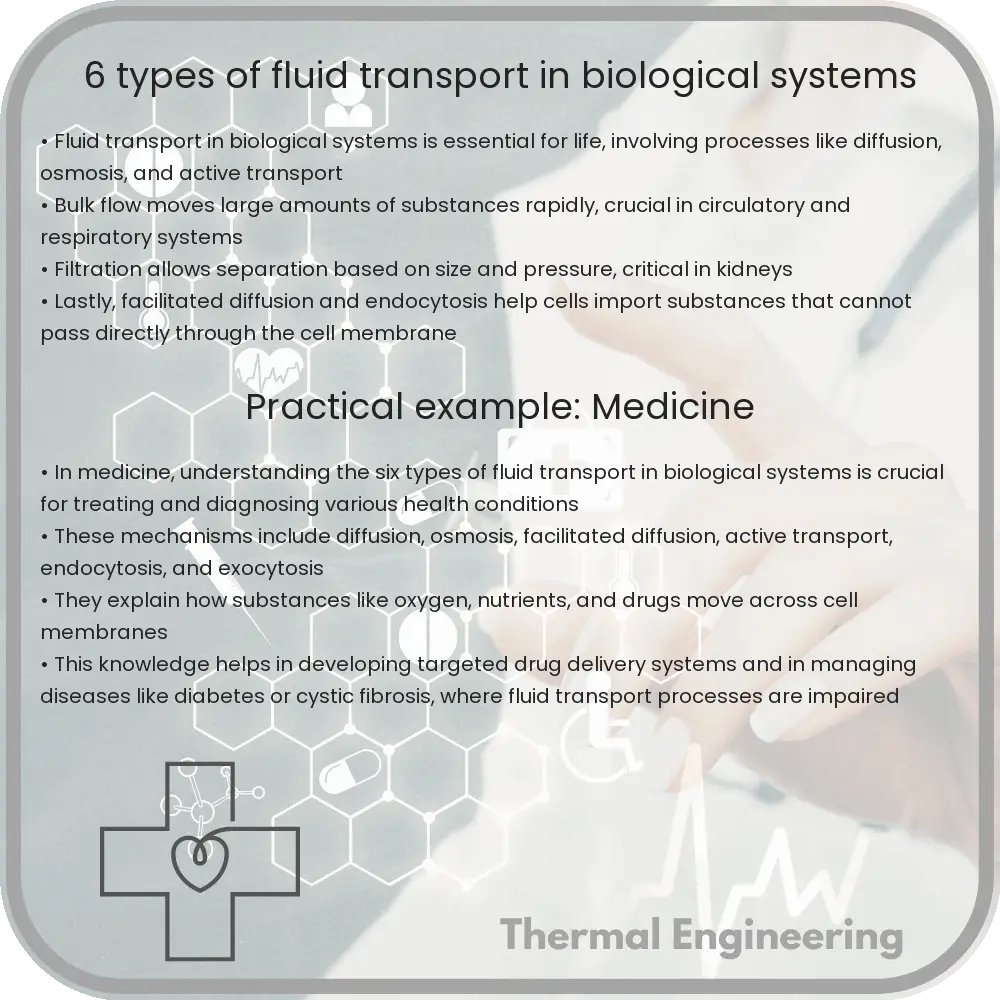
Fluid transport in biological systems is essential for the maintenance of life. These systems utilize a variety of mechanisms to move fluids, which include water, nutrients, gases, and waste products, to and from cells and tissues. This process supports a range of functions from nutrient uptake to waste removal, and understanding these mechanisms offers insights into basic biological processes and potential medical innovations.
1. Diffusion
Diffusion is the passive movement of molecules from an area of high concentration to an area of low concentration until equilibrium is reached. In biological systems, diffusion is crucial for the exchange of gases (like oxygen and carbon dioxide) and small molecules across cell membranes.
2. Osmosis
Osmosis is a specific type of diffusion that involves the movement of water across a semi-permeable membrane from an area of low solute concentration to an area of high solute concentration. This process is vital for maintaining proper hydration and nutrient balance within cells and tissues.
3. Facilitated Diffusion
Unlike simple diffusion, facilitated diffusion requires the help of protein channels or carriers embedded in cellular membranes. This mechanism allows the passive transport of substances (such as glucose and ions) that cannot diffuse freely across the membrane due to their size or polarity.
4. Active Transport
Active transport is the energy-consuming process of moving molecules across a cell membrane against their concentration gradient. This is achieved through transport proteins like pumps, consuming ATP as an energy source. Active transport is crucial for maintaining cellular concentrations of ions like sodium, potassium, and calcium.
5. Bulk Transport
Bulk transport involves the movement of large particles or large volumes of fluids into and out of cells without crossing the plasma membrane directly. This type of transport is categorized into two processes: endocytosis (intake of external substances by enclosing them in a membrane vesicle) and exocytosis (expelling materials from the cell into the extracellular space).
6. Transpiration
In plants, transpiration is a crucial process where water is transported from roots to aerial parts of the plant and eventually evaporated into the atmosphere from leaf surfaces. This not only helps in nutrient uptake and cooling of the plant but also creates a pull that aids in the upward movement of water from the roots.
Conclusion
Understanding these fluid transport mechanisms in biological systems unveils the complex and dynamic nature of living organisms. It highlights how various transport methods are tailored to specific needs, ensuring survival in diverse environments. Studying these systems gives valuable insights into biological functions and potential applications in medicine, agriculture, and biotechnology.