Learn about the function, design, and efficiency benefits of circulator pumps in heating and cooling systems.
Understanding the Role of Circulator Pumps in Heating and Cooling Systems
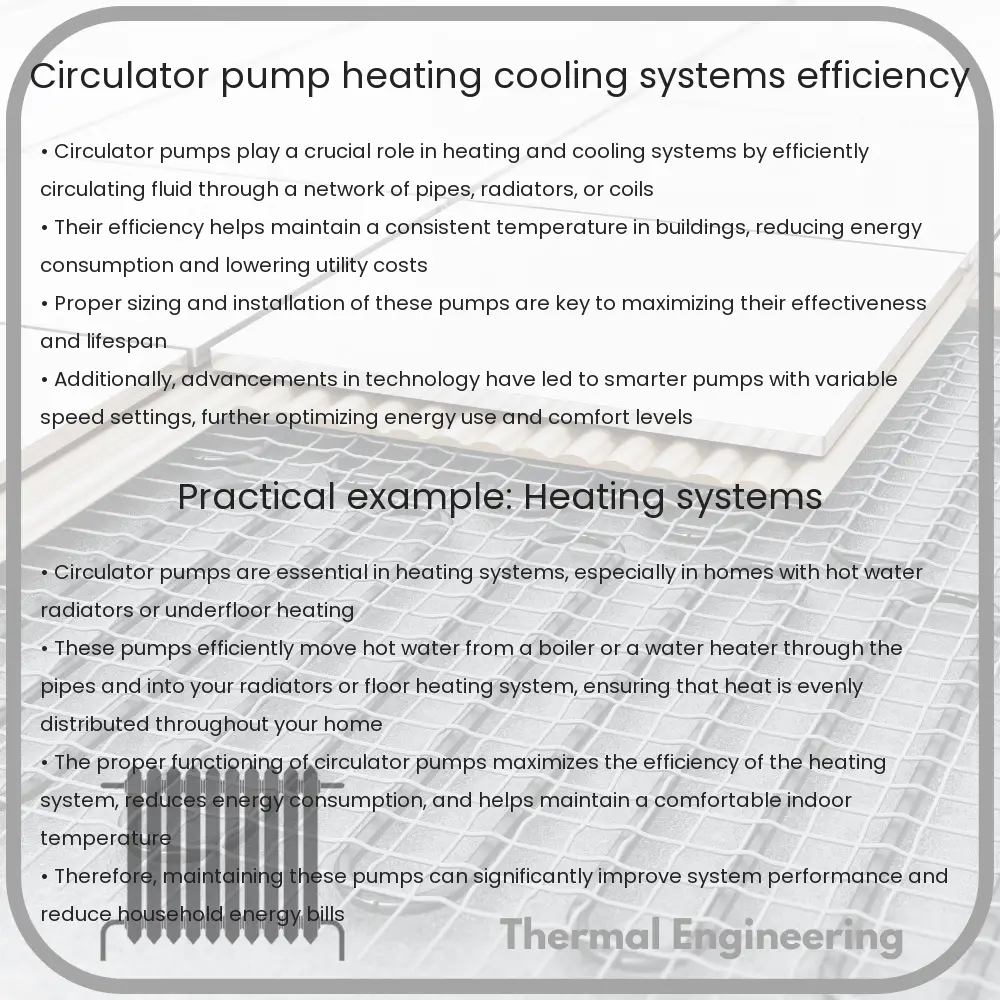
Circulator pumps are a crucial component in heating, cooling, and plumbing systems. These pumps are designed to circulate hot or cold water through a system to ensure consistent temperatures and improve energy efficiency. In this article, we’ll explore how circulator pumps function within these systems, discuss their design features, and illustrate their impact on system efficiency.
How Circulator Pumps Work
Circulator pumps are typically installed in the water or fluid circuit of a heating or cooling system. Their primary function is to move the fluid through the pipes, passing it through radiators, coils, or underfloor heating systems to either heat or cool a space. The pumps are powered by an electric motor and work in conjunction with the heating or cooling device, whether it’s a boiler, chiller, or heat exchanger.
- The pump circulates the water through the system, ensuring it passes through the heat exchanger repeatedly.
- This circulation helps in evenly distributing the thermal energy, thus maintaining consistent temperature levels throughout the building.
- By constantly moving the water, the circulator pump minimizes energy wastage and enhances the overall efficiency of the system.
Key Design Features of Circulator Pumps
Modern circulator pumps offer several features that contribute to their efficiency and functionality:
- Variable Speed Settings: Many pumps come equipped with adjustable speed settings that allow them to operate at different rates based on the specific heating or cooling requirements at any given time. This adaptability not only conserves energy but also reduces wear and tear on the pump.
- Automatic Controls: Some advanced models include sensors and automatic control systems that can detect changes in temperature and adjust the flow rate accordingly. This feature ensures optimal performance and even greater efficiency.
- Durable Construction: The build quality of circulator pumps is essential for their longevity, especially since they operate continuously. High-quality materials and robust construction help withstand the rigors of daily use.
Impact on System Efficiency
The integration of circulator pumps significantly enhances the efficiency of heating and cooling systems. The key aspects include:
- Energy Conservation: By maintaining the flow of water at an optimal rate, circulator pumps reduce the amount of energy needed for heating or cooling. This not only lowers energy consumption but also decreases utility bills.
- Reduced Carbon Footprint: Efficient operation leads to lower energy demand, which in turn reduces the carbon footprint of a building.
- Improved System Life: Regular and efficient circulation prevents the stagnation of water and the buildup of residues within the system. This helps in prolonging the life of both the pumps and the heating/cooling equipment.
Conclusion
Circulator pumps play a vital role in the efficiency of heating and cooling systems. Their ability to maintain constant water flow and temperature distribution not only ensures comfortable environments but also significantly optimizes energy usage and reduces operational costs. By understanding the mechanism and benefits of circulator pumps, homeowners and facility managers can make informed decisions about their HVAC systems, leading to more sustainable and cost-effective operations.