Explore the design, materials, and medical uses of cryogenic tanks, essential for storing substances at ultra-low temperatures.
Understanding Cryogenic Tanks: Materials and Medical Storage Applications
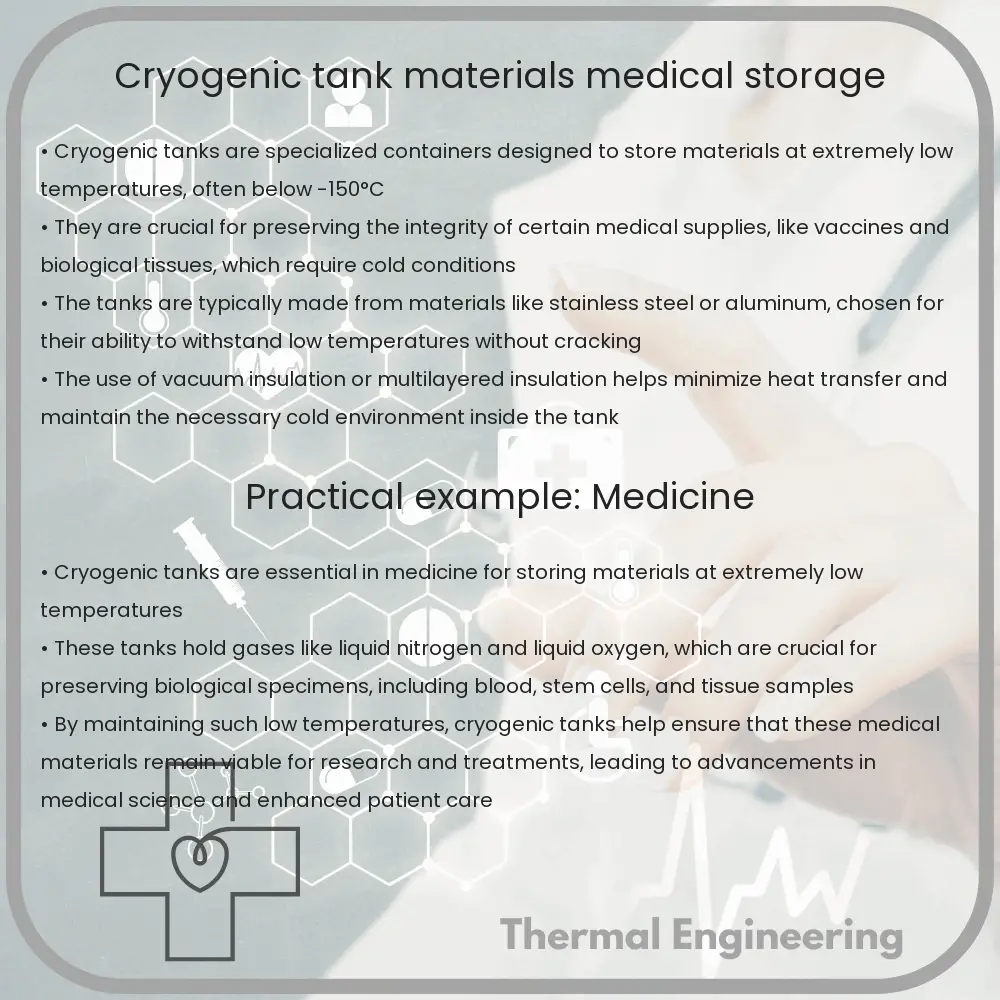
Cryogenic tanks are specialized storage containers designed to hold materials at extremely low temperatures, typically below -150 degrees Celsius (-238 degrees Fahrenheit). These tanks are crucial in various sectors, including medical, industrial, and scientific fields, due to their ability to store perishable liquids like liquid nitrogen, oxygen, argon, and LNG (liquefied natural gas) safely. This article delves into the materials used to construct these tanks and their specific applications in medical storage.
Materials Used in Cryogenic Tanks
The materials used in the construction of cryogenic tanks need to withstand the harsh conditions of cryogenic storage. They must have excellent thermal resistance, low thermal conductivity, and high resistance to fracture at low temperatures. Commonly used materials include:
- Stainless Steel: It is widely used due to its strength and resistance to cryogenic temperatures. Austenitic stainless steels, like 304 and 316 types, are preferred for their durability and corrosion resistance.
- Aluminum Alloys: Known for their light weight and good thermal conductivity, aluminum alloys are often used in the construction of smaller cryogenic containers.
- Composite Materials: Advanced composites such as fiberglass, carbon fiber, and foam insulations are used in cryogenic tanks. These materials help in reducing the weight and improving the thermal insulation properties of the tanks.
- Nickel Alloys: For extremely low temperatures, nickel alloys that retain strength and toughness at these conditions are used, especially in handling liquefied natural gas.
These materials are typically shaped into two main components of the cryogenic tank: the inner vessel that holds the liquefied gas and the outer vessel that serves as a protective jacket. Between these two layers, insulation materials such as vacuum, perlite, or multilayer insulation are used to help maintain the extremely low temperatures needed to keep the contents in a liquid state without excessive evaporation.
Medical Storage Applications of Cryogenic Tanks
In the medical field, cryogenic storage plays a pivotal role in several applications:
- Storage of Human Biological Materials: Human biological samples such as blood, stem cells, and reproductive cells (sperm and eggs) are stored in liquid nitrogen tanks. This form of storage preserves their viability over long periods.
- Cryosurgery: Liquid nitrogen tanks are used in medical procedures that involve the controlled destruction of diseased tissues, such as skin lesions, by freezing.
- Pharmaceuticals: Certain biopharmaceuticals require storage at cryogenic temperatures to maintain their efficacy until they are ready for use.
- Transportation of Critical Samples: Cryogenic tanks are also vital in transporting sensitive biological materials across different locations, ensuring they remain uncontaminated and viable.
Conclusion
The effectiveness of cryogenic tanks in preserving the integrity and viability of critical materials at ultra-low temperatures has made them indispensable, particularly in medical storage applications. The continuous improvement in materials and technology employed in the construction of these tanks promises even more reliable and efficient solutions in the future. Understanding these principles and advancements is key to appreciating how critical these technologies are to modern medicine and beyond.