Delve into the intricacies of cryogenic treatment of metals, a process that greatly enhances durability, wear resistance, and performance of metal components.
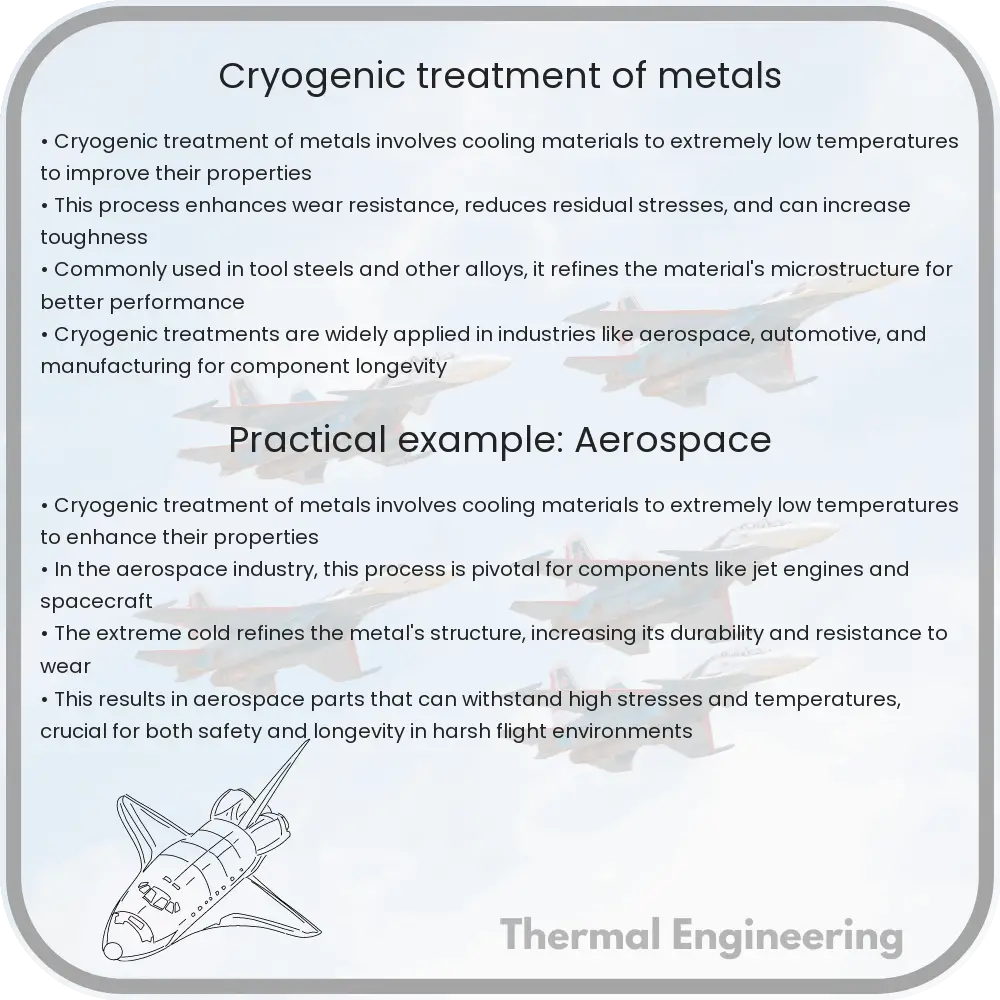
Understanding Cryogenic Treatment of Metals
Cryogenic treatment of metals is a process that uses extremely low temperatures to enhance the properties of metal materials. This treatment is typically applied to tools, dies, and other components with a goal of improving their durability, wear resistance, and overall performance. Here’s an overview of how this process works and why it’s beneficial in various engineering applications.
What is Cryogenic Treatment?
Cryogenic treatment involves cooling metals down to cryogenic temperatures typically around -190°C (-310°F) or lower using liquid nitrogen. Once the metal reaches these temperatures, it is maintained in this state for a specified period, ranging from several hours to days, before it is gradually brought back to room temperature. This extreme cooling and slow return to normal temperature are what lead to changes at the microstructural level of the metals.
Steps in Cryogenic Treatment
- Precooling Phase: The metal is cooled down slowly to avoid thermal shock and to ensure uniform temperature distribution throughout its structure.
- Soaking Phase: Upon reaching the desired cryogenic temperature, the metal is held at this temperature to allow the transformation processes to occur completely.
- Warming Back to Room Temperature: After the soaking phase, the metal is slowly returned to room temperature, either in ambient air or using controlled heating methods.
- Post-Treatment Heat Application: Depending on the type of metal and its intended use, a further heat treatment like tempering may be applied to stabilize the microstructure.
Effects of Cryogenic Treatment on Metal Properties
Cryogenic treatment has several beneficial effects on metals:
- Increase in Wear Resistance: The treatment transforms retained austenite into martensite, which is a harder phase. This increases the wear resistance of the metal.
- Improved Durability: The internal stress within the metal is reduced, improving the life and durability of the material under dynamic stresses.
- Enhanced Dimensional Stability: Changes at the microstructural level can result in fewer tendencies for the metal to distort under heat and mechanical stress.
Applications of Cryogenic Treatment
Cryogenic treatment is used in various areas including:
- Tooling: Drills, end mills, and other cutting instruments are commonly treated to increase their service life and performance.
- Automotive: Components such as gears, bearings, and brake rotors are treated to enhance their wear properties and endurance.
- Electronics: Certain metals used in electronic connectors and other components can undergo cryogenic treatment to improve electrical conductivity and fatigue resistance.
In conclusion, cryogenic treatment of metals is a remarkable example of how advanced material science can dramatically improve the characteristics of metal. By manipulating the microstructure at extremely low temperatures, engineers can create components that are more durable, stable, and efficient, satisfying the increasing demands of modern engineering applications.