Learn about dosing pumps, essential for precise chemical metering in various industries.
Understanding Dosing Pumps: Essential Tools for Precise Chemical Metering and Treatment
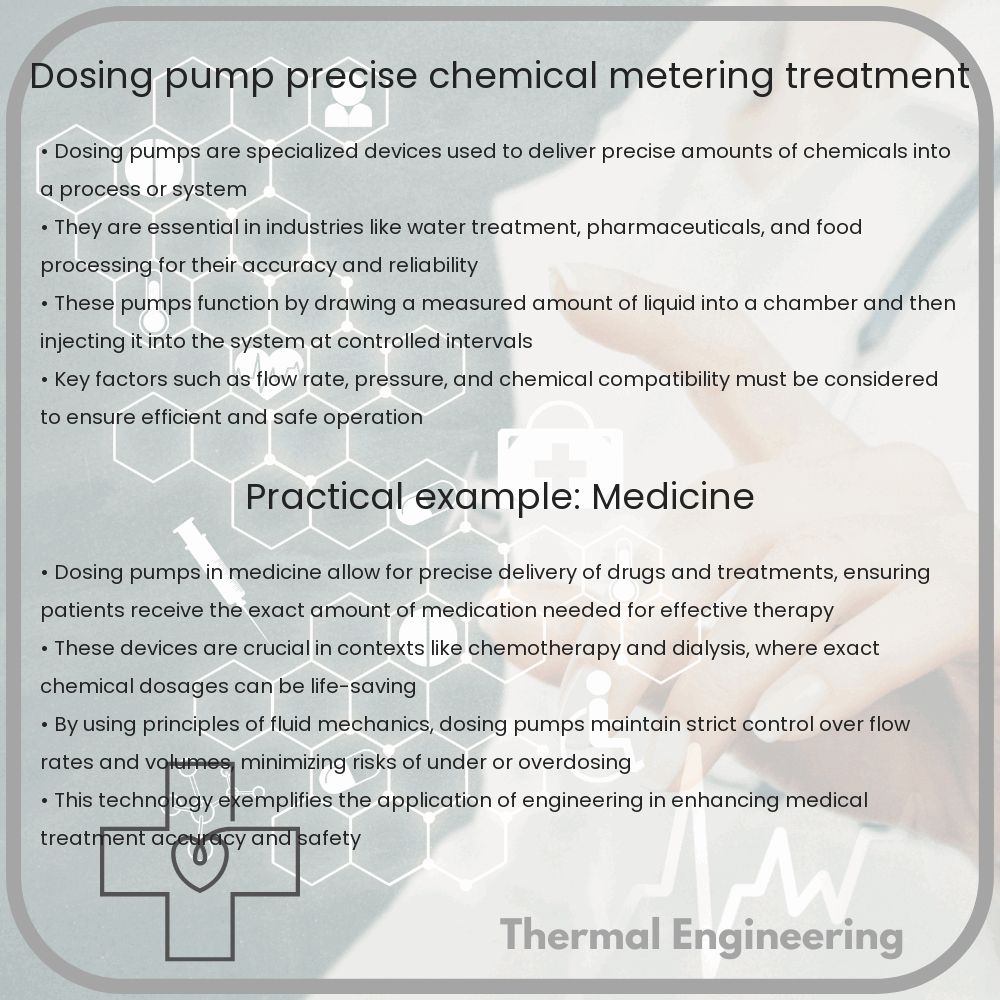
Dosing pumps, also known as metering pumps, are essential components in a variety of engineering fields where precise and controlled dosing of chemicals is required. These pumps are designed to deliver a very exact amount of a substance in a controlled flow rate to a specific process stream. This precision is crucial in applications such as water treatment, chemical processing, and pharmaceutical manufacturing.
How Dosing Pumps Work
A dosing pump functions by drawing a measured amount of liquid into its chamber and then injecting this volume into the pipe or tank where it is needed. The pump is generally operated by an electric motor or pneumatic actuator which controls the movement of a piston within a cylinder, thus determining the volume of the fluid dispensed.
The operation of a dosing pump involves several key components:
- Pump Head: This contains the cylinder in which the piston operates.
- Valves: These allow liquid to enter and exit the pump head. They are designed to only allow movement in one direction (non-return valves).
- Control System: This may be as simple as a manual adjustment or as complex as a fully automated system integrated with the process plant’s central control system.
Dosing accuracy is affected by factors such as pump speed, back pressure, pump head design, and the nature of the liquid being pumped. Modern dosing pumps typically incorporate advanced technologies such as microprocessors for precise control and diaphragms for enhanced safety and efficiency.
Types of Dosing Pumps
There are several types of dosing pumps, each suited to different applications:
- Diaphragm Pumps: These are widely used due to their high level of accuracy and suitability for handling aggressive or hazardous chemicals without leakage.
- Peristaltic Pumps: These contain a flexible tube, which is compressed to move the liquid. This design minimizes contamination risk, making it ideal for sanitary applications like food processing or medical dosing.
- Piston Pumps: Typically offering higher pressures, these pumps are suitable for applications requiring precise injection into pressurized systems.
Applications of Dosing Pumps
Dosing pumps play a critical role across various industrial sectors:
- Water Treatment: These pumps help in the precise dosing of disinfectants and coagulants in water treatment facilities to ensure safe drinking water.
- Chemical Manufacturing: Ensuring proper mixing of chemicals by dosing accurate amounts to reactants.
- Pharmaceuticals: They are critical in processes where precise amounts of fluids need to be added under sanitary conditions.
- Food and Beverage: Dosing pumps are used to add flavors, preservatives, or other ingredients during processing.
Considerations for Choosing a Dosing Pump
When selecting a dosing pump, several factors should be considered to ensure optimal performance:
- Chemical Compatibility: The materials of the pump should be compatible with the chemicals being dosed to avoid corrosion or degradation.
- Flow Rate and Pressure Requirements: The pump must meet the specific flow rate and pressure demands of the application.
- Control and Monitoring Needs: Depending on the application complexity, the level of control and monitoring can range from basic to highly sophisticated systems that connect to central process control networks.
- Maintenance and Servicing: Ease of maintenance and the availability of replacement parts should be considered to minimize downtime.
In conclusion, dosing pumps are indispensable tools in modern industrial operations requiring precise chemical metering and treatment. Understanding the different types of pumps available and their specific applications helps in selecting the right pump that ensures both efficiency and safety in the process.