Explore energy-efficient thermal management strategies and technologies in data centers to improve system reliability and reduce operational costs.
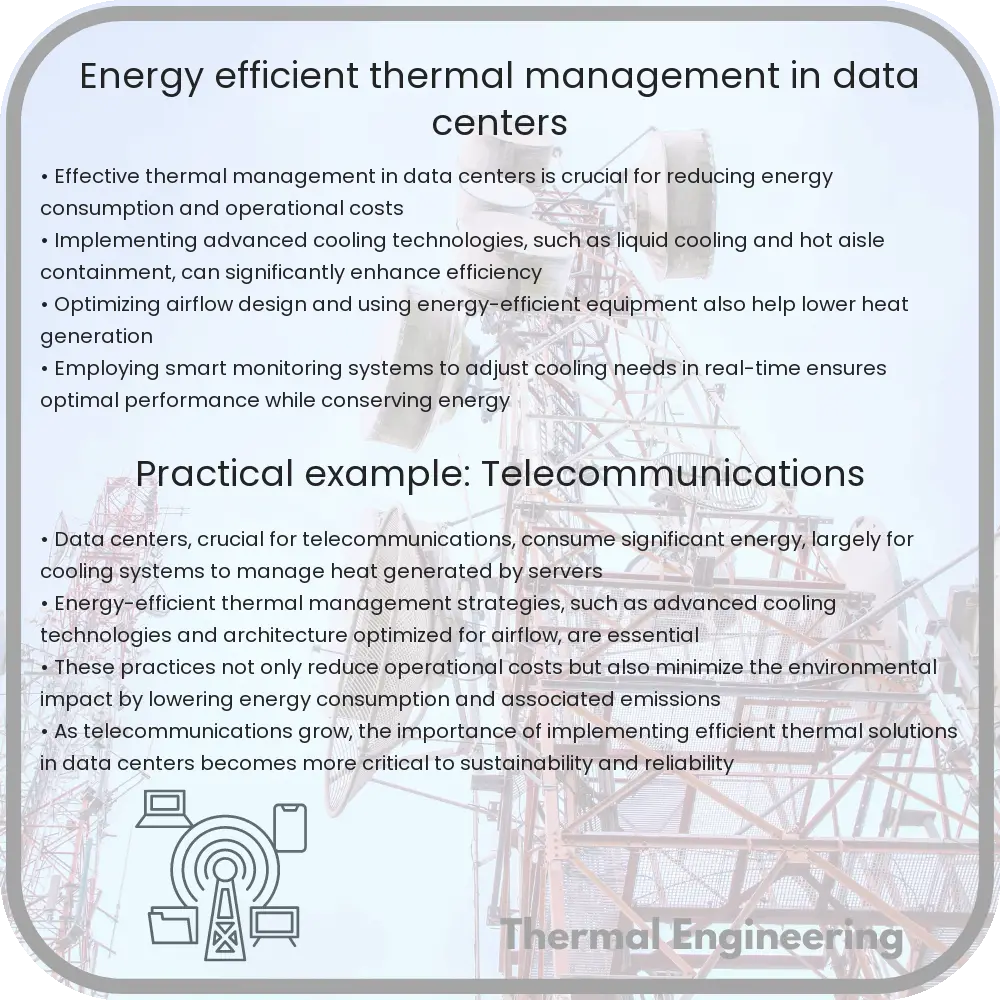
Understanding Energy-Efficient Thermal Management in Data Centers
Data centers are critical infrastructures that store, process, and distribute large amounts of digital information. As the demand for data processing grows, so does the heat generated by the countless servers housed within these facilities. Managing this heat in an energy-efficient manner not only prolongs the lifespan of the hardware but also significantly reduces energy consumption and operational costs. This article explores the strategies and technologies that are used to achieve effective thermal management in data centers.
Why is Efficient Thermal Management Important?
Within a data center, servers and other computing hardware generate heat as a byproduct of their operation. Excessive heat can lead to hardware malfunction, reduced efficiency, and even failure, resulting in downtime and costly repairs or replacements. Efficient thermal management helps maintain an optimal operating temperature, thus ensuring hardware reliability and longevity.
Key Strategies for Effective Thermal Management
- Airflow Management: Effective airflow management ensures that cool air is delivered to the required components effectively. This involves organizing IT equipment in such a way that separates hot and cold air streams. Techniques such as hot/cold aisle containment can prevent the mixing of hot and cold air, making cooling efforts more effective and efficient.
- Temperature and Humidity Controls: Maintaining the right temperature and humidity level is crucial for operational efficiency. ASHRAE recommends temperatures of 18–27°C and humidity levels of 20–80% RH for data center environments depending on the class of the data center.
- Energy-Efficient Cooling Systems: Traditional CRAC (Computer Room Air Conditioning) units are being replaced or supplemented with more energy-efficient systems like free cooling, which utilises the outside air as a cooling method during cooler times, significantly reducing energy consumption.
Advanced Cooling Technologies
As data centers evolve, so do the cooling technologies aimed at improving energy efficiency. Some of the emerging and highly effective cooling technologies include:
- Liquid Cooling: Instead of air, liquid cooling uses a coolant to absorb heat from server components. The heated liquid is then cooled through external radiators and recirculated. This method is especially effective for high-density setups where air cooling might not suffice.
- Chilled Beam Systems: These systems use convection and radiation to cool spaces. Water circulates through coils in a beam (a radiant cooling system), absorbing heat within the data center. Because they do not rely heavily on air movement, these systems can be more energy-efficient and less disruptive than traditional forced-air systems.
- Phase Change Materials (PCMs): PCMs absorb and store excessive heat as they melt, transitioning from solid to liquid. Once the ambient temperature decreases, the PCM solidifies, releasing the stored heat. Integrating PCMs can stabilize temperature fluctuations within data centers efficiently.
Conclusion
Energy-efficient thermal management in data centers is crucial to minimize environmental impact, reduce operational costs, and maintain system reliability and performance. By applying strategic airflow designs, controlling environmental parameters, and utilizing advanced cooling technologies, data centers can achieve substantial energy efficiency improvements. As technology evolves, continual adaptation and integration of innovative cooling methods will play a significant role in the sustainable growth of data centers globally.