Learn about power production using gas turbines, including simple cycle, combined cycle, and cogeneration configurations.
Understanding Gas Turbines for Power Production
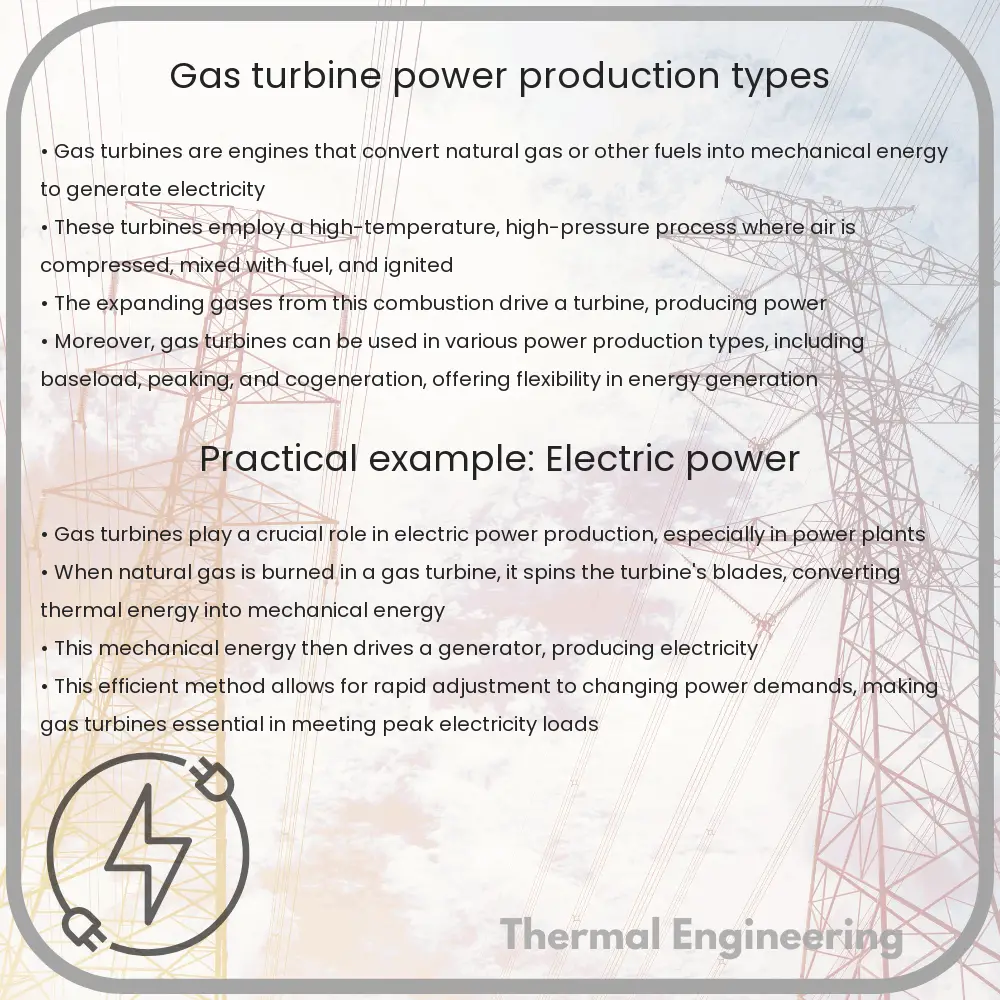
Gas turbines are a crucial component in the energy sector, used extensively for power production. These machines convert natural gas or other fuels into mechanical energy and then into electrical energy. The process involves several core operations including compression, combustion, and expansion. This article explores the different types of power production using gas turbines and their operational principles.
Types of Power Production with Gas Turbines
Gas turbines are versatile and are used in various arrangements for power production, primarily:
- Simple Cycle Gas Turbines
- Combined Cycle Gas Turbines
- Cogeneration (or Combined Heat and Power, CHP)
Simple Cycle Gas Turbines
In a simple cycle, the gas turbine operates with only the basic engine components: an air compressor, a turbine, and a combustion chamber. Air is compressed in the compressor; fuel is injected into the combustion chamber where it ignites and expands rapidly. This high-pressure gas then drives the turbine, which in turn powers a generator for electricity production.
Simple cycle gas turbines are known for their quick start-up capabilities and ability to deliver large amounts of power on demand. However, they are less efficient compared to other setups, with typical energy efficiencies around 35-40%.
Combined Cycle Gas Turbines
Combined cycle systems enhance efficiency by utilizing the waste heat from the gas turbine to generate additional power. After powering the gas turbine, the exhaust heat passes through a heat recovery steam generator (HRSG). This system generates steam, which then drives a steam turbine, producing additional electricity.
This configuration significantly improves the efficiency of the system, with values potentially reaching up to 60% or more. Combined cycle plants are particularly effective for sustained, high-capacity power generation, making them a favorite in static installations like power stations.
Cogeneration (Combined Heat and Power, CHP)
Cogeneration is an efficient way to use a gas turbine to produce not only electricity but also useful heat. The heat generated from the turbine, which would otherwise be wasted, is used for residential or industrial heating purposes such as water heating, space heating, or even cooling through absorption chillers.
CHP systems can achieve total efficiency levels (electrical and thermal) of up to 80-90%, depending on the setup and the utility requirements. This high efficiency makes cogeneration a popular choice for applications such as hospitals, universities, and industrial complexes where both electricity and heat are consistently in demand.
Conclusion
Gas turbines are a dynamic and vital technology in modern power production. Whether through simple cycle, combined cycle, or cogeneration deployments, gas turbines offer flexibility to meet varying demands of energy production, efficiency, and environmental sustainability. As advancements in turbine technology continue, their role in global energy solutions is set to become even more prominent.
Understanding the basic configurations and principles of gas turbines aids in appreciating the complexity and the ingenious engineering behind modern power systems, opening up new perspectives on how our energy needs are met efficiently and reliably.