Learn about hand pumps, essential for manual water access in rural areas, including their types, operation, and role in development.
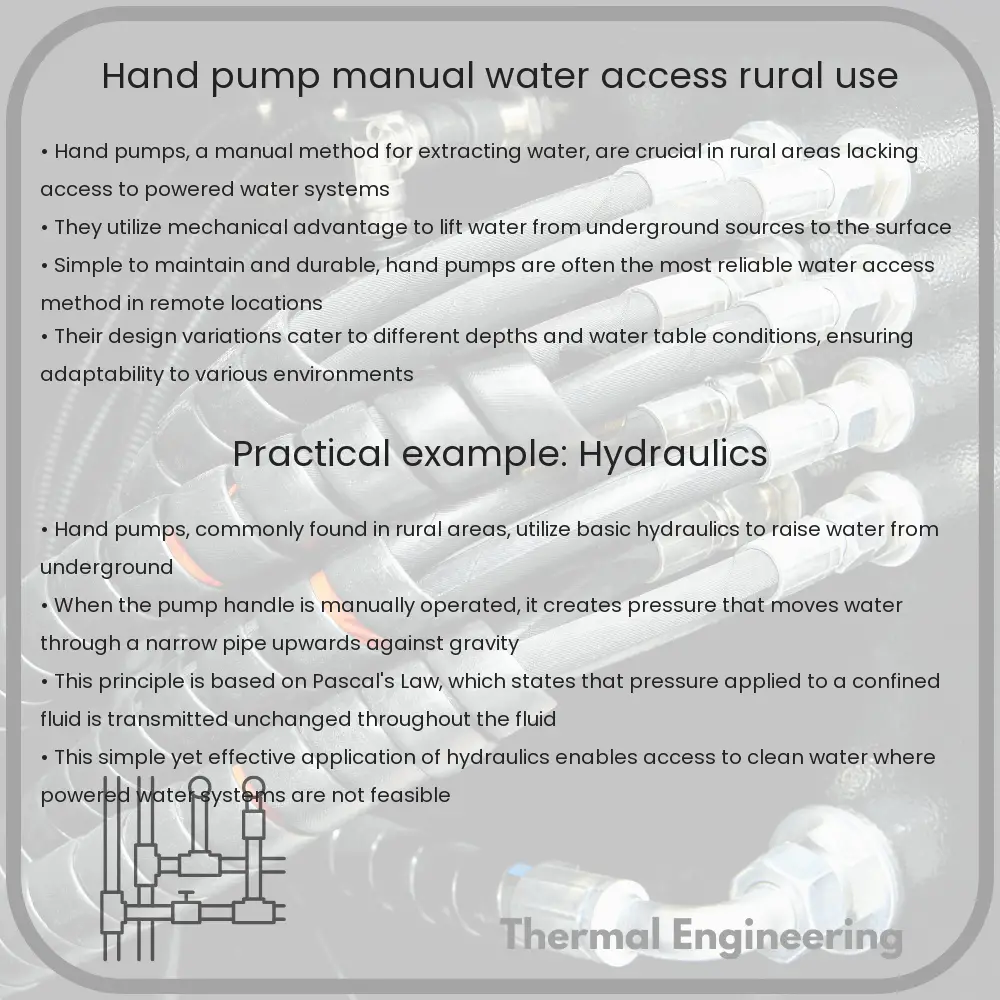
Understanding Hand Pumps: An Essential Tool for Manual Water Access in Rural Areas
Hand pumps are mechanical devices used to manually lift water from underground sources, commonly found in rural and remote areas where access to centralized water systems is limited. These devices play a pivotal role in ensuring the availability of potable water for millions of people, significantly impacting their health and livelihood.
Types of Hand Pumps
There are several types of hand pumps, each suited for different depths and water yield requirements. The most common types include:
- Lever Action Hand Pump: Often used for shallow wells, these pumps are simple to operate, with a handle that is moved up and down to draw water.
- Rotary Hand Pump: Equipped with a rotating handle, this type of pump is effective for slightly deeper sources. The rotary action creates a steady flow of water.
- Deep Well Hand Pump: Capable of drawing water from significantly deeper sources, sometimes up to several hundred feet. These pumps typically require more effort and are equipped with a cylinder placed below ground level.
How Hand Pumps Work
Hand pumps operate based on the principles of mechanical advantage and hydraulic pressure. The basic components of a hand pump include:
- Handle: Used to manually drive the pump’s mechanism.
- Cylinder: Houses a piston that moves up and down as the handle is operated.
- Piston or Plunger: Seals against the cylinder walls and helps in drawing and pushing water up.
- Check Valves: Located at the base of the pump, these allow water to enter the cylinder on the upstroke and prevent it from flowing back into the well on the downstroke.
When the handle of a hand pump is moved, it causes the piston inside the cylinder to move. On the upstroke, a vacuum is created within the cylinder, opening the inlet valve and allowing water to flow in. On the downstroke, the inlet valve closes, the outlet valve opens, and the water above the piston is pushed upwards and out of the pump spout.
Importance in Rural Development
Hand pumps are crucial in rural settings for several reasons:
- Water Accessibility: Provide a reliable source of water in areas lacking infrastructure for water delivery.
- Cost-Effective: Relatively inexpensive to install and maintain, making them economically viable for many communities.
- Sustainability: Operate without electricity, using human power to draw up water, thus promoting sustainability and resilience in off-grid areas.
Maintenance and Sustainability
To ensure the longevity and proper functioning of hand pumps, regular maintenance is essential. This includes checking for leaks, ensuring the cleanliness of water sources, and lubricating moving parts. Training local communities in pump maintenance is also a key aspect of sustainable rural water supply programs.
Furthermore, selecting appropriate pumps based on the community’s needs, the local water table, and soil conditions is vital to prevent over-extraction and ensure the sustainable management of groundwater resources.
Conclusion
Hand pumps are indispensable tools that enhance water security in rural areas. By providing an accessible, reliable, and sustainable means of accessing clean water, hand pumps contribute significantly to improving the quality of life for many isolated populations. The simplicity and effectiveness of these devices have made them a cornerstone of rural development in many parts of the world.