Explore the essentials of heat dissipation in high-power LEDs, focusing on its impact on performance, efficiency, and lifespan.
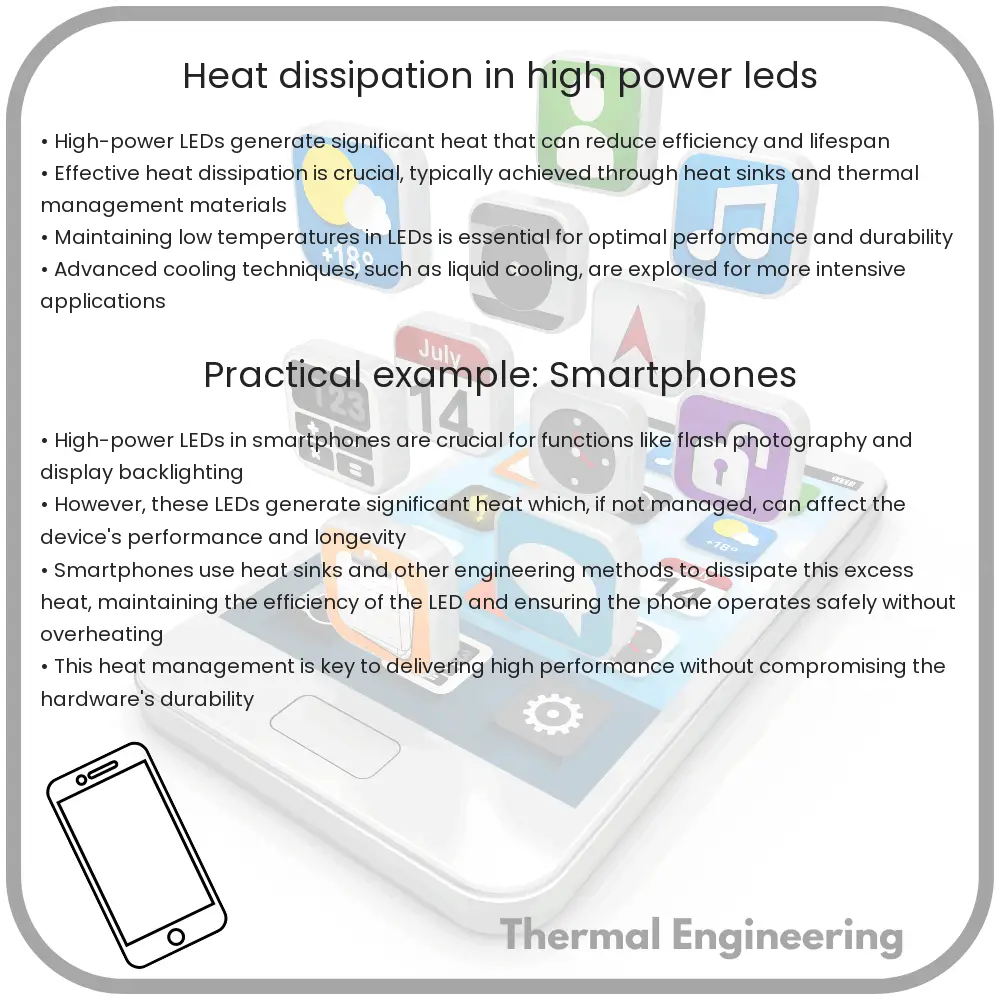
Understanding Heat Dissipation in High-Power LEDs
Light Emitting Diodes (LEDs) have revolutionized the lighting industry with their energy efficiency and longevity. However, as the power and brightness of these LEDs increase, managing the heat they produce becomes a crucial engineering challenge. This article will explore the fundamentals of heat dissipation in high-power LEDs and why it is essential for maintaining their performance and lifespan.
Why Heat Dissipation is Important for LEDs
LEDs convert electrical energy into light efficiently; however, not all of the electrical energy is converted into light. A significant portion is converted into heat. In high-power LEDs, the amount of heat generated is considerable and can adversely affect the LED’s performance by:
- Reducing the light output (luminous efficacy)
- Altering the color quality
- Shortening the operational lifespan
Effective heat management is therefore vital to prevent these adverse effects and ensure the LED functions within its intended specifications.
How Heat is Generated in LEDs
Heat generation in LEDs occurs primarily at the junction where the electrical energy is converted into light. This region, known as the p-n junction, operates efficiently only within a specific temperature range. Exceeding this range can cause permanent damage or failure of the LED. The heat must be removed from the junction and dissipated properly to maintain optimal operating conditions.
Methods of Heat Dissipation in LEDs
To manage the heat effectively, several engineering solutions are employed:
- Heat Sinks: The most common method of heat dissipation. Heat sinks are usually made of aluminum and have a large surface area to maximize heat transfer to the surrounding environment.
- Thermal Pads: These help enhance the thermal connectivity between the LED and the heat sink.
- Thermal Grease: Often used alongside heat sinks to improve the interface by filling air gaps, thus enhancing heat conduction.
- Active Cooling Systems: In very high-power applications, fans or cooling systems might be necessary to aid in heat dissipation.
Thermal Management Design
When designing a thermal management system for LEDs, engineers must consider several factors:
- Material selection for heat sinks and interfaces depending on thermal conductivity and environmental durability.
- Size and shape of the heat sink, which depend on the amount of heat to be dissipated and the physical space available.
- The ambient temperature where the LED will be operated. Higher ambient temperatures require more efficient heat dissipation mechanisms.
Advanced computational methods such as Computational Fluid Dynamics (CFD) and Finite Element Analysis (FEA) are often used to simulate and optimize the heat dissipation performance before physical prototypes are created.
Impact of Enhanced Heat Dissipation
Improving heat dissipation in high-power LEDs can have profound impacts:
- Increased Efficiency: Efficient thermal management can increase the overall efficiency of LEDs as less energy is wasted as heat.
- Enhanced Performance: Better heat dissipation maintains the LED’s color stability and brightness over time.
- Extended Lifespan: Heat management directly correlates with the operational life of the LED. Effective heat dissipation systems extend the lifespan significantly.
In summary, effective heat dissipation is critical for maximizing the performance and durability of high-power LEDs. Through the use of various thermal management techniques and careful design considerations, engineers can greatly improve the functionality and longevity of LED technologies, ensuring they meet the demanding requirements of modern lighting applications.