Exploring the selection and impact of fluids in heat pipes for effective electronic cooling and thermal management.
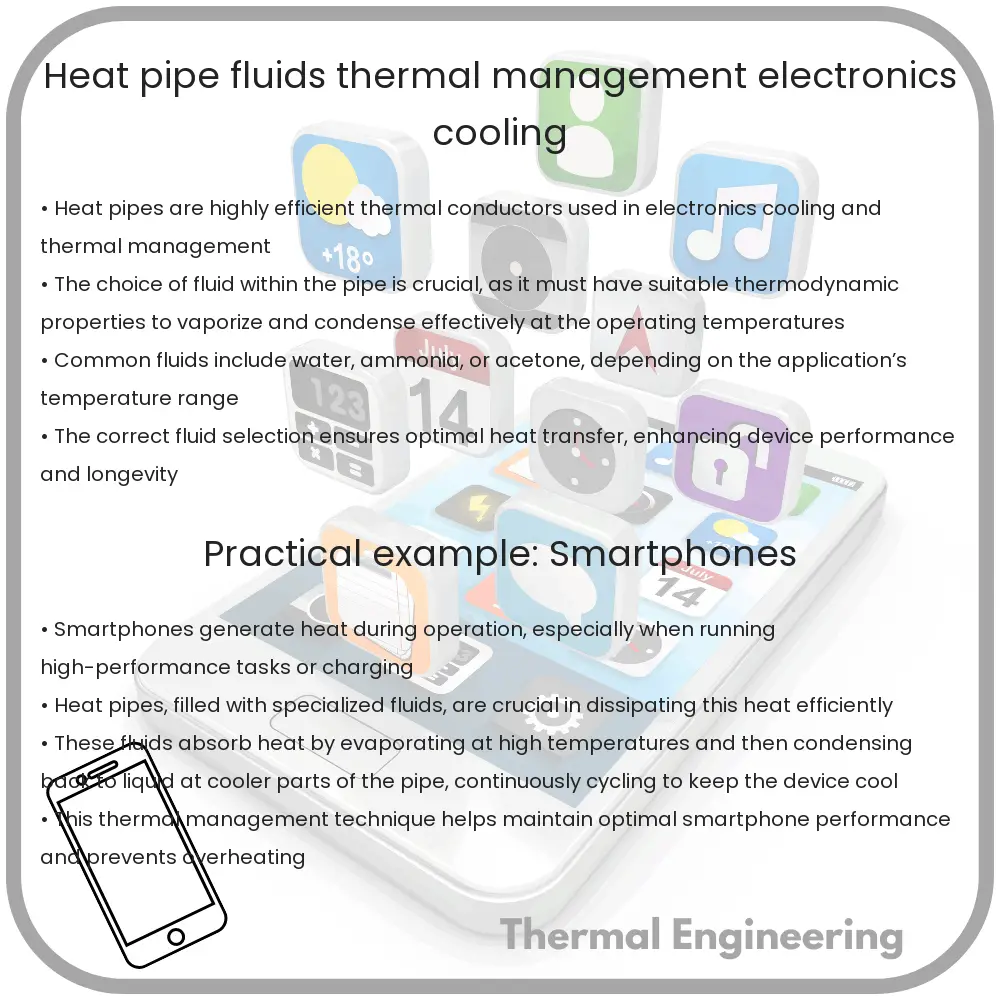
Understanding Heat Pipe Fluids for Efficient Thermal Management in Electronics Cooling
Heat pipes are a critical component in the field of thermal management engineering. They are widely used for the cooling of electronic devices due to their high effective thermal conductivity. The performance of a heat pipe, however, heavily depends on the choice of fluid used within it. In this article, we delve into the world of heat pipe fluids, explaining their role, how they are chosen, and their impact on the efficiency of heat pipes.
Role of Fluids in Heat Pipes
At the core of heat pipe technology is the concept of phase transfer heat transfer. This system utilizes a fluid that undergoes phase changes (from liquid to vapor and back to liquid) within the pipe. This fluid absorbs heat from a heat source (such as an overheating electronic component), vaporizes, and travels to a cooler region of the heat pipe where it condenses, releasing the absorbed heat. The cycle repeats, effectively transferring heat from hot areas to cooler ones.
Criteria for Fluid Selection
Choosing the right fluid is crucial for optimizing a heat pipe’s performance for specific applications, particularly in electronics cooling. The selection depends on several factors:
- Boiling Point: The fluid’s boiling point must be suitable for the operating temperature range of the application. It should be low enough to vaporize at the heat source’s temperature and high enough to condense back at the cooler end.
- Thermal Conductivity: Higher thermal conductivity aids in the efficient transfer of heat.
- Viscosity: Lower viscosity facilitates the easier flow of fluid, ensuring more efficient vapor and liquid movement inside the pipe.
- Compatibility: The fluid must be chemically inert with the materials of the heat pipe and other components in the environment to avoid any chemical reactions that could degrade the performance.
- Wetting Characteristics: Good wetting characteristics are essential for efficient heat transfer and effective return of the condensed fluid via capillary action in the wick structure.
- Safety and Stability: Fluids should be safe to handle and stable under operational temperatures and pressures.
Commonly Used Fluids in Heat Pipes
Different fluids are used based on the operating temperatures they need to handle:
- Water: The most commonly used fluid due to its excellent thermal properties and performance in the temperature range of 20°C to 200°C. Because of its chemical properties, water is particularly effective for cooling electronics.
- Methanol: Used for applications where lower temperature operation is needed, as it has a boiling point of -64.7°C.
- Ammonia: Suitable for applications requiring operation at temperatures between -60°C and 120°C. Ammonia’s high latent heat of vaporization makes it effective for transferring heat over larger distances.
- Acetone: Known for its use in applications requiring rapid heat transfer at temperatures ranging from -95°C to 56°C.
For applications beyond the scope of these common fluids, synthetic oils or even more specialized magnetic fluids might be used depending on specific requirements such as higher non-reactivity or operation under magnetic influence.
Enhancing Heat Pipe Efficiency
Optimizing the heat pipe’s design such as the shape and size, the wick structure, and the material of the casing can further enhance efficiency. However, the choice of fluid remains a fundamental element in achieving the desired thermal management performance. By carefully selecting the appropriate fluid, engineers can greatly improve the rate of heat transfer, thermal capacity, and overall reliability of heat pipe cooling systems in electronic applications.
In summary, the efficacy of heat pipes in electronic cooling significantly depends on the fluid used. The characteristics and compatibility of the fluid with the operating environment determine the overall performance, making the process of fluid selection integral to advanced thermal management solutions in engineering.