Understanding the mechanisms and management of heat transfer in aerospace materials, which impacts spacecraft design and safety.
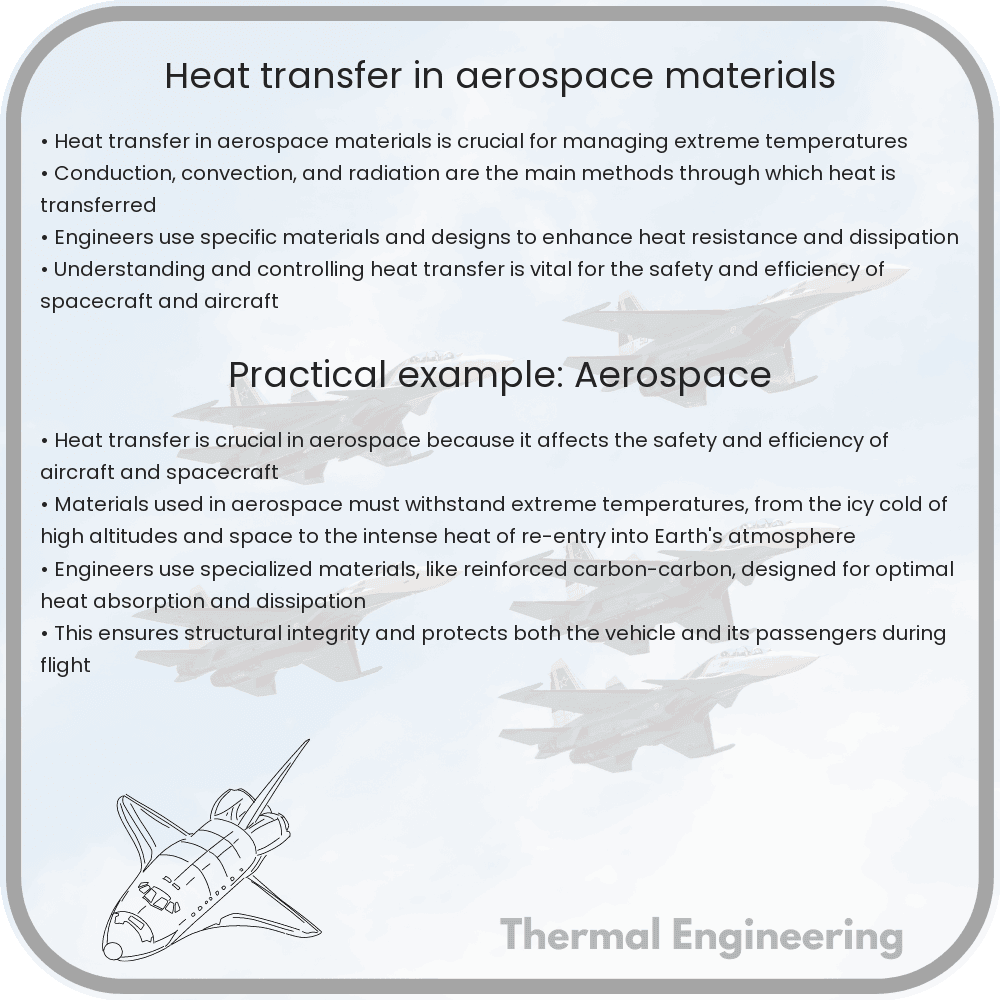
Understanding Heat Transfer in Aerospace Materials
Heat transfer is a fundamental aspect of aerospace engineering, affecting everything from the design of spacecraft to their operational efficiency and safety. Aerospace materials are specifically developed or chosen based on their ability to withstand extreme temperatures and heat transfer processes inherent in aerospace environments. This article explores the basic mechanisms of heat transfer in aerospace materials and their implications in aerospace technology.
Types of Heat Transfer
There are three primary modes of heat transfer: conduction, convection, and radiation. Each mode plays a critical role in aerospace engineering:
- Conduction occurs when heat is transferred through a material without the material itself moving. In aerospace, conduction is crucial in materials that form the structural components of spacecraft and jets, as these materials must efficiently conduct heat away from critical areas to prevent damage.
- Convection involves the transfer of heat by the physical movement of a fluid (which can be a liquid or gas). In aerospace, this is particularly relevant for cooling systems that utilize airflow over surfaces to remove heat from the aircraft or spacecraft structures.
- Radiation refers to the transfer of heat through electromagnetic waves. Spacecraft are exposed to intense radiation from the sun, and must have materials capable of reflecting this radiation or dissipating its energy effectively.
Thermal Properties of Aerospace Materials
Choosing the right materials for aerospace applications involves understanding their thermal properties. These include:
- Thermal Conductivity: This property measures how well a material can conduct heat. Materials with high thermal conductivity are essential for areas that require quick heat dissipation.
- Specific Heat Capacity: This refers to the amount of heat per unit mass required to raise the temperature of the material by one degree Celsius. High specific heat capacities are favorable in thermal protection systems to absorb and retain heat during high-temperature exposure.
- Thermal Expansion: Materials expand when heated and contract when cooled. Aerospace materials must be selected with compatible thermal expansion properties to avoid stress and structural damage under different temperatures.
Challenges in Heat Transfer Management
Aerospace engineers face various challenges in managing heat transfer:
- Extreme Temperature Variations: Aerospace vehicles undergo severe temperature fluctuations, from very cold conditions in upper atmosphere or space to extremely hot temperatures during re-entry or propulsion phases.
- Material Degradation: Over time, exposure to high temperatures and thermal cycles can degrade materials, affecting their strength and functionality.
- Efficiency: Efficient heat management systems are crucial for the operational effectiveness of spacecraft and aircraft, requiring advanced materials and design strategies to optimize performance while minimizing weight and energy consumption.
Examples of Aerospace Materials
Several materials are commonly used in aerospace for their excellent thermal properties:
- Aluminum Alloys: Lightweight and with reasonable thermal conductivity, used extensively in aircraft structures.
- Titanium Alloys: Known for their strength and resistance to high temperatures, ideal for critical high-heat zones.
- Ceramic Composites: Excellent for thermal insulation, used in space shuttles and re-entry vehicles to protect against extreme heat.
- Ablative Materials: These materials slowly erode at high temperatures, absorbing heat in the process, and are used in areas exposed to the highest temperatures during re-entry.
Conclusion
Heat transfer in aerospace materials is a complex but fascinating area of study that plays a vital role in the safety and functionality of aircraft and spacecraft. By understanding and leveraging the properties of different materials to manage heat effectively, aerospace engineers can achieve remarkable advancements in aerospace technology, pushing the boundaries of what is possible in air and space travel.