Learn how catalytic heaters provide efficient, flameless warmth using chemical reactions, ideal for safe heating in various applications.
Understanding Catalytic Heaters: A Primer on Generating Warmth without Flames
Catalytic heaters are a fascinating piece of technology widely used in various applications where safe, flameless warmth is required. From heating trucks and buses to industrial and outdoor use, the science behind these devices offers a straightforward yet intriguing example of applied chemistry and engineering. In this article, we explore how catalytic heaters work and their benefits.
The Basics of Catalytic Heating
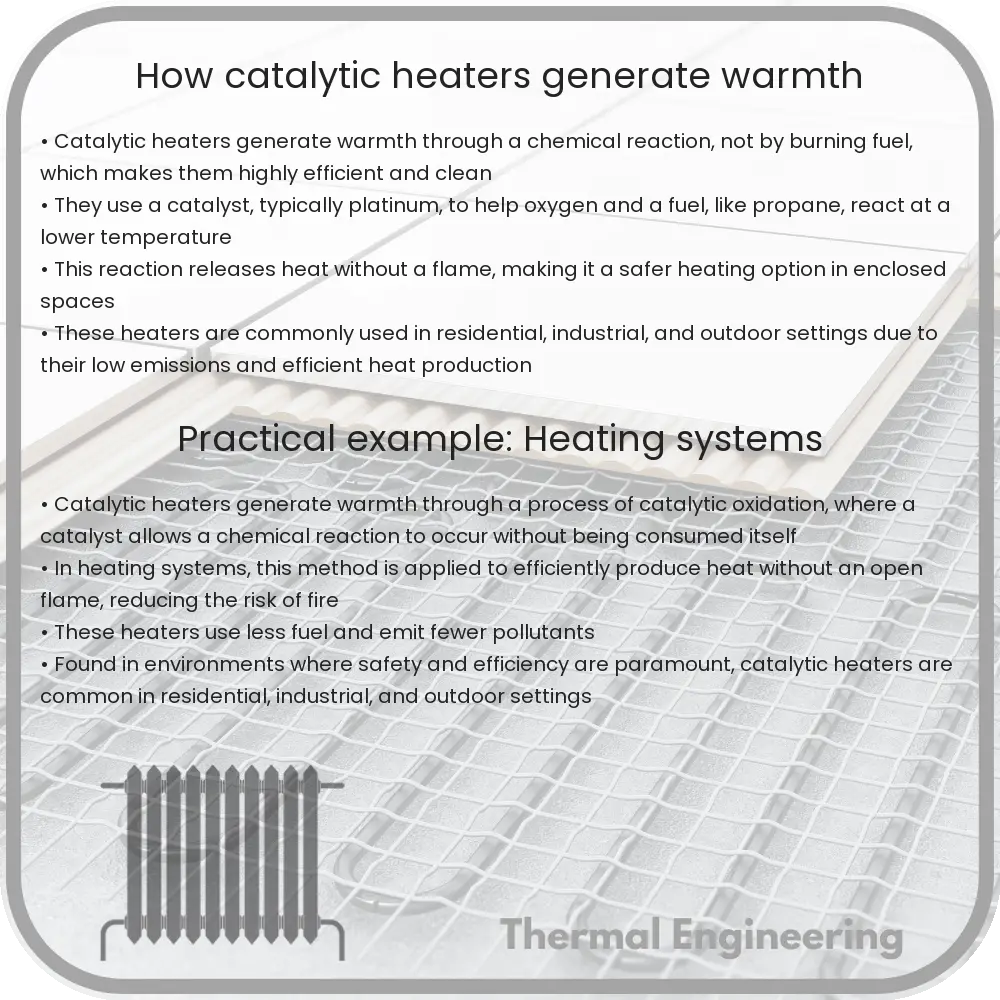
A catalytic heater generates heat through a chemical process known as catalysis, rather than by direct burning of fuel, which significantly reduces the risks of fire or explosion. This makes it particularly useful in environments where open flames can be hazardous.
Components of a Catalytic Heater
- Catalyst: Typically a metal such as platinum or palladium applied to a ceramic substrate. The catalyst is crucial as it allows the fuel oxidation process to occur at a lower temperature.
- Fuel Source: Commonly propane or natural gas, which are clean-burning and efficient fuels.
- Heating Panel: The surface across which heat is radiated, usually made from aluminum due to its excellent thermal conductivity.
The Chemical Reaction
The process at the heart of the operation of a catalytic heater is the oxidation of gas. In simpler terms, the fuel (like propane) reacts with oxygen in the air, facilitated by the catalyst, to produce heat, water vapor, and carbon dioxide. The reaction can be broadly represented by the chemical equation:
C3H8 (propane) + 5O2 → 3CO2 + 4H2O + Heat
Here, the catalyst lowers the activation energy needed for the combustion reaction but does so without flaming. This results in a clean burn that is efficient and less likely to produce harmful byproducts.
Heat Distribution
The heat generated by the reaction is absorbed by the heating panel and then radiated into the surrounding space. This method of heat transfer is largely radiant, which is effective for directly warming people and objects in close proximity to the heater. Because of the nature of radiant heating, catalytic heaters can make occupants feel warm even if the ambient air remains cooler.
Advantages of Catalytic Heaters
- Safety: Since there is no flame, the risk of ignition of flammable materials is greatly reduced.
- Efficiency: These heaters convert almost all the fuel to heat, making them very efficient.
- Portability: Without the need for electrical connections, many catalytic heaters are portable and convenient for various applications.
- Eco-Friendly: The byproducts of the chemical reaction are primarily water vapor and a small amount of carbon dioxide, resulting in cleaner emissions than traditional combustion heaters.
Applications of Catalytic Heaters
Catalytic heaters are used in a variety of settings that benefit from their unique properties. Some common applications include:
- Heating the cabins of vehicles in cold climates without idling the engine.
- Providing warmth in outdoor recreational activities such as camping.
- Heating industrial environments where safety regulations restrict open flames.
- Emergency heating during power outages or in areas without access to electricity.
In conclusion, catalytic heaters offer an efficient, safe, and environmentally friendly way of generating heat in various settings. Their operation, based on the principles of catalysis, showcases an intricate blend of chemistry and engineering aimed at delivering warmth where conventional methods might fall short.