Learn about the principles, types, and applications of fluid filtration used in diverse industries for purifying liquids and gases.
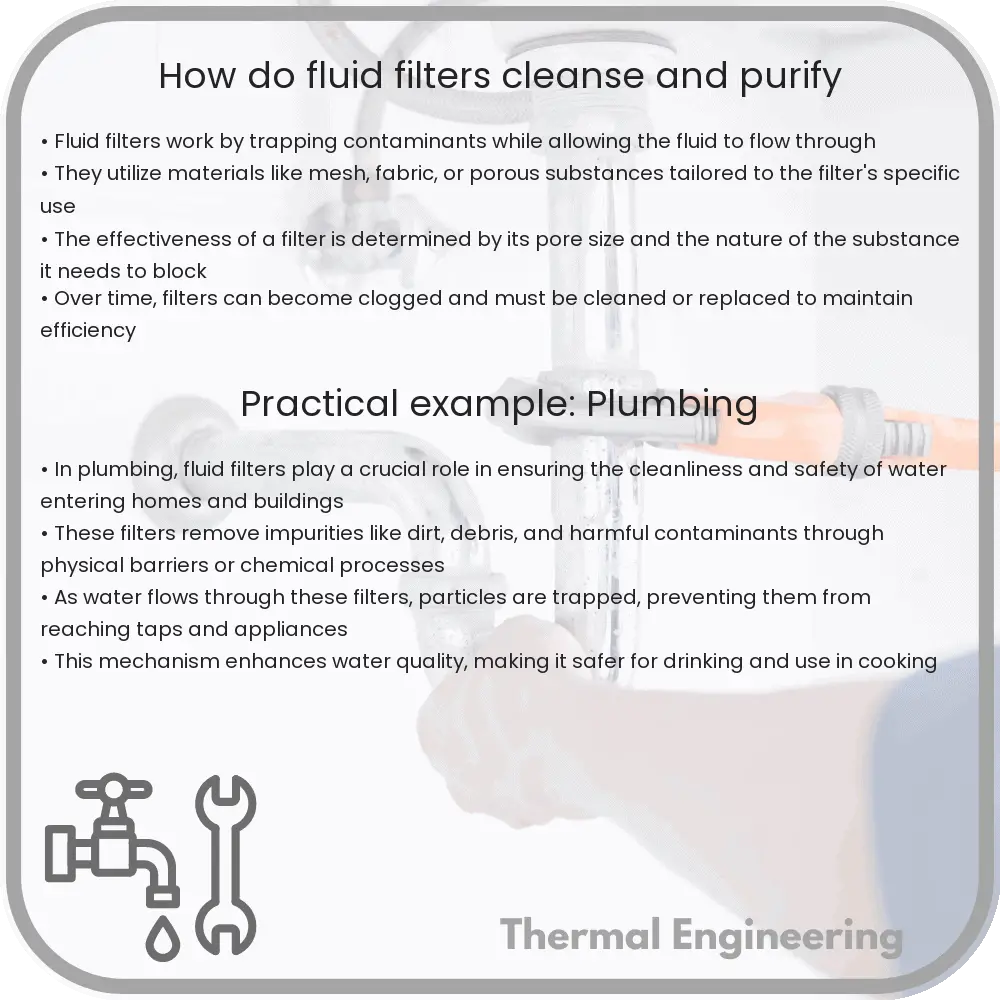
How Do Fluid Filters Cleanse and Purify?
Fluid filtration is a crucial process used in a variety of applications, from water purification systems to oil refineries, providing a reliable method for removing impurities and contaminants from liquids. This article explores the fundamental principles behind fluid filters, how they operate, and their importance in everyday and industrial contexts.
Basic Principles of Fluid Filtration
Filtration is the process of separating solids from liquids or gases by passing them through a medium that allows only certain components to pass through. The medium used for filtration is known as a filter, which can vary widely in material, pore size, and design, depending on the specific requirements of the application.
- Mechanical Filtration: This involves physically trapping solids or particulate matter. Filters used in mechanical filtration typically include materials like polypropylene, nylon, or metal meshes with defined pore sizes that prevent particles larger than the mesh size from passing through.
- Biological Filtration: Utilized primarily in water treatment, this method involves using natural processes where bacteria or other microorganisms break down organic impurities. The filter medium provides a surface for these organisms to grow and perform biological cleansing.
- Chemical Filtration: This process uses a medium that removes impurities through a chemical reaction, such as adsorption. Activated carbon is a common filter material that captures various chemicals and odors through its vast surface area.
Types of Fluid Filters
There are numerous types of filters, each designed to address specific kinds of impurities and fluid characteristics:
- Screen Filters: These are simple, effective solutions for removing large particles. They have screens with holes of a specific size, suited for applications where large particulate filtration is sufficient.
- Cartridge Filters: Used for finer filtration, cartridge filters can remove smaller particles. These are typically disposable and are used in residential water purifiers, HVAC systems, and more.
- Sand Filters: Commonly used in large-scale water treatment, such as swimming pools and municipal water systems. Water is passed through a bed of sand that traps particulate matter.
- HEPA Filters: High Efficiency Particulate Air (HEPA) filters can trap very fine particles effectively. These are extensively used in environments that require very clean air, such as hospitals and laboratories.
Applications of Fluid Filtration
Filtration is employed in a wide array of applications across many industries:
- Drinking Water Purification: To ensure safety and quality, water is filtered to remove microorganisms and impurities that can pose health risks.
- Wastewater Treatment: Filtration processes are essential in treating industrial and municipal wastewater before it is discharged into natural bodies or reused.
- Pharmaceuticals: Stringent purity standards in this industry require advanced filtration methods to ensure that products are free from contaminants.
- Food and Beverage Industry: Filtration is used to clarify liquids and ensure that products meet regulatory and consumer standards for purity and taste.
Importance of Filtration
Filtration plays a vital role in protecting human health, preserving environmental quality, and ensuring the purity of products in industrial processes. By removing unwanted substances from fluids, filters contribute significantly to the safety, efficiency, and sustainability of many systems. As technology advances, the development of more efficient and selective filters continues to expand the possibilities and effectiveness of filtration across various fields.
Understanding the basics of fluid filtration not only highlights its importance but also its vast application in everyday life and in complex industrial processes. Whether it’s the water we drink or the air we breathe, filtration systems help maintain essential cleanliness and safety standards that enhance the quality of life and protect the environment.