Learn how fluid dynamics impacts aerodynamic shapes in vehicles and technology, enhancing efficiency and performance.
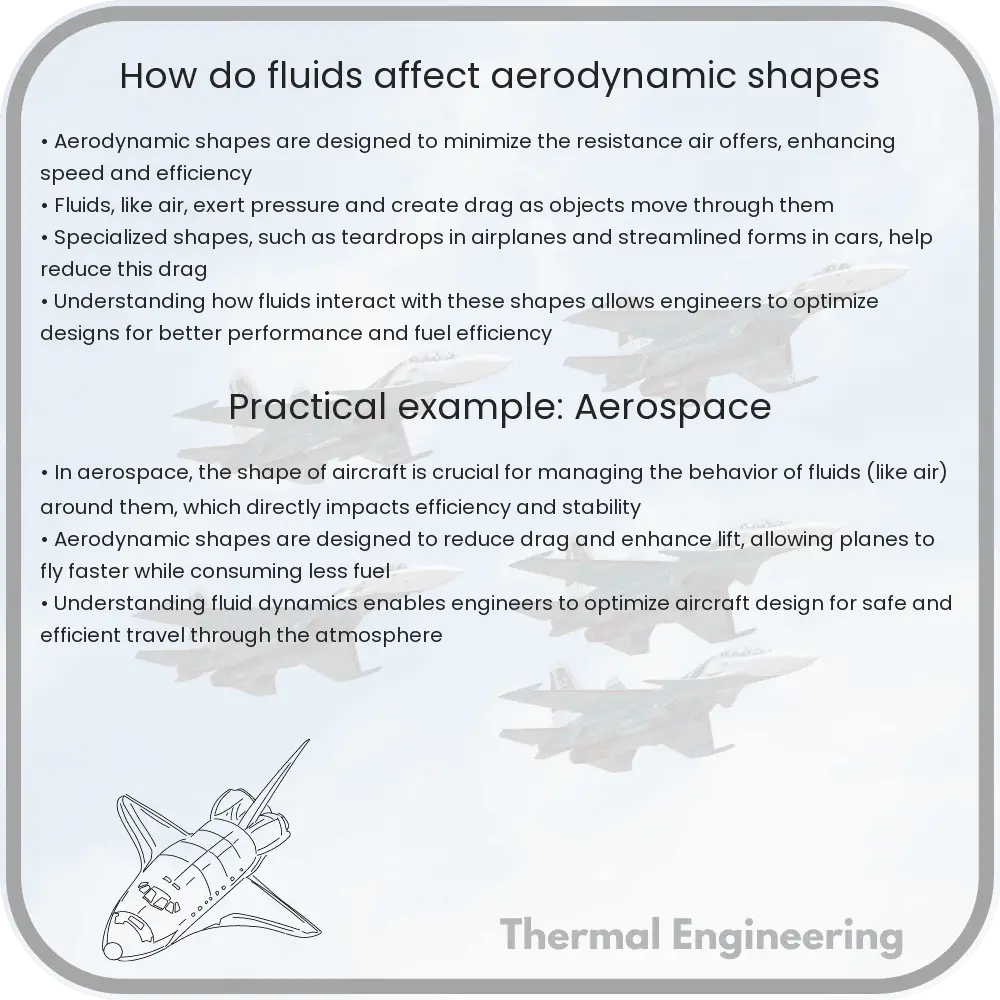
Understanding the Impact of Fluids on Aerodynamic Shapes
Aerodynamics is a fascinating branch of physics and engineering that explores how gases interact with moving objects. When it comes to understanding how fluids affect aerodynamic shapes, such as those of airplanes, cars, and trains, it’s essential to grasp some basic principles of fluid dynamics—the study of fluids (liquids and gases) in motion.
Basics of Fluid Dynamics
Fluid dynamics examines the behaviors of liquids and gases in motion. The fundamental equations governing these behaviors are the Navier-Stokes equations, which account for changes in velocity, pressure, temperature, and density of the fluid. These properties play a critical role in shaping the interactions between the fluid and objects of various shapes.
Pressure Differences and Boundary Layers
When a fluid such as air flows over the surface of an aerodynamic shape, it creates variations in pressure on the surface of the object. High-speed flows tend to lower pressure, while slower flows increase it. This variation in pressure around different parts of an object helps generate lift in aerodynamic shapes like airplane wings.
Accompanying the pressure changes, boundary layers form near the surface. These are thin layers of fluid where viscous forces are significant, affecting the overall aerodynamic performance. Engineers design surfaces to influence the behavior of these boundary layers to minimize drag (resistance offered by the air) and optimize lift.
Streamlining Aerodynamic Shapes
The design of aerodynamic shapes is often streamlined to reduce the drag. Streamlining shapes allow the fluid to flow smoothly over the object, diminishing the size and effects of wake—the region of recirculating flow immediately behind the moving object. Reduced wake leads to lower drag. Understanding the characteristics of fluid flow and the Reynolds number (a dimensionless quantity that helps predict flow patterns in different fluid flow situations) assists engineers in enhancing efficiencies for various transportation modes.
Effects of Turbulence
Turbulence refers to complex, irregular fluid movements that can dramatically influence the efficiency of aerodynamic shapes. It increases drag but can sometimes contribute to stabilizing the flow and increasing lift. Turbulent flow is characterized by chaotic changes in pressure and flow velocity. Engineers and scientists use various devices like spoilers on cars or vortex generators on airplane wings to manage and manipulate turbulence to achieve desired aerodynamic qualities.
Application in Design
Every aspect of an aerodynamic object’s design, from its overall shape to the texture of its surface, teems with considerations about how fluids interact with these features. Whether it’s the sleek design of a sports car or the wing configuration on an aircraft, fluid dynamics influence crucial design decisions. These decisions can affect speed, fuel efficiency, stability, and the ability to control the vehicle effectively in air or on the road.
Understanding how fluids interact with different shapes not only helps in designing efficient vehicles and other systems but also enhances our grasp of natural phenomena such as wind flow patterns and weather formations. This knowledge is invaluable in diverse fields from climatology to urban planning, showcasing the vast applicability of fluid dynamics in real-world situations.
In conclusion, the study of how fluids affect aerodynamic shapes is a cornerstone of aerodynamics and fluid dynamics and is essential for the advancement of technology in fields such as aviation, automotive industry, and even environmental science. By mastering the fundamentals of this interaction, engineers can continue to innovate and improve the performance and efficiency of various technologies in our everyday lives.