Unlock the potential of pyroelectric materials and their ability to generate voltage from temperature changes, crucial for infrared sensors and energy harvesting.
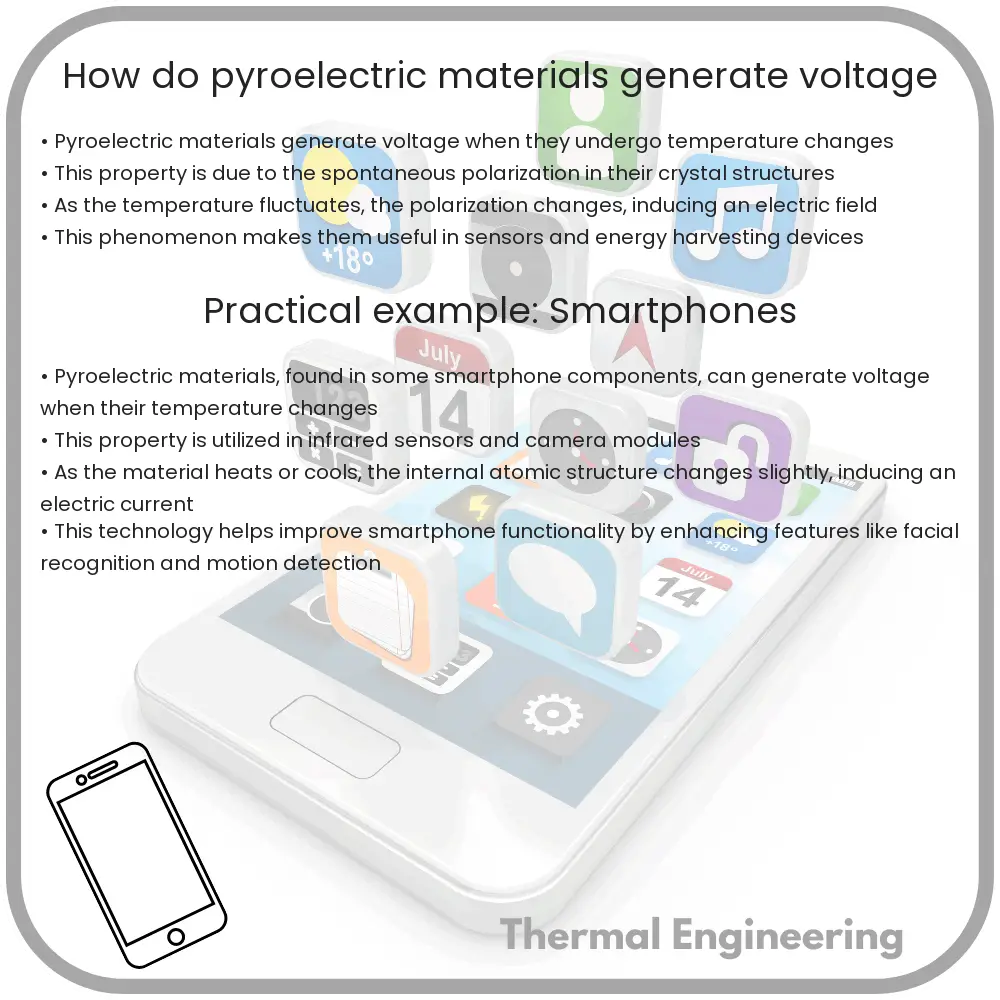
Understanding Pyroelectric Materials and Voltage Generation
Pyroelectric materials are a fascinating category of materials that have the ability to generate an electric voltage when they experience a temperature change. This unique property makes them applicable in various technological devices, including infrared sensors, energy harvesters, and novel electronic applications.
What are Pyroelectric Materials?
Pyroelectric materials are a type of dielectric material, typically crystalline, that exhibit the pyroelectric effect. The term “pyroelectric” stems from the Greek words ‘pyr’ (fire) and ‘electric,’ indicating the relationship between heat and electricity inherent to these materials.
The Pyroelectric Effect
The pyroelectric effect occurs when a material with a permanent electric polarization changes its temperature, leading to a change in polarization and the generation of a temporary voltage across the material. This effect is closely related to, but different from, the piezoelectric effect, where voltage is generated by mechanical stress rather than thermal changes.
Mechanism of Voltage Generation
The sequence of events for voltage generation in pyroelectric materials is as follows:
- Temperature Change: When the temperature of a pyroelectric material changes, the material’s crystal structure responds by altering its dimensions slightly because different parts of the crystal expand or contract at different rates.
- Change in Polarization: These dimensional changes lead to a shift in the distribution of positive and negative charges within the material, which alters the electric dipole moment. A change in dipole moment directly equates to a change in polarization.
- Electric Displacement: This change in polarization results in an electric field across the material, creating a displacement of charges that generates a voltage.
The circuit to which the pyroelectric material is connected can then capture this voltage for further use, whether for sensing, power generation, or other purposes.
Applications of Pyroelectric Materials
Due to their unique properties, pyroelectric materials are used in various applications:
- Infrared Sensors: The most common use of pyroelectric materials is in passive infrared sensors, where they detect changes in infrared radiation — effectively sensing heat emitted by objects.
- Energy Harvesting: These materials can also be used for thermal energy harvesting by capturing naturally occurring or waste heat changes and converting them into electrical energy.
- Environmental Monitoring: Pyroelectric sensors are useful in environmental monitoring equipment to detect temperature fluctuations in the environment.
Conclusion
Pyroelectric materials offer a unique approach for generating voltage from temperature changes. This property has practical implications in a variety of fields, especially in developing technologies that are geared towards sustainability and efficient energy use. The continued study and development of these materials promises to enhance their adaptability and efficiency in future applications.
For students, hobbyists, and professionals alike, understanding the fundamentals of pyroelectric materials and their behavior under varying temperatures can open doors to innovating new devices and improving existing technologies.