Learn how thermal barriers enhance racing car efficiency by managing engine heat, improving performance, and reducing fuel consumption.
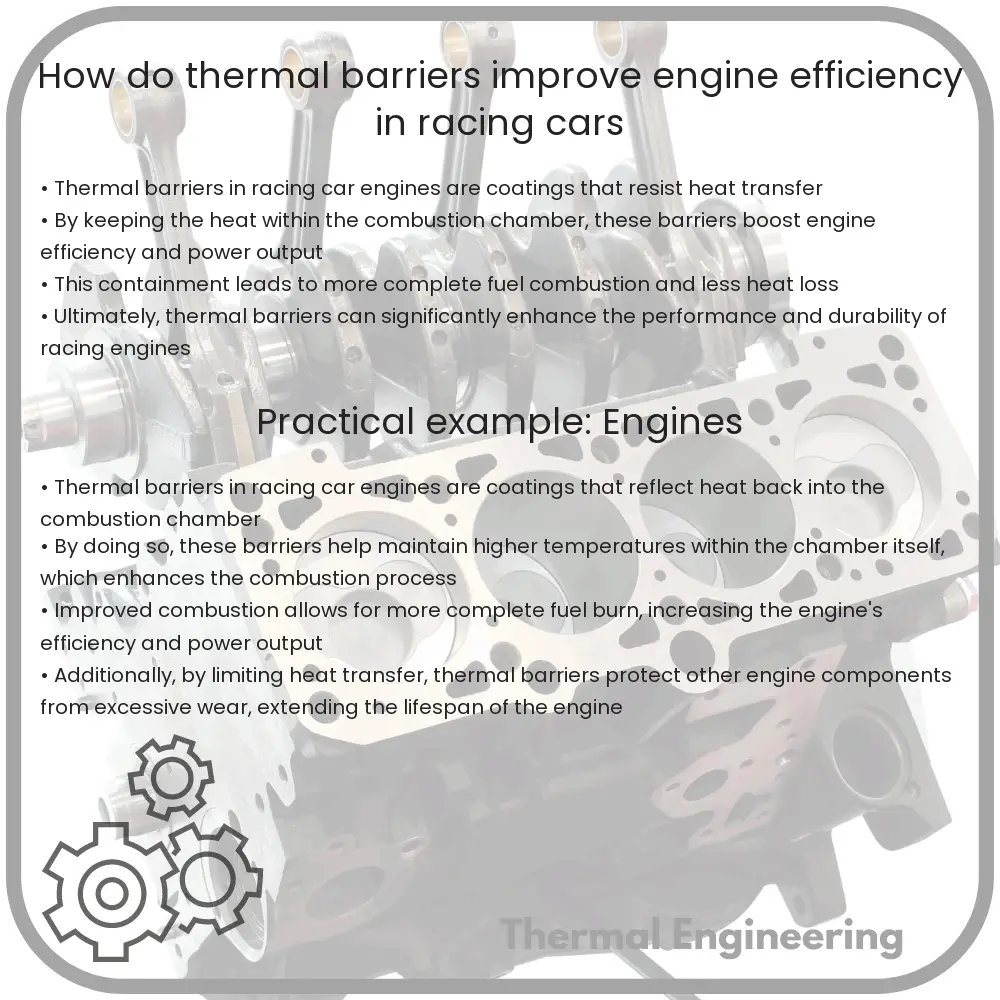
Understanding the Role of Thermal Barriers in Racing Car Efficiency
Racing cars are engineered to deliver maximum performance under extreme conditions. One key aspect of achieving high efficiency and performance is managing the intense heat generated by the engine. This is where thermal barriers come into play. In this article, we will explore how thermal barriers improve engine efficiency in racing cars.
What are Thermal Barriers?
Thermal barriers are materials or coatings applied to various parts of an engine and exhaust system to prevent heat loss and manage thermal energy more effectively. These barriers are designed to withstand high temperatures and provide insulation, keeping the heat within the components where it can do the most work.
Function and Benefits of Thermal Barriers
- Increased Thermal Efficiency: By maintaining higher temperatures within the combustion chamber, thermal barriers improve the thermodynamic efficiency of the engine. According to the ideal gas law (PV = nRT), higher temperatures can increase the pressure exerted by the gases on the pistons, thus enhancing the power output.
- Protection of Engine Components: Thermal barriers protect sensitive components from the detrimental effects of high temperatures, thereby extending the life of these parts and reducing maintenance costs.
- Reduced Heat Soak: These barriers limit the amount of heat transferred from the engine and exhaust system to other parts of the car, such as the oil and fuel systems, which can degrade in performance if overheated.
Types of Thermal Barrier Coatings (TBCs)
There are several types of thermal barrier coatings used in racing engines, each with unique properties and applications:
- Ceramic Coatings: Applied to combustion chambers, pistons, and valve faces, ceramic coatings are popular due to their ability to reflect heat back into the combustion process and reduce thermal gradients.
- Exhaust Coatings: Special coatings used on exhaust systems help in maintaining high temperatures within the exhaust gases. This is critical for the efficiency of turbocharged engines, where hotter exhaust gases can help drive the turbocharger more effectively.
Impact on Engine Performance
The incorporation of thermal barriers in racing engines can lead to several performance improvements:
- Increased Horsepower: Enhanced management of thermal energy helps in maintaining optimal combustion temperatures, leading to more complete burning of fuel and higher power output.
- Fuel Efficiency: With improved combustion efficiency, the engine can extract more energy from the same amount of fuel. This not only boosts performance but also reduces fuel consumption relative to the distance raced.
- Faster Engine Response: By reducing thermal mass (the ability of a material to absorb and retain heat), these coatings can allow engine components to heat up and cool down more quickly, improving engine responsiveness.
Conclusion
Thermal barriers play a crucial role in the performance and efficiency of racing cars. By effectively managing the extreme heat produced by racing engines, these barriers contribute significantly to enhanced engine performance, durability, and fuel efficiency. The science of thermodynamics and materials engineering behind thermal barriers is a prime example of how advanced engineering techniques are applied in high-performance sports to gain a competitive edge.
The continuous development and refinement of thermal barrier technologies will undoubtedly keep playing a key role in the evolution of racing car performance in the future.