Learn about thermal batteries in grid storage, their working mechanism, benefits, challenges, and real-world applications.
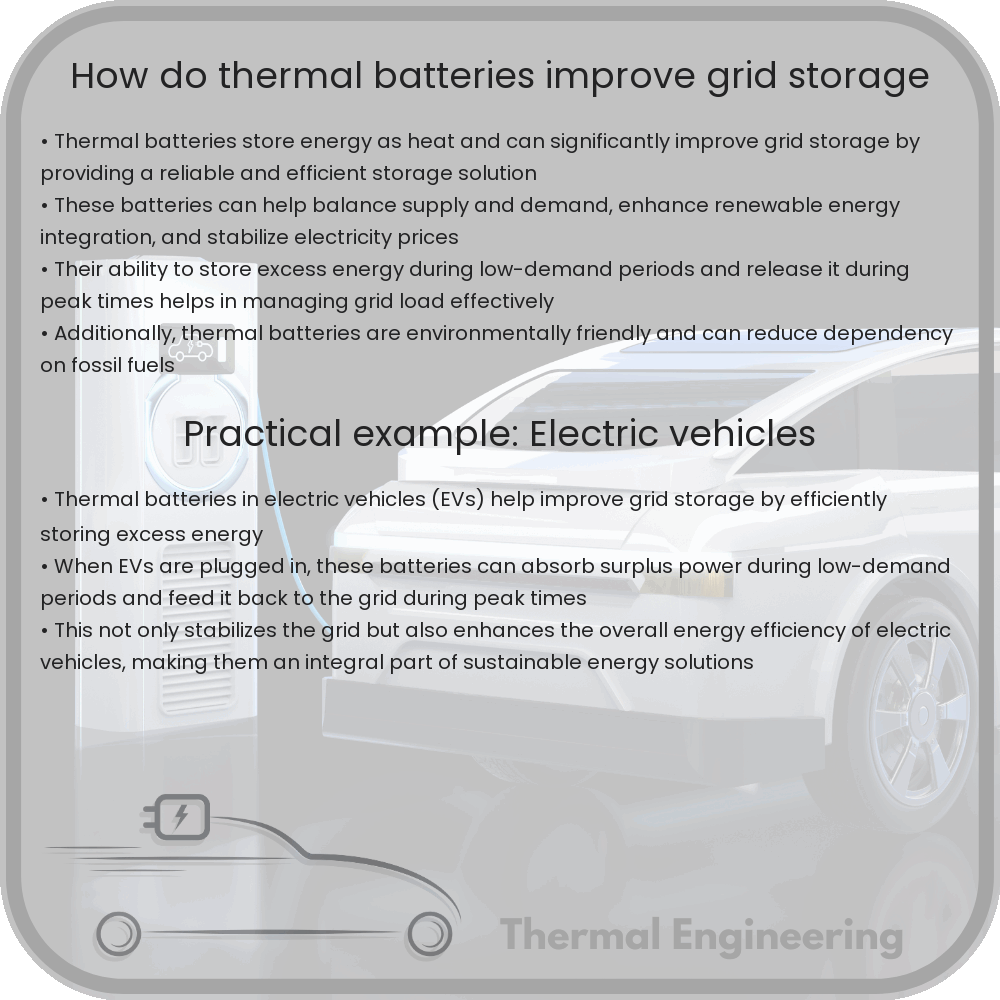
Understanding Thermal Batteries in Grid Storage
Thermal batteries, also known as heat or thermal energy storage systems, are emerging as a transformative solution for improving the efficiency and reliability of the electrical grid. They can store excess energy generated during low-demand periods and release it during peak times. This capability is particularly crucial as the grid becomes increasingly reliant on intermittent renewable energy sources like solar and wind power.
How Thermal Batteries Work
Thermal batteries store energy in the form of heat. The process begins by using excess electricity, often generated from renewable sources, to heat a storage medium, which could be molten salts, water, or other specialized materials. This heated material is stored in insulated tanks to retain the energy until it is needed. When the grid requires additional power, the stored heat is then converted back into electricity.
The conversion of stored thermal energy to electrical energy generally involves a heat engine. For example, steam turbines can be used to generate electricity from the high-temperature steam produced by heated molten salts. The fundamental principle is the same as a conventional power plant but drives the turbine using stored heat instead.
Benefits of Thermal Batteries for Grid Storage
- Enhanced Grid Stability: By providing a reliable store of energy that can be quickly dispatched during peak demand or when solar and wind sources are unavailable, thermal batteries help maintain a stable power supply and prevent blackouts.
- Improved Energy Efficiency: Storing surplus energy and using it during demand peaks minimizes energy wastage and improves the overall efficiency of the power grid.
- Cost-effectiveness: Thermal storage systems generally have lower capital costs compared to their electrochemical counterparts, such as lithium-ion batteries, particularly at larger scales.
- Longer Lifespan: Thermal batteries typically have longer lifespans than traditional batteries, as they are less prone to degradation from charging and discharging cycles.
- Flexibility: These systems can be integrated with existing infrastructure, like conventional power plants, enhancing their efficiency and prolonging their operational life.
Challenges and Considerations
Despite the numerous benefits, the implementation of thermal battery systems is not devoid of challenges:
- Size and Location Constraints: Thermal storage units, owing to their large size, require significant space, which may limit installation options, particularly in urban areas.
- Insulation Efficiency: Maintaining the efficiency of heat retention over time is essential. Loss of heat due to inadequate insulation can significantly reduce the system’s effectiveness.
- Material Selection: The choice of storage medium impacts both the efficiency and cost of the storage system. The ideal material should have a high specific heat capacity, high thermal conductivity, and be cost-effective.
- Integration Complexity: Integrating thermal batteries into existing grid infrastructures requires sophisticated control systems to ensure energy is stored and released optimally.
Case Studies and Real-World Applications
Several countries are actively exploring thermal battery technology. For instance, CSP (Concentrated Solar Power) plants in Spain and the United States often use molten salt thermal storage to allow for electricity production several hours after sunset. Additionally, innovative residential solutions such as solar water heaters incorporate thermal batteries to enhance efficiency and reduce dependency on external power sources.
In conclusion, as the world moves towards more sustainable energy solutions, thermal batteries present an effective and efficient method of enhancing grid stability and maximizing the use of renewable resources. While challenges remain in their broader adoption, advancements in materials science and engineering are likely to overcome these hurdles, paving the way for wider implementation.