Learn about thermal desorption tubes, crucial for analyzing air quality and detecting volatile organic compounds (VOCs) through efficient air sampling methods.
Understanding Thermal Desorption Tubes and Air Sampling
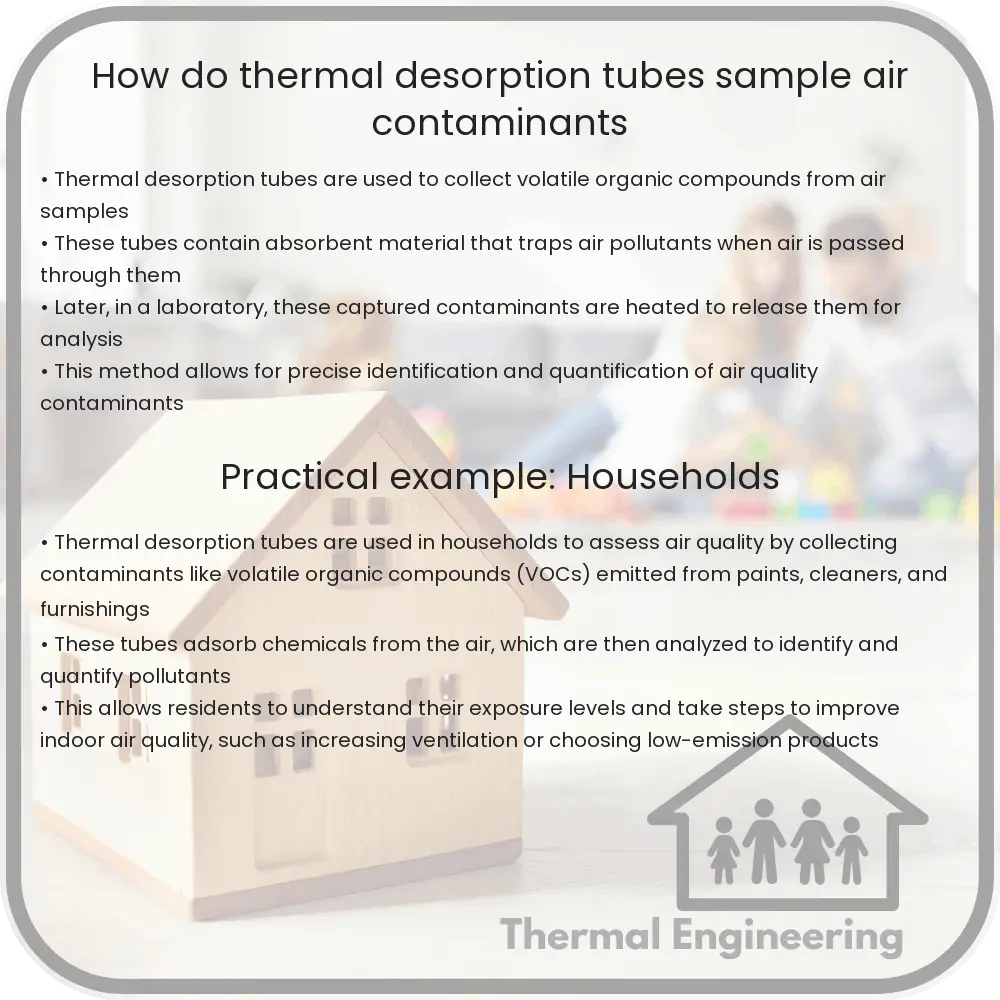
Thermal desorption tubes are an essential tool used in the study and measurement of volatile organic compounds (VOCs) in the air. These tubes provide a reliable method for sampling air contaminants, which is crucial for environmental monitoring, occupational health studies, and various forms of air quality research.
What are Thermal Desorption Tubes?
Thermal desorption tubes are small, cylindrical devices filled with an adsorbent material such as Tenax, silica gel, or activated carbon. These materials are selected for their ability to trap airborne chemical molecules at ambient temperatures efficiently.
How Do Thermal Desorption Tubes Work?
The principle behind thermal desorption tubes involves two main steps: adsorption and desorption.
- Adsorption: During this phase, air is pulled through the tube by a sampling pump, and contaminants in the air are captured and concentrated by the adsorbent material. The ability to trap different chemicals depends on the nature of the adsorbent and the compounds’ physical and chemical properties.
- Desorption: Once sampling is complete, the tubes are heated in a controlled environment, typically in a laboratory using a thermal desorption unit. The increase in temperature causes the trapped compounds to vaporize. This process reverses the adsorption effect, releasing the compounds into a gas phase.
Following desorption, the vaporized compounds are usually funneled into a gas chromatograph for analysis. This technique allows researchers to identify and quantify the types of contaminants present in the air sample initially collected.
Advantages of Using Thermal Desorption Tubes
Thermal desorption tubes offer several advantages that make them a preferred choice for air sampling in various fields:
- Sensitivity: These tubes can detect very low levels of VOCs, making them ideal for environments where pollutant levels are not visually apparent.
- Versatility: They can be used to sample a wide range of organic compounds, providing flexibility in the types of environments and situations they can be applied.
- Practicality: The tubes are portable, easy to use, and require minimal setup, which is beneficial for field studies and rapid assessments.
- Quantitative Analysis: When coupled with analytical techniques like gas chromatography, thermal desorption tubes provide quantitative data that is critical for regulatory compliance and health safety evaluations.
Applications of Thermal Desorption Tubes
Thermal desorption tubes are widely used across many sectors, including:
- Environmental Monitoring: Assessing outdoor air quality and the impact of pollutants emitted by industrial activities.
- Occupational Health: Monitoring workplace air to ensure safety standards are met and to protect workers from potential health hazards due to airborne chemicals.
- Indoor Air Quality: Measuring levels of VOCs inside buildings and homes to evaluate the impact of indoor air on human health.
In conclusion, thermal desorption tubes are a powerful tool in the arsenal of environmental engineers and researchers. They not only help in mapping air contaminant levels but also play a critical role in designing interventions for pollution control and public health protection.