Learn how thermal mass floors enhance energy efficiency by storing and releasing heat, stabilizing indoor temperatures, and reducing energy costs.
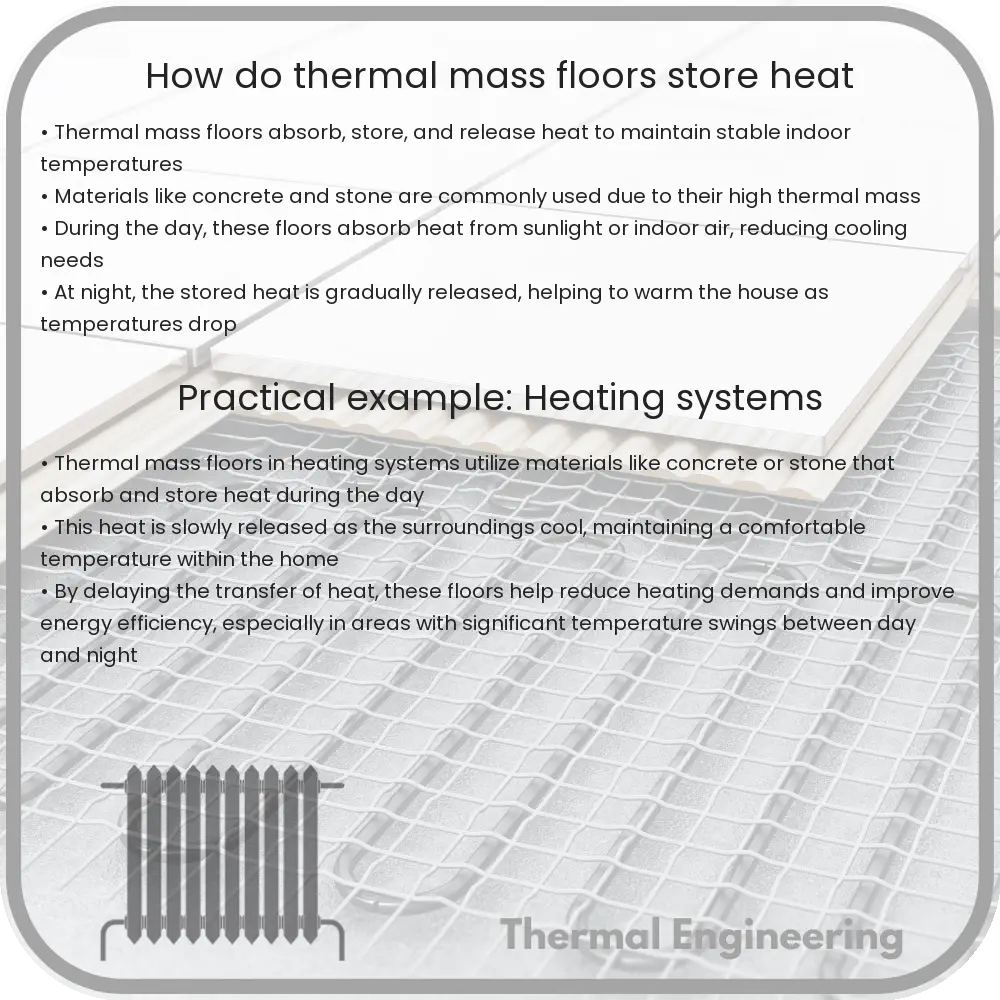
Understanding Thermal Mass Floors and Heat Storage
Thermal mass floors are a key component in sustainable building design, offering a method to store heat during warmer periods and release it during cooler periods. This natural heating and cooling system contributes to energy efficiency and consistent indoor temperature control. But how exactly does this system work? Let’s break down the concept of thermal mass and explore how it can effectively store heat.
What is Thermal Mass?
Thermal mass refers to the ability of a material to absorb, store, and release heat energy. Materials with high thermal mass, like concrete, brick, stone, and ceramic tiles, are able to absorb a large amount of heat without a significant rise in their own temperature. The efficiency of thermal mass is due to the specific heat capacity of the material, which is the amount of heat energy required to raise the temperature of one kilogram of the substance by one degree Celsius.
How Thermal Mass Floors Store Heat
The process of heat storage in thermal mass floors involves the following steps:
- Heat Absorption: During the day, especially in sunny conditions, thermal mass floors absorb heat from the sun and/or ambient heat from the indoor environment. This heat is absorbed through direct sunlight (if exposed), convection, and thermal radiation from the surrounding air.
- Heat Storage: Once absorbed, the heat energy is stored deep within the material of the thermal mass floor. The dense nature of materials utilized in thermal mass floors allows them to contain this heat without a substantial temperature increase, enabling prolonged storage duration.
- Heat Distribution: The stored heat does not remain localized. Over time, it starts to diffuse through the material of the floor. The slower release rate prevents rapid temperature changes, offering a gradual warming effect to the area above and adjacent to the floor.
- Delayed Release: As the temperature in the environment drops, particularly at night, the stored heat in the thermal mass floor begins to release. This released heat warms the surrounding air, offering a natural heating mechanism which reduces the reliance on artificial heating systems.
Benefits of Thermal Mass Floors
Thermal mass floors provide multiple benefits:
- Energy Efficiency: By storing excess heat during the day and releasing it at night, thermal mass floors can significantly reduce the need for mechanical heating and cooling systems, leading to lower energy consumption and costs.
- Consistent Indoor Climate: Thermal mass floors help in stabilizing indoor temperatures, reducing the extremes of hot and cold, thus enhancing occupant comfort.
- Environmental Impact: Reduced dependence on fossil fuel-based energy systems decreases the carbon footprint of a building, contributing to a more sustainable environment.
Optimizing Thermal Mass Floor Performance
To maximize the benefits of thermal mass floors, a few considerations should be kept in mind:
- Material Choice: Selecting the appropriate materials with high density and specific heat capacity is crucial. Commonly used materials include concrete, tiles, and bricks.
- Exposure to Sunlight: The placement of thermal mass floors in areas receiving ample sunlight can increase their effectiveness in absorbing heat.
- Insulation Integration: While thermal mass can store and release heat, efficient insulation is necessary to prevent heat loss to the surroundings, ensuring that the stored heat is effectively utilized within the building.
In conclusion, thermal mass floors represent a strategic and efficient approach to natural temperature regulation in buildings. By understanding and leveraging the properties of thermal mass, engineers and architects can design buildings that are not only more energy-efficient but also provide a comfortable living environment.