Desalination” refers to the technological process of removing salts and minerals from seawater or brackish water to produce potable water.
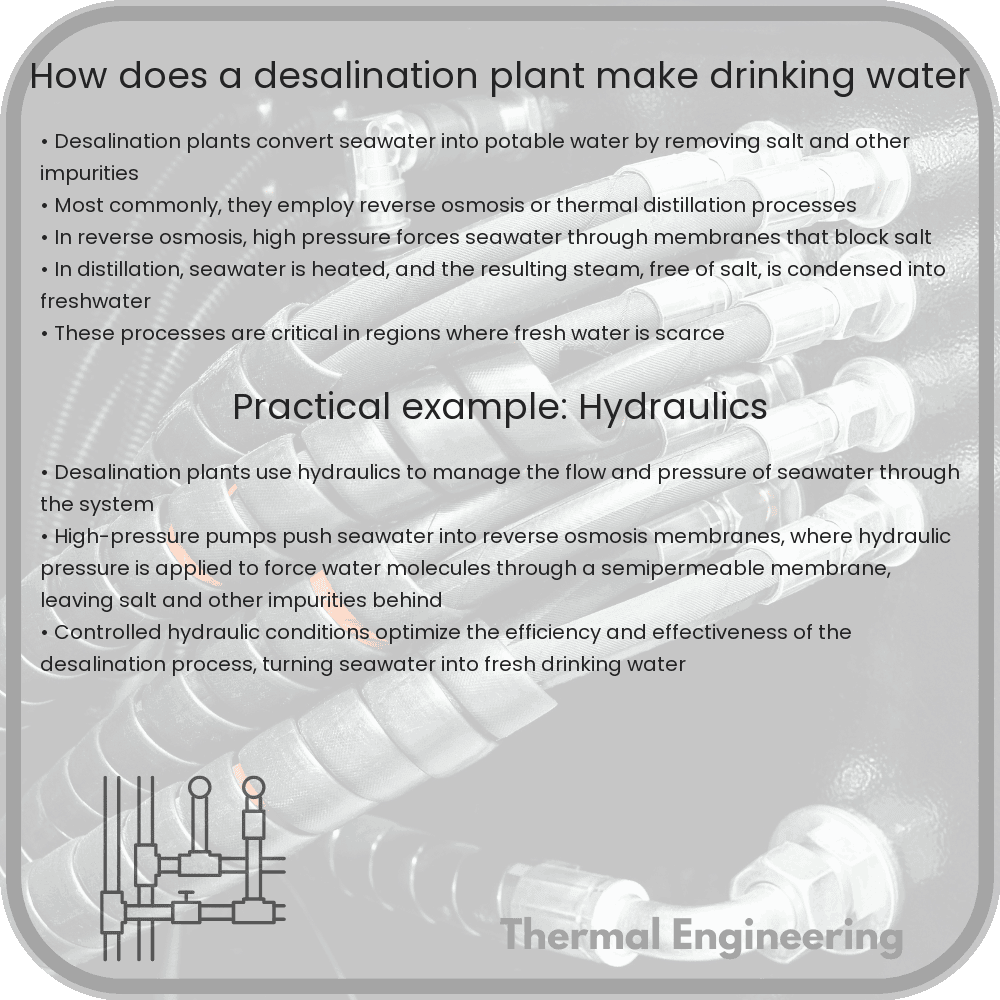
Understanding Desalination: The Process of Making Drinking Water from Sea Water
Desalination is the engineering process through which salt and other minerals are removed from seawater or brackish water, transforming it into water that is safe for human consumption. As freshwater resources become increasingly scarce due to factors like population growth and climate change, the technology and implementation of desalination play a crucial role in providing a sustainable water supply.
Key Desalination Technologies
There are two primary technologies used in desalination: reverse osmosis and thermal distillation. Each method has its specific applications and is chosen based on various factors including the salinity of the water, energy costs, and environmental impacts.
- Reverse Osmosis (RO): This is the most common desalination method, where water is forced through a semi-permeable membrane that blocks salts and other impurities. The pressure required to push water through this membrane is typically higher than the naturally occurring osmotic pressure, which dictates the movement of water across a membrane from areas of low solute concentration to areas of high solute concentration.
- Thermal Distillation: This method involves heating the saline water until it evaporates, leaving the salts behind in the solid form, and then condensing the steam back into liquid water. There are several types of distillation processes, including multi-stage flash distillation, multi-effect distillation, and vapor compression distillation.
Steps in Desalination via Reverse Osmosis
- Pre-Treatment: This step involves removing sediments and other particulates from the seawater, which could clog or damage the membranes used in the RO process.
- Membrane Filtration: Water is pushed through the membranes under pressure, effectively separating it from the dissolved salts and other contaminants.
- Post-Treatment: After desalination, the water usually undergoes further treatment, including the addition of minerals and other adjustments to make the water suitable for drinking.
- Disposal of Brine: The concentrated brine, a byproduct containing the removed salts and minerals, is typically discharged back into the sea or to evaporation ponds, though this process must be managed carefully to minimize environmental impacts.
Environmental and Economic Considerations
While desalination provides a critical solution to water scarcity, it comes with both environmental and economic challenges. The main environmental concerns include the high energy consumption required for the processes, especially for reverse osmosis, and the impact of brine disposal on marine ecosystems. Economically, the cost of building, maintaining, and operating a desalination plant is significant, and often higher than other water supply alternatives.
Technological advancements and increasing efficiency continue to make desalination a more viable option for many regions around the world. As research progresses, new methods that reduce energy consumption and mitigate environmental effects are being developed, making desalination an essential part of the global strategy to meet the growing water demands of the 21st century.