Learn about thermal blankets in athletic recovery, their benefits, and how they enhance muscle repair and reduce recovery time.
Understanding the Role of Thermal Blankets in Athletic Recovery
The use of thermal blankets, also known as recovery blankets, in sports and athletics is becoming increasingly popular to enhance recovery after intense physical activity. To understand how these blankets aid in recovery, it is essential to delve into their function, the role of heat in muscle recovery, and the benefits they provide to athletes.
What is a Thermal Blanket?
A thermal blanket is a specially designed cover that is used to retain body heat or provide additional heat to the body. Made from materials that are good insulators of heat, such as wool or specially engineered fabrics, these blankets are used to manage the body’s thermal environment during rest periods or post-exercise recovery phases.
How Do Thermal Blankets Work?
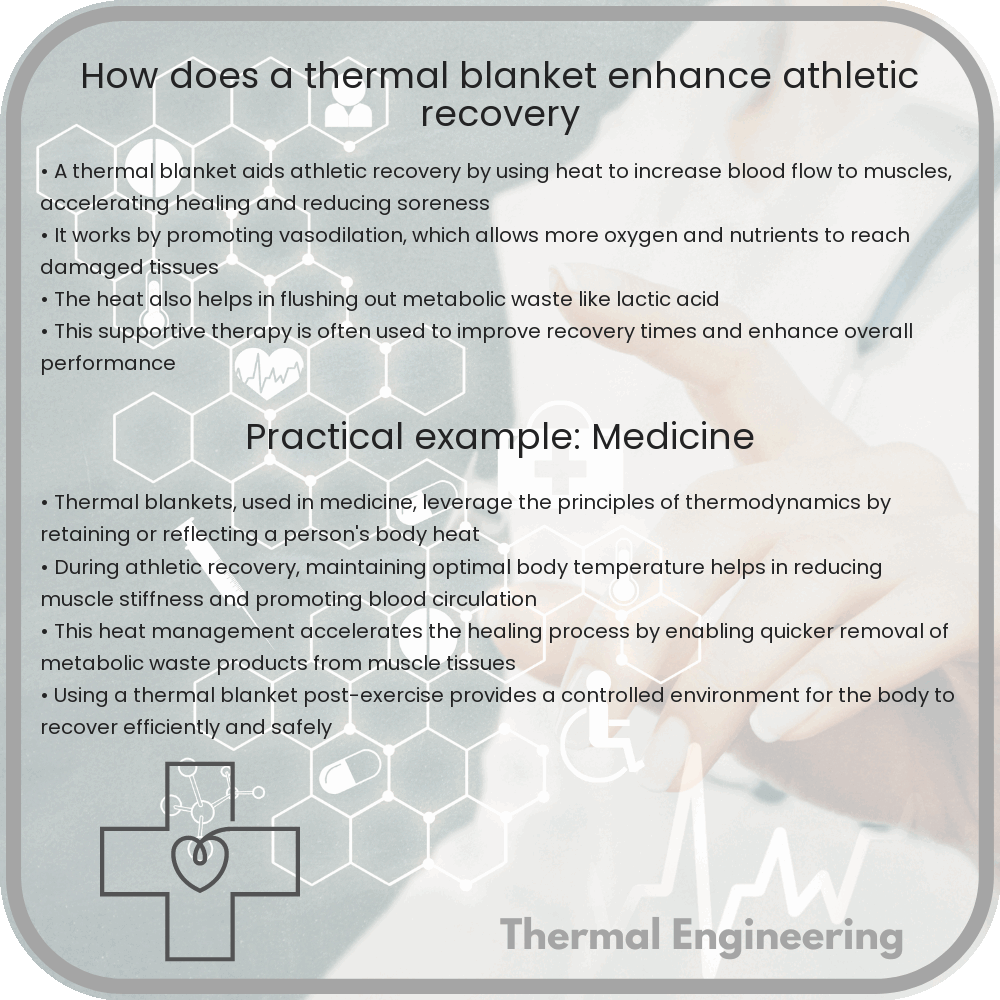
Thermal blankets operate on the principle of thermotherapy, which involves applying heat to the body to soothe and heal muscles. When applied, the blanket increases the body surface temperature, which in turn raises the underlying muscle temperature. This heat transfer is crucial for the therapeutic effects that follow.
- Vasodilation: Heat causes vasodilation, which is the widening of blood vessels. This process increases blood flow to the muscles, which helps in the delivery of more oxygen and nutrients essential for muscle repair and recovery.
- Metabolic rate: Elevated temperature increases the metabolic rate of cells, including muscle cells. An increased metabolic rate accelerates the muscle repair processes by enhancing the rate of energy consumption and waste removal.
- Reduction in muscle stiffness: Muscle stiffness and soreness, often a result of lactic acid accumulation, can be alleviated through heat application as it helps in lactic acid dispersal from muscle fibers.
Benefits of Thermal Blankets in Athletic Recovery
- Enhanced Recovery Rate: By improving blood flow and increasing muscle temperature, thermal blankets can shorten the recovery time needed between workouts or following injuries.
- Reduction of Pain and Discomfort: The heat provided by thermal blankets can serve as a natural analgesic, lessening pain associated with muscle cramps, strains, or spasms.
- Improved Flexibility: Regular use of a thermal blanket can improve flexibility by warming up the muscles, making them more pliable and less prone to injuries.
- Better Sleep Quality: Maintaining an optimal body temperature during sleep can improve sleep quality, which is crucial for recovery. The thermal blanket helps in maintaining this temperature, aiding in more restful sleep.
Considerations and Contraindications
While thermal blankets are beneficial for most athletes, there are some considerations and contraindications to keep in mind:
- Duration and Temperature: It is crucial not to use the blanket at too high a temperature or for too long, as this can lead to skin burns or heat exhaustion.
- Medical Conditions: Athletes with certain medical conditions, such as skin disorders, severe varicose veins, cardiovascular issues, or sensory impairments, should consult with a medical professional before using thermal blankets.
- Hydration: Increased heat can lead to dehydration. It is vital to stay well-hydrated before and after using a thermal blanket.
Overall, when used correctly, thermal blankets are a valuable tool in the arsenal of an athlete for muscle recovery. They contribute to faster recovery times, reduced pain, and better overall athletic performance.