Learn about the thermal lance, a high-temperature tool used for cutting steel, concrete, and other hard materials through oxidation.
Understanding the Power of a Thermal Lance in Cutting Through Steel
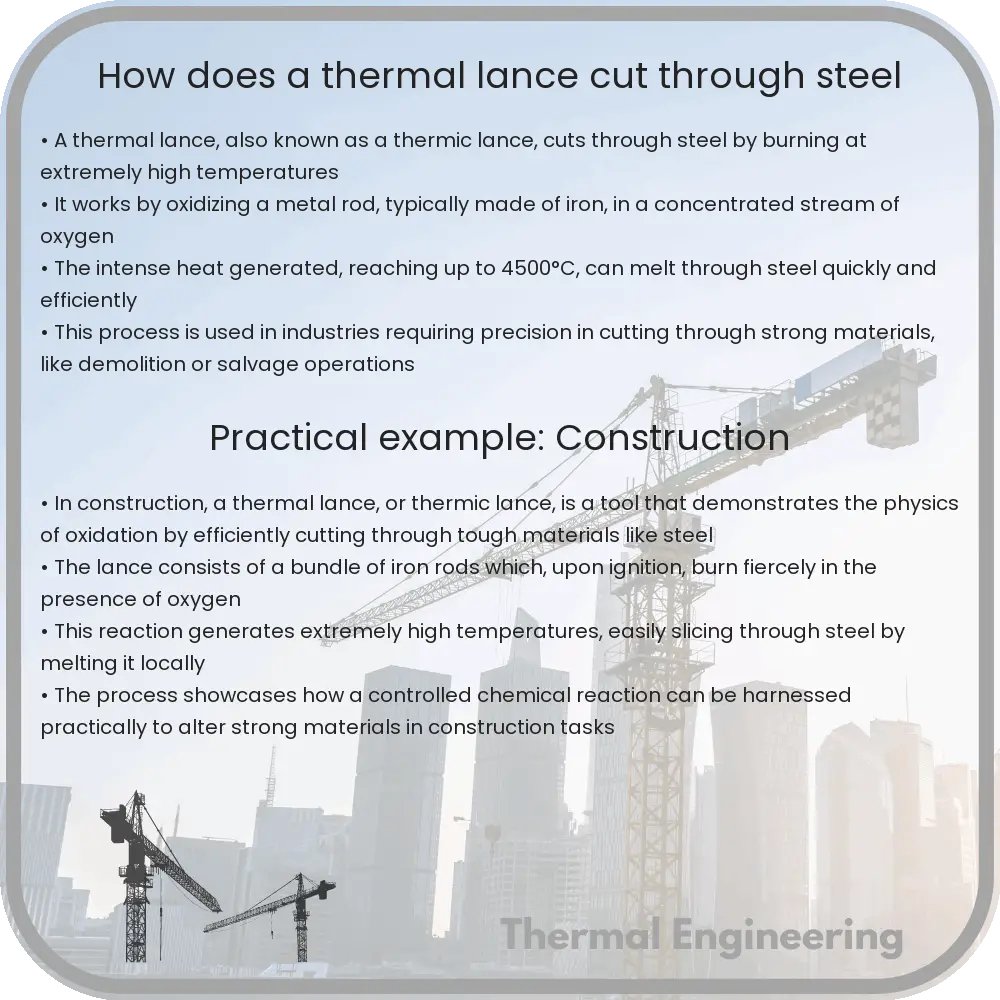
A thermal lance, also known as a thermic lance, oxygen lance, or burning bar, is a tool used to cut through materials such as steel, concrete, and other hard substances. This device utilizes the principles of oxidation to generate extreme heat, capable of melting the toughest materials in a matter of seconds.
What is a Thermal Lance?
A thermal lance is essentially a steel pipe packed with a series of iron rods. At the center, there is typically one rod made of a material with a lower ignition temperature compared to the rest of the iron rods. This setup is connected to a pressurized source of oxygen.
How it Works
The process of cutting through steel using a thermal lance involves several steps:
- Ignition: The lance is ignited typically using a high-temperature source, such as an oxyacetylene torch. The initial rod lights first due to its lower ignition temperature.
- Oxygen Flow: Once ignited, a strong flow of oxygen is continuously passed through the pipe. The oxygen plays a critical role in sustaining the reaction.
- Oxidation Reaction: The intense heat from the initial burning rod ignites the iron rods, and the oxygen rapidly oxidizes the iron at high temperatures. This reaction releases a substantial amount of energy and produces molten iron and a significant amount of heat.
- Melting Through Material: The combined effect of molten iron and high heat assists in melting through the steel or other material being cut. The molten slag is expelled from the cut, clearing a path through the material.
The temperatures reached during the cutting process can exceed 4000°C (7232°F), which is more than enough to melt steel, which typically melts at around 1500°C (2732°F).
The Chemistry Behind It
The primary reaction occurring inside a thermal lance is the oxidation of iron in an oxygen-rich environment. The overall chemical reaction can be summarized with the following equation:
3Fe + 2O2 → Fe3O4
This reaction indicates that three atoms of iron (Fe) react with two molecules of oxygen (O2) to form one molecule of iron oxide (Fe3O4), releasing a tremendous amount of heat. This exothermic reaction is self-sustaining once initiated, as long as oxygen continues to be supplied.
Applications of Thermal Lances
Thermal lances are used in a variety of applications where conventional cutting methods are inadequate. Their utilization spans:
- Scrapyard Operations: Used for cutting large pieces of scrap metal that are too thick for traditional cutting tools.
- Construction and Demolition: Effective in demolishing concrete structures, especially those containing heavy rebar.
- Emergency Rescue Operations: Useful in quickly cutting through debris in collapsed structures to rescue trapped individuals.
- Underwater Cutting: Deployed in underwater salvage operations to cut through sunken ships and other obstacles.
In conclusion, a thermal lance represents a powerful tool in the industrial and rescue operations arena, leveraging the basic principles of oxidation to achieve astonishing temperatures for cutting through robust materials like steel with relative ease.