Learn about thermal reactors, a crucial component in reducing vehicle emissions by promoting more complete combustion of exhaust gases.
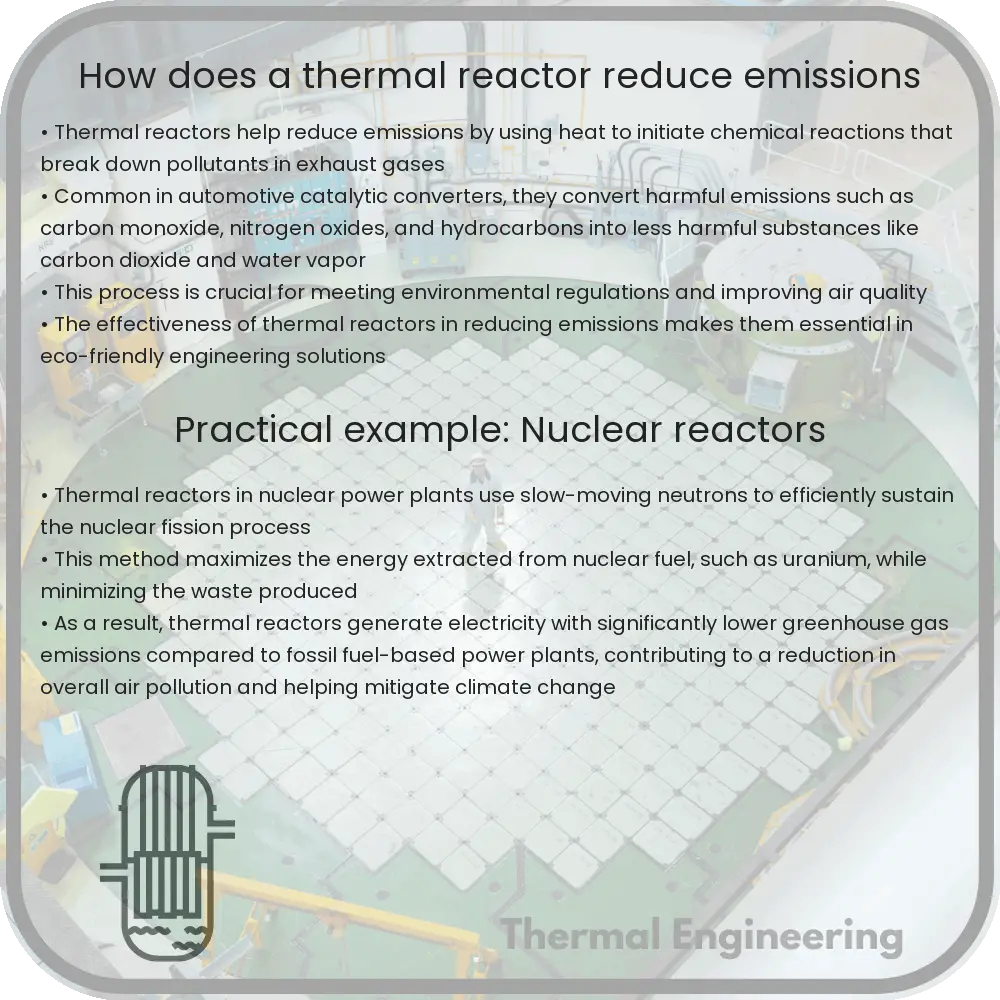
Understanding How a Thermal Reactor Reduces Emissions
In the quest to reduce harmful emissions from internal combustion engines, engineering solutions such as the thermal reactor play a critical role. Primarily found in automotive emission control systems, the thermal reactor is designed to promote more complete combustion of exhaust gases, thus reducing the amount of pollutants released into the environment.
What is a Thermal Reactor?
A thermal reactor is a component used in the exhaust system of an engine. Its design leverages the principles of heat and oxidation to break down harmful exhaust pollutants into less harmful substances before they are emitted into the air. The reactor operates at high temperatures, which accelerate the chemical reactions necessary for this conversion process.
How Does It Work?
The thermal reactor functions by increasing the temperature of the exhaust gases. This is done by either using the heat of the engine’s exhaust or through additional heating elements. The high temperatures enhance the oxidation of unburnt hydrocarbons (HC) and carbon monoxide (CO), two of the primary pollutants in engine exhaust.
- Oxidation of Carbon Monoxide: Carbon monoxide is a colorless, odorless gas that can be deadly in high concentrations. It is produced from the incomplete combustion of fuel. In a thermal reactor, carbon monoxide is oxidized to carbon dioxide (CO2) according to the reaction 2 CO + O2 → 2 CO2.
- Oxidation of Unburnt Hydrocarbons: Hydrocarbons are organic compounds made up of hydrogen and carbon. They are a major component of fuel but can be harmful if emitted into the atmosphere. In the thermal reactor, hydrocarbons are oxidized to form water (H2O) and carbon dioxide (CO2), facilitated by the reaction CnH2n+2 + (1.5n + 0.5) O2 → n CO2 + (n + 1) H2O.
Benefits of Using a Thermal Reactor
The utilization of thermal reactors in vehicles brings about several environmental benefits:
- Reduction in Smog Formation: By converting CO and HC into CO2 and H2O, thermal reactors help reduce the formation of ground-level ozone, a key component of smog.
- Improved Air Quality: Lower emissions of harmful substances contribute to overall better air quality, which is beneficial for public health and the environment.
- Compliance with Emission Standards: Many countries have strict regulations regarding vehicle emissions. Utilizing a thermal reactor helps manufacturers meet these stringent standards.
While thermal reactors are effective in reducing certain types of emissions, they are often used in combination with other technologies such as catalytic converters to achieve even cleaner exhaust systems. This integrated approach allows for the effective control of a broader range of exhaust pollutants under various operating conditions.
Challenges and Considerations
Despite their benefits, there are several challenges associated with thermal reactors:
- Fuel Efficiency: The higher operating temperatures can lead to increased fuel consumption, as some of the energy that could be used for propulsion is diverted to maintain the temperature of the reactor.
- Engine Wear: High temperatures can accelerate the wear and tear on engine components, potentially leading to more frequent maintenance requirements and reduced engine lifespan.
In conclusion, while thermal reactors are a useful engineering solution for reducing automotive emissions, they need to be carefully managed and often used in conjunction with other technologies to optimize both performance and environmental impact. The continuous evolution of emission control technologies shows the potential for even greater efficiencies and reductions in pollutants in the future.