Explore the causes, mechanisms, and prevention of thermal runaway in lithium-ion batteries, a critical safety concern in battery technology.
Understanding Thermal Runaway and Battery Failure
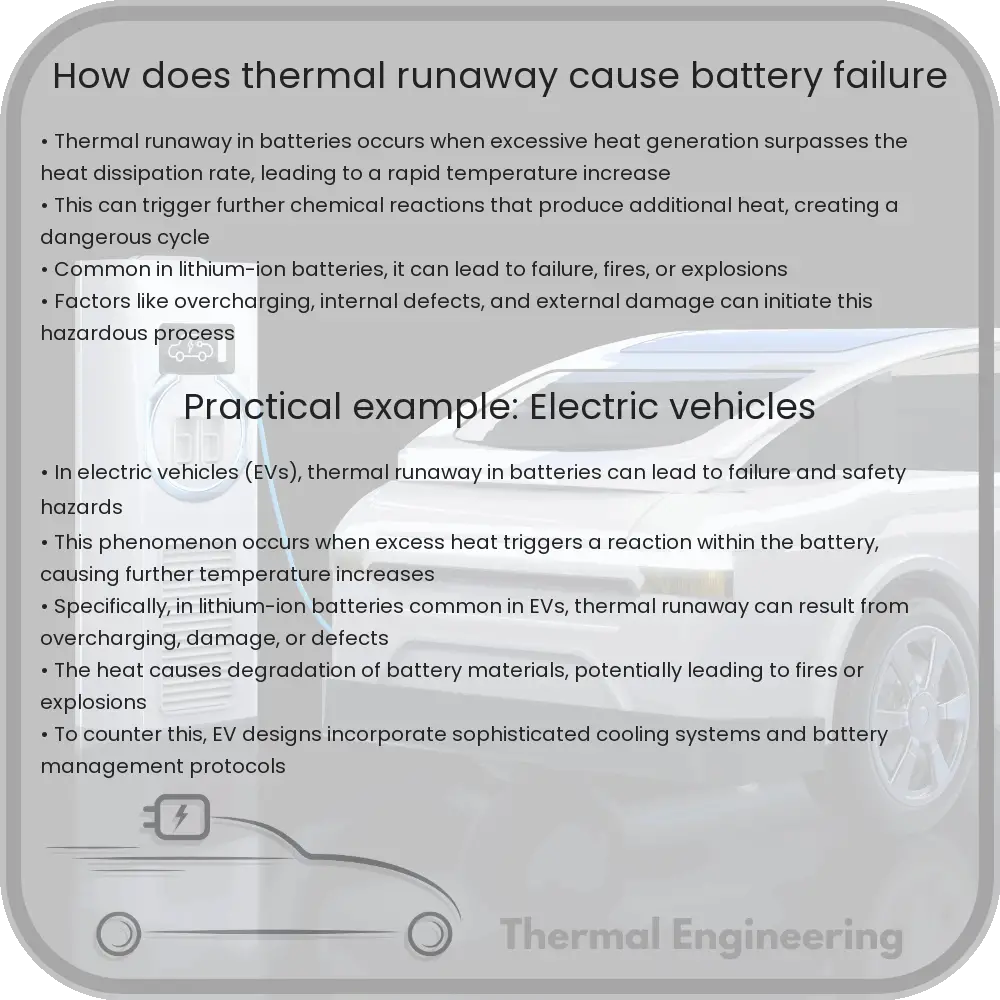
Thermal runaway is a critical issue in the field of battery technology, particularly concerning rechargeable lithium-ion batteries. It is a self-sustaining chemical reaction that occurs within the battery, leading to overheating and often resulting in catastrophic battery failures such as fires or explosions. This phenomenon can jeopardize the safety of electronic devices, electric vehicles, and storage systems that employ these batteries. To understand thermal runaway, it’s essential to explore its causes, mechanisms, and preventive measures.
Causes of Thermal Runaway
Thermal runaway can be initiated by various factors, often related to design flaws, operational errors, or external influences:
- Overcharging: Charging beyond the recommended voltage causes excessive heat and can lead to thermal runaway.
- Physical Damage: Impacts, punctures, or crushes can compromise internal structures, creating internal short circuits that generate heat.
- High Temperatures: External heat sources or operation in high-temperature environments can push the battery beyond its thermal limits.
- Manufacturing Defects: Imperfections such as metal particles inside the battery can lead to short circuits within the cell.
Mechanism of Thermal Runaway
Thermal runaway in lithium-ion batteries involves three primary stages:
- Initiation: The process begins with an initial heat source which may be due to overcharging, mechanical damage, or an internal defect that causes a short circuit.
- Heat Generation: Once initiated, the heat causes the internal temperature and pressure of the battery to rise, leading to further degradation of the electrolyte and electrodes. This degradation releases more heat and may cause the release of gases.
- Self-propagation: If the heat is not dissipated quickly, the rising temperature leads to further chemical reactions and breakdowns, essentially allowing the reaction to propagate and accelerate, even if the initial source is removed.
The critical concern is that once thermal runaway starts, it is often impossible to stop, leading to the destruction of the battery and potentially causing fire.
Preventing Thermal Runaway
Preventing thermal runaway involves several strategies aimed at both design and operational levels:
- Battery Management Systems (BMS): These systems monitor the state of charge, temperature, and health of the battery pack to prevent unsafe operations.
- Temperature Regulation: Using cooling systems to ensure that batteries operate within safe temperature ranges.
- Safe Battery Design: Developing batteries with robust structures and materials that can withstand physical stresses and thermal pressures.
- Manufacturing Quality Control: Ensuring that batteries are free from defects such as metal particles or poorly aligned components which can cause short circuits.
Understanding thermal runaway in batteries is essential for engineering safer energy storage systems. With advancements in technology and improved safety standards, the risks associated with these powerful but volatile components can be mitigated.
Conclusion
Thermal runaway represents a significant safety risk in various applications of lithium-ion batteries. Through comprehensive understanding and rigorous safety protocols, engineers and researchers aim to curb the dangers associated with battery technologies. The future of battery safety lies in the continuous improvement of battery chemistries, designs, and protective technologies to prevent such failures effectively.