Learn how underfloor heating systems distribute heat efficiently and offer benefits over traditional heating methods.
Understanding How Underfloor Heating Spreads Heat
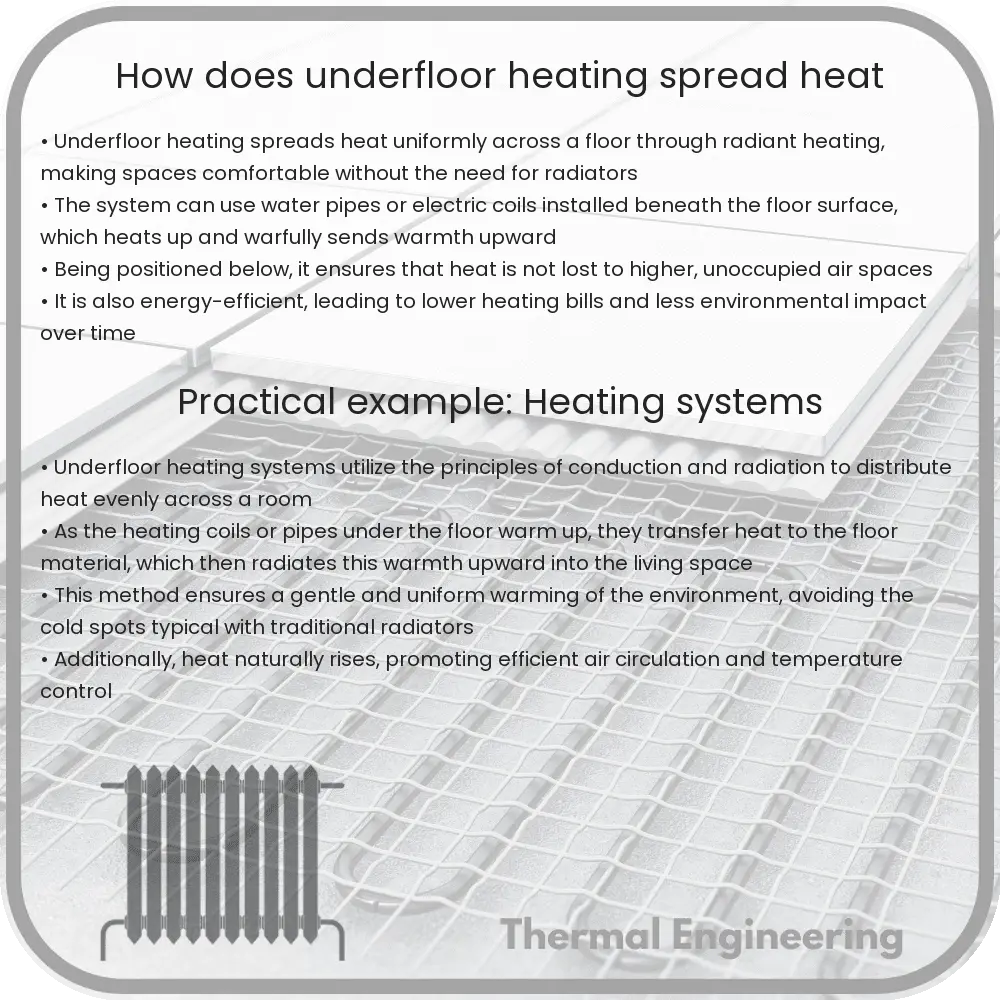
Underfloor heating is a sophisticated and efficient method for heating homes and buildings. This system uses either electrical coils or water-filled pipes, laid beneath the floor, to provide warmth directly from the ground up. Understanding the heat distribution mechanism of underfloor heating helps in appreciating its efficiency and comfort compared to traditional heating systems like radiators.
Types of Underfloor Heating Systems
There are two main types of underfloor heating systems:
- Electric Underfloor Heating: This system uses electric wires or mats that generate heat when electricity passes through them.
- Hydronic (Water) Underfloor Heating: This type uses a network of pipes laid under the floor through which heated water is circulated.
How Heat is Spread Through Underfloor Heating
The key to the efficiency of underfloor heating lies in the way it distributes heat. Unlike traditional radiators that heat the air around them, underfloor heating warms the lower part of the room and the surfaces with which it comes into contact directly. Here’s a step-by-step explanation:
- Conduction: Heat transfer occurs initially via conduction, where heat travels from the hot surface of the floor directly to any colder surface it touches.
- Radiation: As the floor itself gets warm, it also begins to radiate heat upwards into the room. This radiant heat provides a uniform warmth that rises evenly across the entire space.
- Convection: Finally, the warm air naturally rises through the process of convection, further helping to circulate warmth throughout the room.
The design of underfloor heating closely adheres to the principles of thermal comfort and energy efficiency. It uniformly heats a room and maintains consistent temperature distribution from the floor up, contrasting sharply with traditional systems where heat accumulates at the ceiling or near the heating source.
Factors Affecting the Efficiency of Underfloor Heating
Several factors influence how effectively an underfloor heating system spreads heat throughout a space:
- Flooring Materials: Different materials have varying thermal conductivities. Tile and stone have high conductivity, making them excellent for heat transfer, while wood and carpet have lower conductivity rates.
- Installation: Proper installation is crucial. Insulating layers beneath the heating elements can prevent heat loss to the subfloor, ensuring more heat is directed upwards into the living space.
- Temperature Settings: Efficient underfloor heating should not require extremely high temperatures. It operates best at a consistent, moderate temperature, utilizing the thermal mass of the flooring material to store and gradually release heat.
Benefits of Underfloor Heating
Underfloor heating systems offer multiple benefits over traditional heating methods:
- Energy Efficiency: They can be more energy-efficient by operating at lower temperatures while delivering the same level of comfort as higher-temperature conventional heaters.
- Space Saving: As the heating components are hidden underneath the floor, they save space that would otherwise be occupied by radiators.
- Improved Comfort: Heat is distributed evenly, eliminating hot spots and cold drafts typically associated with conventional heating methods.
In conclusion, the method by which underfloor heating spreads heat not only makes it an effective and comfortable heating solution but also a preferable choice for new construction and renovations. By understanding the core principles behind its operation, homeowners can make informed decisions about their heating needs and maximize the system’s efficiency and benefits.