Explore the influence of heat on seed germination, emphasizing the importance of optimal temperature for various crops and the effects of extreme heat.
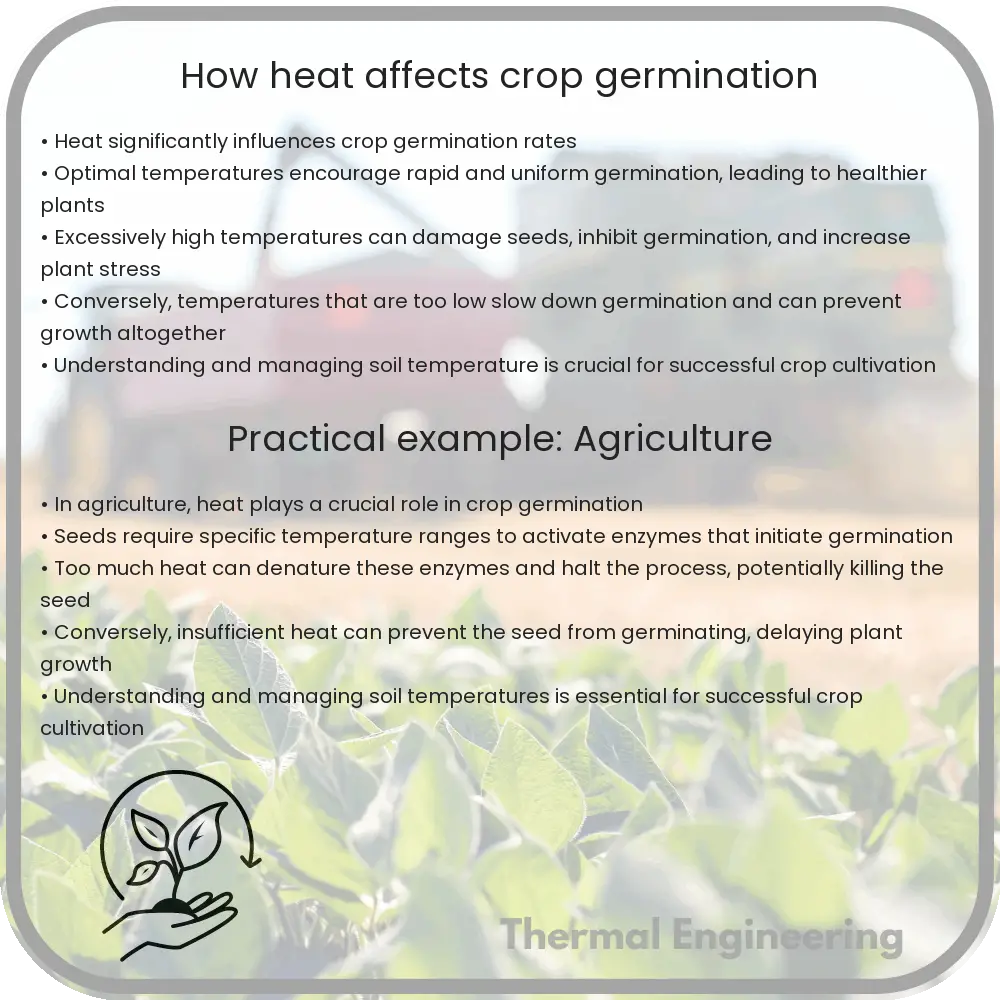
Understanding the Impact of Heat on Crop Germination
Germination is the process through which a seed develops into a new plant. This crucial phase in a plant’s lifecycle is significantly influenced by various environmental factors, with temperature being one of the most critical. Heat, in particular, plays a pivotal role in either facilitating or hindering the germination of seeds. Here we explore how temperature affects seed germination, focusing on the optimal conditions required and the risks associated with temperatures that are too high or too low.
Optimal Temperature for Seed Germination
Each plant species has a specific temperature range that promotes optimal seed germination. This range is typically between 20°C to 30°C for most crops, although it varies depending on the crop type. For instance:
- Wheat and barley exhibit optimal germination at about 20°C to 25°C.
- Corn and rice prefer slightly warmer conditions, generally 25°C to 30°C.
- Vegetables like tomatoes and peppers germinate best around 25°C to 30°C.
Temperature affects the biological processes within the seed, including the activity of enzymes that are crucial for breaking down food stores within the seed, providing the necessary energy for growth. A temperature within the ideal range stimulates enzymatic activity, thus facilitating a quicker and more uniform germination.
How Heat Affects Enzymatic Activity in Seeds
Enzymes in seeds are sensitive to temperature. Each enzyme has a temperature range where it functions optimally, and exceeding this range can either slow down its activity or denature it, which is a form of structural damage that renders the enzyme nonfunctional. The relationship between enzyme activity and temperature is often described by the Q10 coefficient, which predicts how the rate of an enzyme-catalyzed reaction changes with a 10°C increase in temperature, usually doubling or tripling the rate within its optimal range. However, beyond a certain threshold, further increases in temperature lead to a rapid decline in reaction rates, negatively affecting germination.
Effects of Excessive Heat on Germination
When temperatures soar beyond a seed’s thermal tolerance, several detrimental effects can occur:
- Reduced Germination Rate: High temperatures can inhibit the absorption of water, a critical process in germination. It can also damage or inactivate key enzymes.
- Structural Damage: Proteins and cellular structures within the seed can be damaged by excessive heat, leading to a reduction in viability.
- Increased Respiration: Elevations in temperature increase the rate of respiration, which can deplete the energy reserves necessary for the seedling to break through the soil surface and begin photosynthesis.
Adaptations and Agricultural Implications
To counteract the negative effects of high temperatures on germination, agricultural scientists and farmers use several strategies:
- Planting at depths where soil temperatures are more stable.
- Using seeds selectively bred for higher temperature resilience.
- Adjusting planting schedules to avoid peak temperature periods.
Understanding the dynamics of heat and its impact on crop germination is vital for improving agricultural productivity, especially in the context of global warming, where temperature fluctuations are becoming more extreme. Through targeted practices and innovative breeding programs, it is possible to mitigate some of the adverse effects that heat can have on the success of crop germination.