Explore the roles, types, and uses of hydraulic fluid in diverse machinery systems.
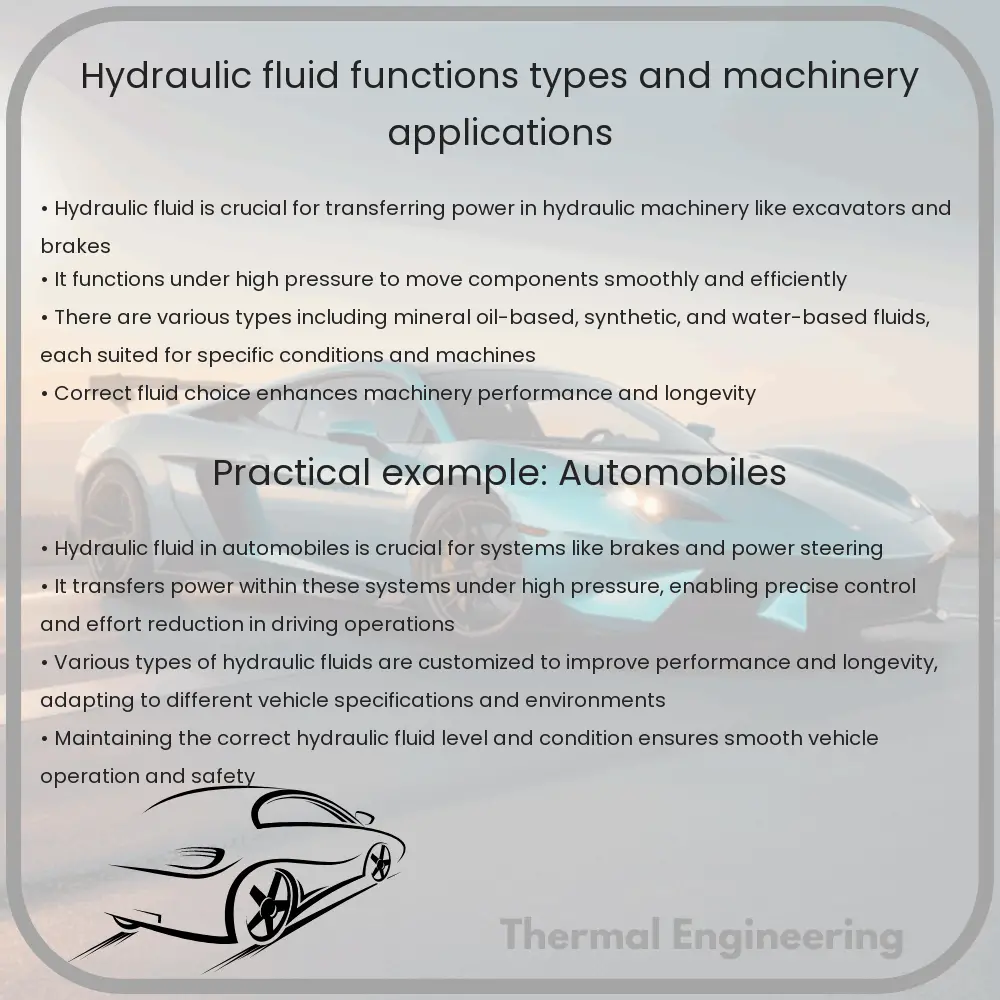
Understanding Hydraulic Fluid: Functions, Types, and Machinery Applications
Hydraulic fluid is a crucial component in many mechanical systems, enabling the transfer of power in hydraulic machinery. It is used in a wide range of applications, from automotive braking systems to heavy industrial machinery. In this article, we will explore the functions, types, and applications of hydraulic fluids in different machinery.
Functions of Hydraulic Fluid
Hydraulic fluid serves several important functions in hydraulic systems:
- Power Transmission: It transfers power from one part of the system to another. This is the primary role of hydraulic fluid, and it is accomplished by the fluid flowing under pressure through the system.
- Lubrication: It lubricates the components of the hydraulic system, reducing friction and wear, and helping to extend the life of the system.
- Heat Transfer: Hydraulic fluid helps to remove heat from the system components. As the fluid circulates, it carries heat away, which is then dissipated in the cooler parts of the system or via a heat exchanger.
- Sealing: It provides a seal in various parts of the hydraulic machinery, improving efficiency and preventing leaks by maintaining a tight fit between components.
- Contaminant Removal: The fluid carries away contaminants and debris from critical areas of the system, which are then filtered out.
Types of Hydraulic Fluids
There are several types of hydraulic fluids, each designed for specific system requirements and operating environments:
- Mineral Oil-Based Fluids: These are the most commonly used hydraulic fluids and are made from refining crude oil. They are relatively inexpensive and provide good lubrication.
- Synthetic Hydraulic Fluids: These are engineered fluids designed to offer superior performance under extreme conditions, such as very high or low temperatures. They typically offer better viscosity control and are less flammable than mineral oils.
- Water-Based Fluids: These include water-glycol solutions and water-oil emulsions. They are used primarily where fire resistance is a critical need. However, they may provide less lubrication and are more susceptible to freezing and microbial growth.
- Biodegradable Hydraulic Fluids: These are made from esters either synthetic or derived from vegetable oils. They are used in environmentally sensitive areas, as they break down more quickly and are less harmful to the environment in the event of a spill.
Machinery Applications
Hydraulic fluids are used in a myriad of machinery across various industries:
- Construction Machinery: Hydraulic excavators, loaders, and bulldozers rely on hydraulic fluid for their digging, lifting, and pushing operations.
- Agricultural Equipment: Tractors and harvesters use hydraulic systems to operate attachments like plows and combines.
- Manufacturing Equipment: Hydraulic presses, conveyor systems, and robotic arms in factories utilize hydraulic fluid to ensure precise control and movement.
- Aerospace: Aircraft use hydraulic systems for braking, controlling wing flaps, and other critical operations.
- Automotive: Hydraulic systems power steering and brake systems in vehicles, enhancing the safety and functionality of the automotive.
In conclusion, hydraulic fluid is a vital component in various types of machinery, contributing to the functionality and efficiency of systems in multiple sectors. Understanding the different types of hydraulic fluids and their applications helps in selecting the right fluid for specific needs, ensuring system reliability and longevity.