Liquid ammonia is explored as a dual-purpose solution for refrigeration and agriculture, emphasizing its efficiency and high nitrogen content.
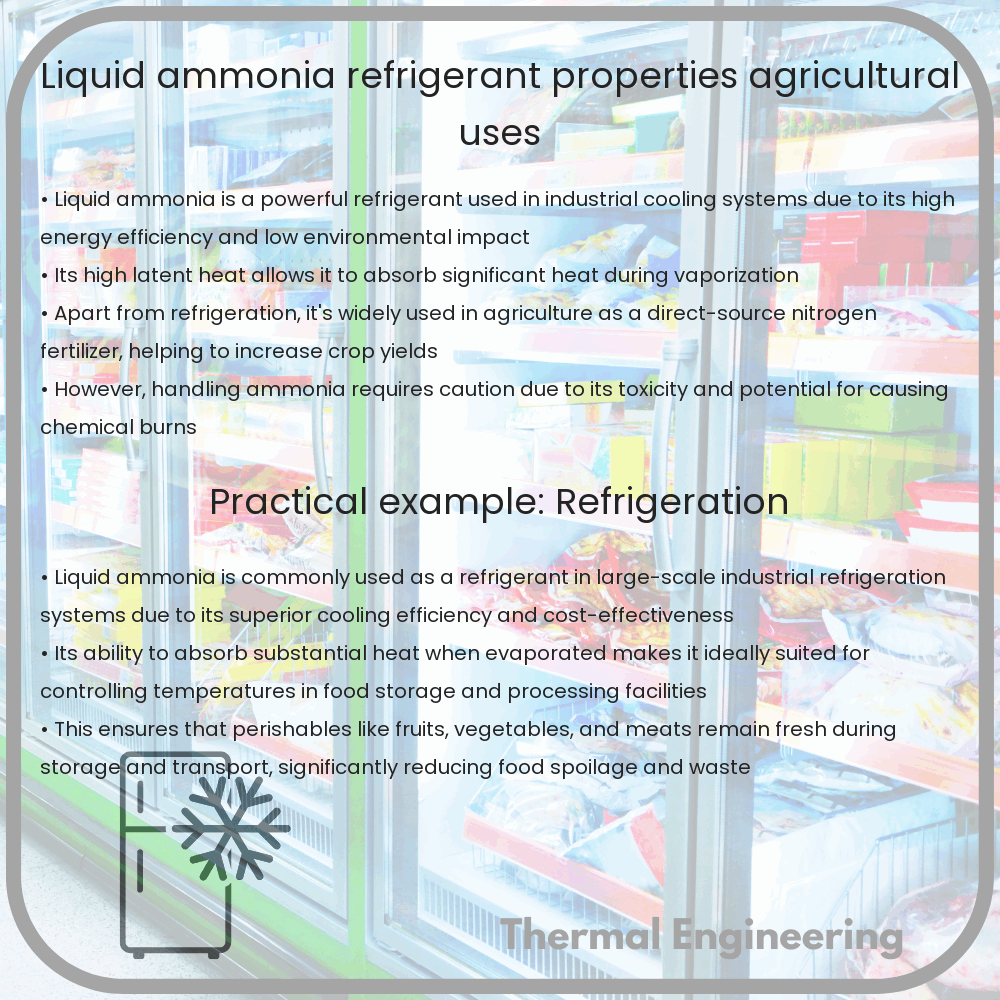
Liquid Amnesia – A Dual-Purpose Marvel
Liquid ammonia, notably a clear, colorless liquid when stored under pressure, holds significant importance in both refrigeration and agriculture. Its unique properties make it a versatile solution across these fields. This article delves into the refrigerant properties of liquid ammonia and its agricultural uses, highlighting its dual applicability.
Refrigerant Properties of Liquid Ammonia
Ammonia (chemical formula NH3) is widely recognized as an effective refrigerant. It is mostly used in industrial refrigeration systems due to its excellent thermodynamic properties. Here are the key reasons why ammonia is preferred in refrigeration:
- High Thermal Efficiency: Ammonia has a superior cooling effect per unit volume compared to other refrigerants. This means systems using ammonia are more efficient, leading to lower operational costs.
- Ozone-Friendly: With a global warming potential (GWP) of zero, ammonia doesn’t contribute to ozone layer depletion, unlike many fluorocarbon refrigerants.
- Energy Efficiency: It absorbs a lot of heat from its surroundings quickly, which makes it highly effective in systems requiring rapid cooling effects.
However, the use of ammonia also presents challenges such as toxicity and flammability, which necessitate stringent safety measures and proper handling.
Agricultural Uses of Liquid Ammonia
In agriculture, anhydrous ammonia is a cornerstone for fertilizers. It offers a concentrated and readily available source of nitrogen, which is crucial for plant growth. Here’s how ammonia stands out in agricultural applications:
- High Nitrogen Content: Anhydrous ammonia consists of about 82% nitrogen, making it one of the most concentrated nitrogenous fertilizers.
- Cost-Effectiveness: It is often less expensive per pound of actual nitrogen than other nitrogenous fertilizers, which can lead to lower costs for farmers.
- Soil Penetration: Being a gas at atmospheric pressure, when injected into the soil, it quickly turns to a liquid and provides nitrogen to plants in a directly usable form.
Nevertheless, the application of anhydrous ammonia must be handled carefully due to its corrosive properties and the potential for nitrogen loss to the atmosphere if not properly administered.
Conclusion
Liquid ammonia serves as a pivotal substance in both the refrigeration and agricultural sectors due to its efficient cooling properties and high nitrogen content, respectively. Its versatility and cost-effectiveness are countered by the need for careful handling due to environmental and safety concerns. Understanding these dual aspects of liquid ammonia helps in optimizing its use in varied applications while adhering to safety standards.