Learn about the uses and importance of liquid cobalt in magnetic alloys, batteries, and as a catalyst in various technological applications.
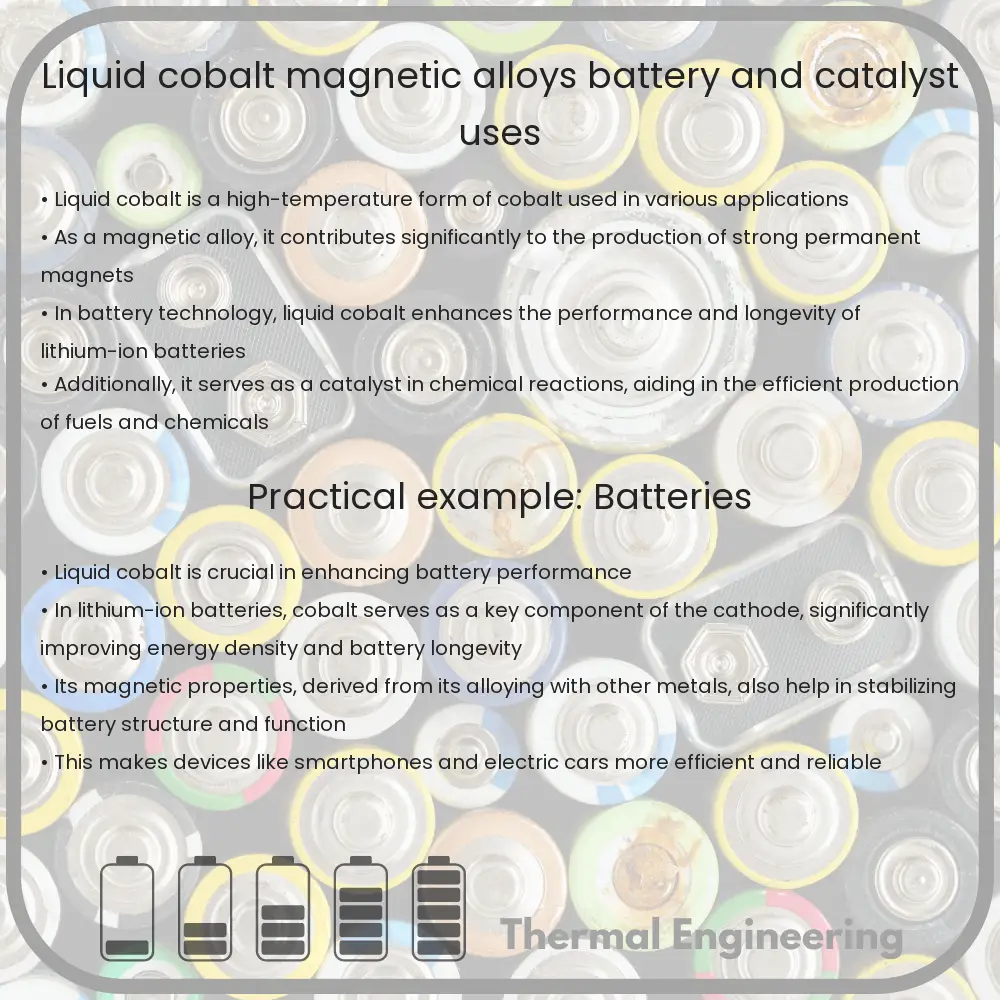
Understanding Liquid Cobalt: Magnetic Alloys, Battery, and Catalyst Uses
Liquid cobalt, a high-stakes player in various engineering and technological fields, plays a crucial role in the development of magnetic alloys, batteries, and as a catalyst. The unique properties of cobalt, especially in its liquid state, make it invaluable in many modern applications. This article explores the significance of liquid cobalt, focusing on its use in magnetic alloys, batteries, and as a catalyst.
Magnetic Alloys
Magnetic alloys are critical for many technological applications, ranging from electronic devices to magnetic imaging systems. Cobalt, as an element, offers excellent magnetic properties, which become particularly beneficial when alloyed with other metals. When cobalt is included in an alloy, it helps in enhancing the material’s strength, resistance to high temperatures, and magnetic permeability. One of the prominent examples of such an alloy is the cobalt-iron alloy, known for its high magnetic saturation and mechanical durability.
Battery Applications
Cobalt is also a vital component in the battery industry, particularly in lithium-ion batteries, which power everything from mobile devices to electric vehicles. Cobalt in these batteries primarily serves as a part of the cathode. It helps in maintaining battery stability and increases the energy density, which translates to longer-lasting batteries. The role of liquid cobalt here involves ensuring the precise deposition of cobalt in the cathode during manufacturing, which can enhance performance consistency and safety.
Catalyst Uses
As a catalyst, cobalt provides essential reactivity characteristics that are crucial in several chemical reactions and industrial processes. One significant application is in the Fischer-Tropsch process, where cobalt is used to catalyze the conversion of synthetic natural gas into liquid hydrocarbons. This process is pivotal in producing cleaner fuel alternatives. Additionally, cobalt catalysts are used in the production of certain alcohols and in the purification of hydrocarbons.
Environmental and Safety Considerations
While liquid cobalt drives several technological advancements, it also poses environmental and safety challenges. Cobalt mining and processing have raised concerns due to their environmental impact, including pollution and habitat destruction. Moreover, the handling of liquid cobalt demands strict safety protocols to prevent toxic exposure.
Future Prospects and Innovations
Research continues to explore more sustainable and efficient uses of cobalt. Innovations include developing cobalt recycling techniques from used batteries and reducing the cobalt content in lithium-ion batteries while maintaining performance. Additionally, new catalysts that minimize environmental impact yet retain efficiency are under development.
In conclusion, liquid cobalt remains a cornerstone of engineering applications due to its impressive properties in creating magnetic alloys, enhancing battery performance, and acting as a catalyst in chemical reactions. However, balancing its benefits with environmental and health considerations is key to its sustainable use in future technologies.