Learn about lobe pumps, their design, operation, and key applications in food and pharmaceutical industries.
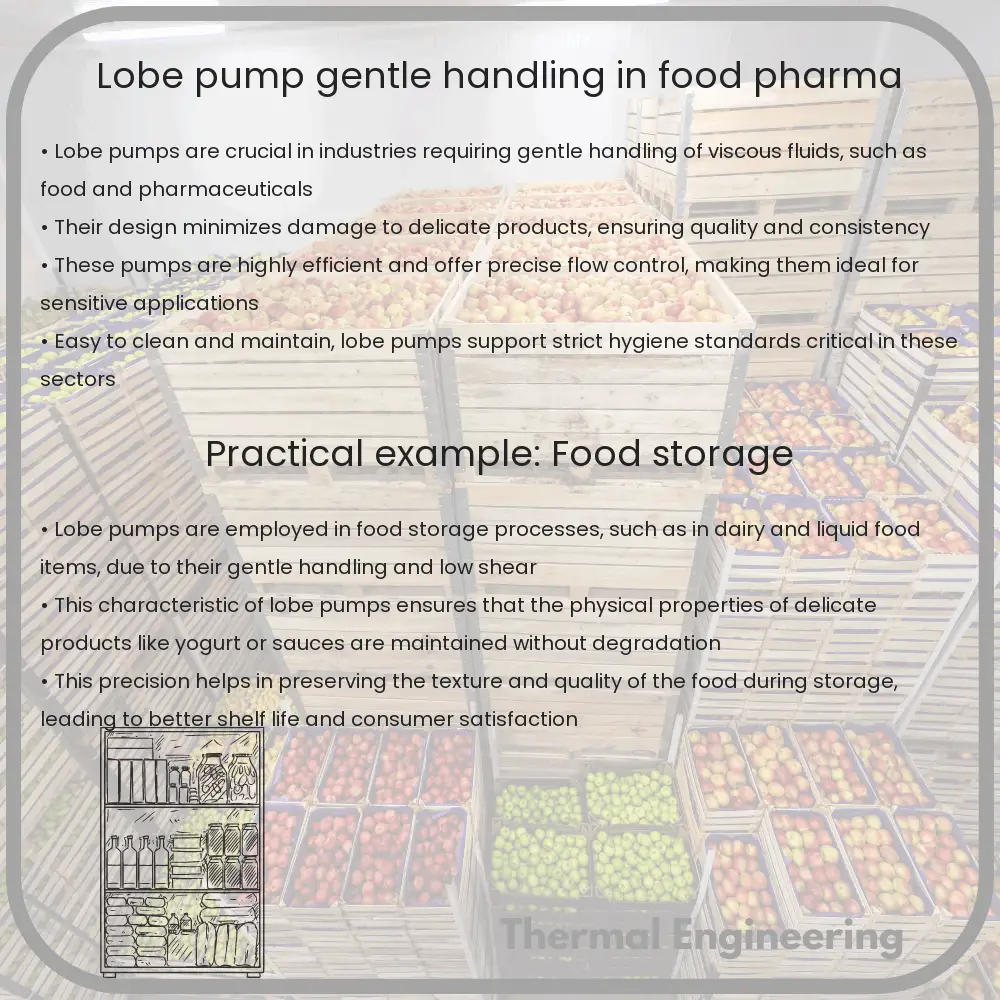
Understanding Lobe Pumps: Their Application in Food and Pharmaceutical Industries
Lobe pumps are a type of positive displacement pump used extensively in various industries, especially in food processing and pharmaceuticals. These pumps are highly valued for their ability to handle fluids gently which is crucial for maintaining the integrity and quality of delicate products.
Principle of Operation
Lobe pumps operate on a simple principle: two synchronized, rotating lobes create a vacuum at the pump inlet which draws in the fluid. These lobes rotate without touching each other, driven by external timing gears located in the gearbox. As the lobes rotate, the captured fluid is transported around the inner periphery of the casing from the inlet side to the outlet side. Finally, the fluid is forced out of the pump under pressure created by the meshing of the lobes.
Components of a Lobe Pump
- Lobes: Usually made of stainless steel or other high-quality metals, the lobes are the crucial components that move the fluid. They are designed in various shapes like bi-wing, tri-lobe, or multi-lobe configurations.
- Gearbox: Houses the gears required to drive the lobes synchronously, ensuring they do not touch each other.
- Sealing system: Seals prevent leakage of the fluid from the pump, maintaining efficiency and hygiene. Options range from simple lip seals to more complex mechanical and magnetic seals depending on the level of containment required.
- Housing: Encases the internal components and is usually constructed from high-grade materials that withstand the hygienic and cleaning standards of the food and pharmaceutical industries.
Advantages of Lobe Pumps in Sensitive Industries
- Gentle Handling: The non-contact nature of the lobe operation minimizes shear and agitation, making it ideal for handling shear-sensitive products like yogurts or biopharmaceuticals.
- Hygienic Design: Lobe pumps can be easily cleaned and sterilized, adhering to strict sanitary standards essential in food processing and pharmaceutical manufacturing.
- Versatility: Capable of handling a wide range of viscosities, from water-like fluids to highly viscous pastes.
- Low Maintenance: With fewer parts that are susceptible to wear and tear, lobe pumps typically have lower maintenance costs than other types of pumps.
Applications within the Industries
In the food industry, lobe pumps are used for transferring a variety of products including sauces, dairy items, and confectionery items. Their gentle pumping action is crucial for maintaining the quality and texture of foods that are sensitive to shear forces.
In the pharmaceutical industry, these pumps facilitate the processing of lotions, gels, and ointments. They are also essential during the manufacturing of APIs (Active Pharmaceutical Ingredients), where contamination-free and precise dosing is crucial.
Challenges and Precautions
While lobe pumps offer considerable advantages, they also face certain challenges such as dealing with abrasive wear when handling grainy or particulate-laden fluids. Moreover, the initial cost can be higher than other pump types, though often justified by lower maintenance costs and superior performance in critical applications.
Selecting the right lobe pump—with appropriate lobe design, material, and sealing system—is crucial for operational efficiency and longevity. Regular maintenance and monitoring are also vital to ensure optimal performance and to prevent unexpected downtimes in crucial processes.
Through their gentle handling, hygiene, and efficiency, lobe pumps continue to be indispensable in the food and pharmaceutical industries, reflecting their adaptability and crucial role in modern manufacturing and processing operations.