Learn about magnetic drive pumps, sealless pumps that prevent leaks by using a magnetic coupling instead of shaft seals.
Understanding Magnetic Drive Pumps: Sealless Technology for Leak Prevention
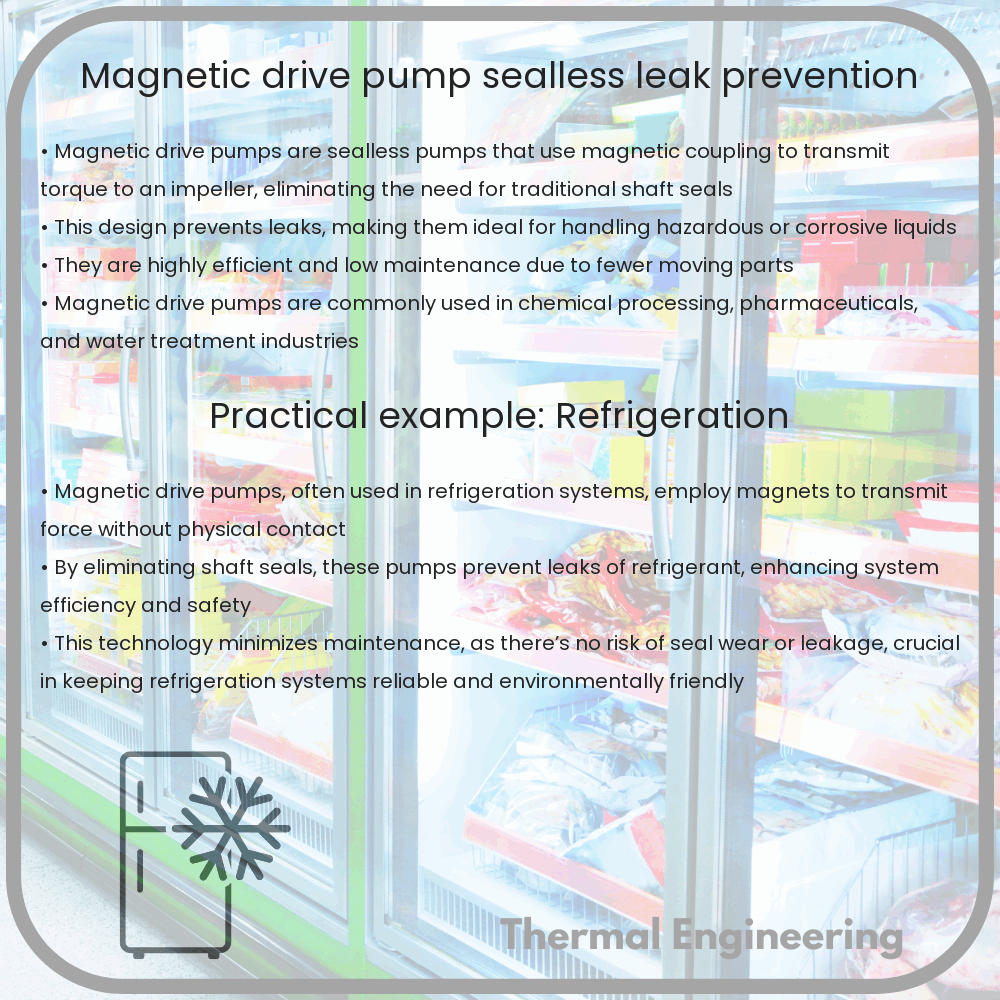
Magnetic drive pumps are a type of pump characterized by their ability to eliminate shaft seals and thus prevent leaks. This unique feature makes them particularly useful in industries where avoiding leakage of hazardous or precious fluids is critical. By exploring how magnetic drive pumps work, we can appreciate their engineering and the benefits they offer in various applications.
How Magnetic Drive Pumps Work
At the core of a magnetic drive pump’s operation is the magnetic coupling, which is composed of two parts: an outer magnet attached to the motor and an inner magnet connected to the pump’s impeller. These are separated by a rear casing that forms a hermetic seal. Unlike traditional pumps that use a mechanical seal or packing to prevent leaks from the drive shaft, magnetic drive pumps use magnetic force to transmit torque from the motor to the impeller.
When the motor is activated, the outer magnet rotates, creating a magnetic field that also causes the inner magnet to turn. This action spins the impeller, which propels the fluid through the pump. The entire mechanism is sealed off by the rear casing, ensuring that there is no direct path for the fluid to leak out.
Advantages of Magnetic Drive Pumps
- Leak Prevention: Since there are no shaft seals that can wear out or fail, the risk of leakage is greatly minimized. This makes magnetic drive pumps ideal for handling hazardous, toxic, or corrosive chemicals.
- Maintenance Costs: The sealless design also reduces maintenance overhead, as there are fewer parts that require regular replacement compared to pumps with mechanical seals.
- Energy Efficiency: These pumps are generally more energy efficient. The magnetic coupling can reduce energy loss, typically making the pump perform better for the same input power.
Considerations When Choosing Magnetic Drive Pumps
Despite their numerous advantages, there are several factors to consider when implementing magnetic drive pumps:
- Magnetic Field Limitations: The performance of the pump depends on the strength and alignment of the magnets. Misalignment or loss of magnetic material can reduce the efficiency of the pump.
- Heat Generation: Magnetic drive pumps can generate heat due to magnetic resistance and eddy currents. Adequate cooling or heat dissipation mechanisms must be in place, especially in chemical processes where temperature control is crucial.
- Material Selection: The materials used for the casing and other components must be compatible with the fluids being pumped to avoid corrosion or degradation, which could compromise the integrity and performance of the pump.
Applications of Magnetic Drive Pumps
Magnetic drive pumps are widely used in industries where fluid integrity is essential. These applications include:
- Chemical Processing: Safely handling aggressive solvents, acids, and other hazardous chemicals.
- Pharmaceuticals: Ensuring purity and preventing contamination during the manufacturing of medicines.
- Water Treatment: Minimizing risks of leaks when dealing with treatment chemicals.
- Oil and Gas: Transporting petrochemicals without risk of environmental contamination from leaks.
In conclusion, magnetic drive pumps offer a reliable and efficient solution for applications requiring airtight fluid handling. By removing the need for shaft seals, these pumps not only prevent leaks but also reduce maintenance requirements and operating costs. Understanding their operation and appropriate application ensures optimized performance and lifecycle benefits.