Learn about phosphine gas (PH3), its uses, risks, and safety measures across various industries.
What is Phosphine Gas?
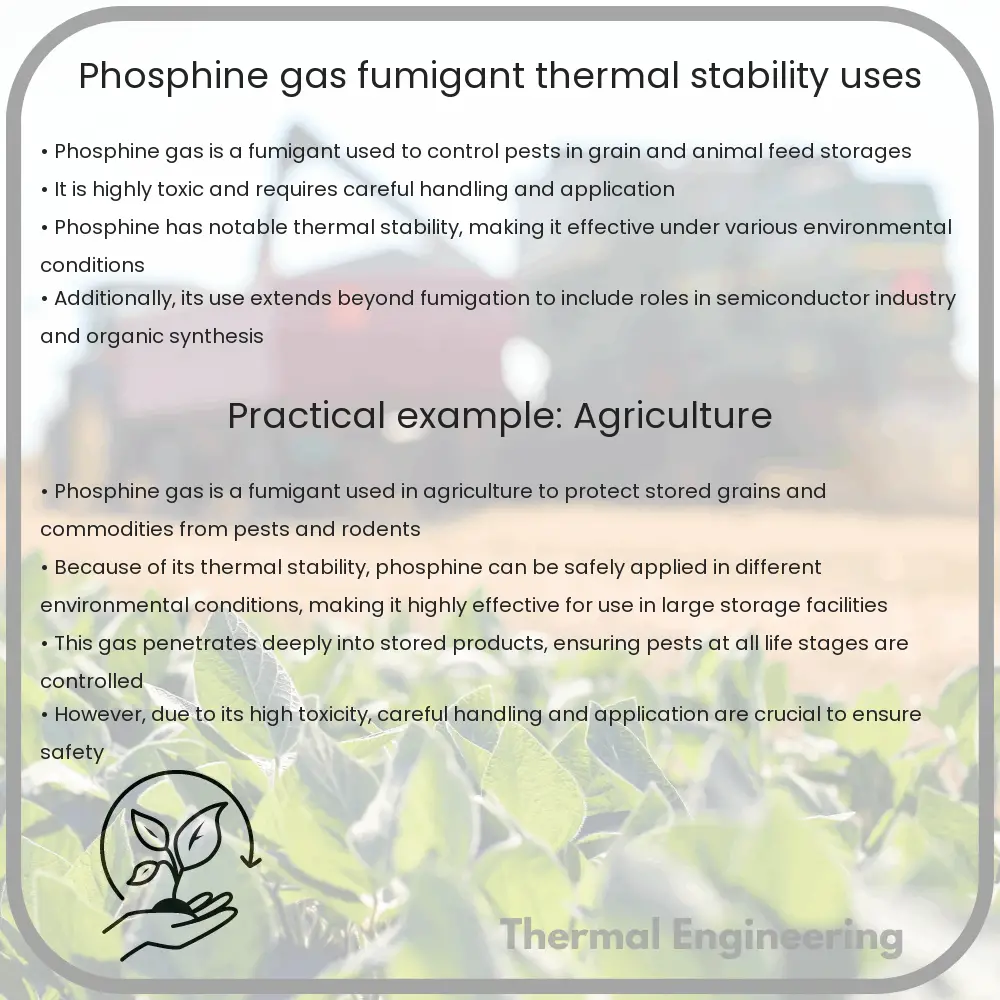
Phosphine gas (PH3) is a colorless, flammable, and highly toxic gas with a fishy or garlic-like odor. It is a compound composed of phosphorus and hydrogen and is mainly used in the semiconductor industry and as an agricultural fumigant. The gas is denser than air and can accumulate in low-lying areas, posing significant risks if not handled properly.
Thermal Stability of Phosphine Gas
Phosphine is thermally unstable and can decompose into phosphorus and hydrogen gas when exposed to light or heat. This decomposition can be dangerous as it might lead to spontaneous combustion or explosion if the gas is confined. At temperatures above 200 degrees Celsius, the decomposition reaction becomes significantly rapid which illustrates why managing the storage conditions of phosphine is crucial for safety.
Uses of Phosphine Gas
- Fumigant: Phosphine is extensively used as a fumigant for stored cereal grains, animal feed, and leaf-stored tobacco. It controls pests and rodents that may infest these storages without leaving harmful residues that affect the agricultural product.
- Semiconductor Industry: In the semiconductor industry, phosphine is utilized in the process of chemical vapor deposition, which helps in creating thin films and structures made of silicon, silicon dioxide, and other materials.
- Chemical Synthesis: Phosphine plays a role as a reducing agent or a catalyst in certain types of organic synthesis and is involved in several reactions in the pharmaceutical industry to manufacture drugs.
Safety Measures and Precautions
Due to its high toxicity and flammability, phosphine gas requires stringent handling and storage measures. Some safety precautions include:
- Ensuring that areas where phosphine gas is stored or used are well-ventilated to prevent the accumulation of gas.
- Using proper protective equipment, including gas masks and gloves, while handling phosphine.
- Regularly monitoring for the presence of phosphine in the air using appropriate detection systems.
- Storing phosphine cylinders in cool, well-ventilated areas away from sources of heat and direct sunlight.
Conclusion
Phosphine gas holds a vital place in industries ranging from agriculture to high-tech electronics. However, the inherent risks associated with its use require careful and informed handling to ensure both efficiency in use and safety in its application. Being aware of its properties, uses, and necessary safety measures is crucial for anyone working with or around this compound.