Explore the working, applications, and benefits of plunger pumps in high-pressure cleaning and industrial uses.
Understanding the Plunger Pump: Applications in High Pressure Cleaning and Industrial Processes
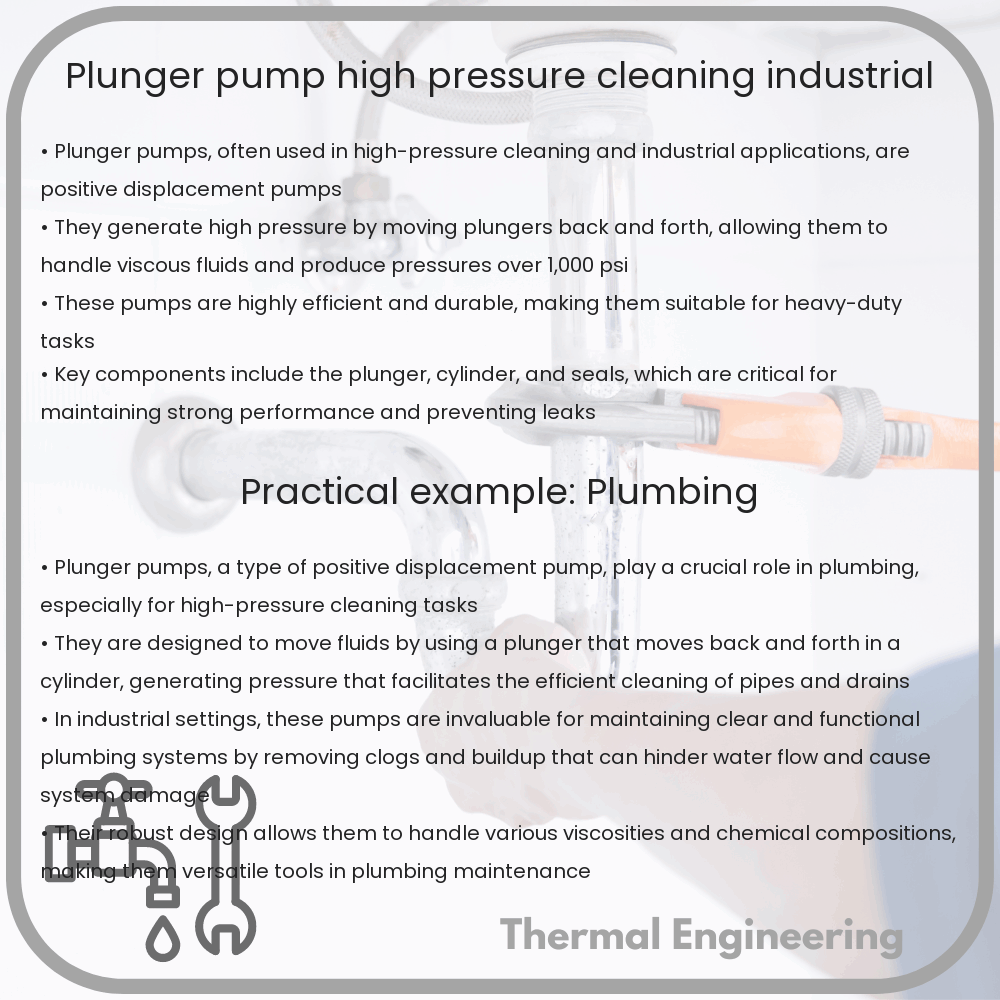
A plunger pump, often a crucial component in various high-pressure applications, operates through a simple yet effective mechanism. This type of positive displacement pump is extensively utilized in industries ranging from cleaning to the handling of chemicals. In this article, we delve into the design, function, and applications of plunger pumps, especially focusing on their roles in high pressure cleaning and industrial settings.
Principles of Operation
The core operation of a plunger pump is based on creating a high-pressure seal and allowing fluid to move through a cylinder. Unlike pistons, plungers are sealed by packing or a specialized seal, which helps maintain the high pressures required. The operation involves three main phases:
- Suction: The inlet valve opens, the plunger retracts, creating a vacuum that pulls fluid into the cylinder.
- Compression: As the plunger moves forward, it pushes the fluid ahead, increasing the pressure within the cylinder.
- Discharge: The high-pressure fluid opens the outlet valve and is expelled from the pump, and the cycle repeats.
Key Components
The efficiency and robustness of a plunger pump depend on its key components:
- Plunger: The precision-engineered component that moves back and forth in the cylinder.
- Seals: These prevent leaks and handle the high pressures generated by the pump.
- Valves: Inlet and outlet valves that manage the flow of fluids into and out of the pump.
- Cylinder: Houses the plunger and the fluid during the pumping process.
Applications in High-Pressure Cleaning
Plunger pumps are pivotal in high-pressure cleaning applications, widely used in:
- Power washers: Essential for cleaning buildings, vehicles, and concrete surfaces, where they help in removing dirt, algae, and other stubborn substances.
- Water jetting: Used for more intensive cleaning tasks, such as removing paint from surfaces or cutting through debris in blocked drains.
Industrial Applications
In the industrial sector, the plunger pump’s ability to handle various fluids at high pressures makes it suitable for a broad range of applications:
- Chemical injection: Accurate dosing and injection of chemicals in processes like water treatment and processing industries.
- Oil and gas: Used in the extraction and transportation processes where high-pressure oil or water is needed.
- Manufacturing: Involves applications ranging from the use in hydraulic presses to the delivery of cutting fluids in machining processes.
Advantages of Plunger Pumps
Choosing a plunger pump comes with several benefits:
- Efficiency: Capable of achieving very high pressures, essential for both cleaning and the effective handling of viscous fluids in industrial settings.
- Reliability: Simple design and robust construction reduce the likelihood of mechanical failure.
- Versatility: Able to handle a variety of fluids, including aggressive chemicals, provided that the appropriate seal materials are used.
In conclusion, the plunger pump is a versatile and powerful tool in both high-pressure cleaning and numerous industrial applications. Its fundamental operation, combined with the ability to manage different fluids, makes it a preferred choice for tasks requiring efficiency and reliability at high pressures.