Learn about the essential role and functioning of pressure relief valves in maintaining system safety and managing overpressure.
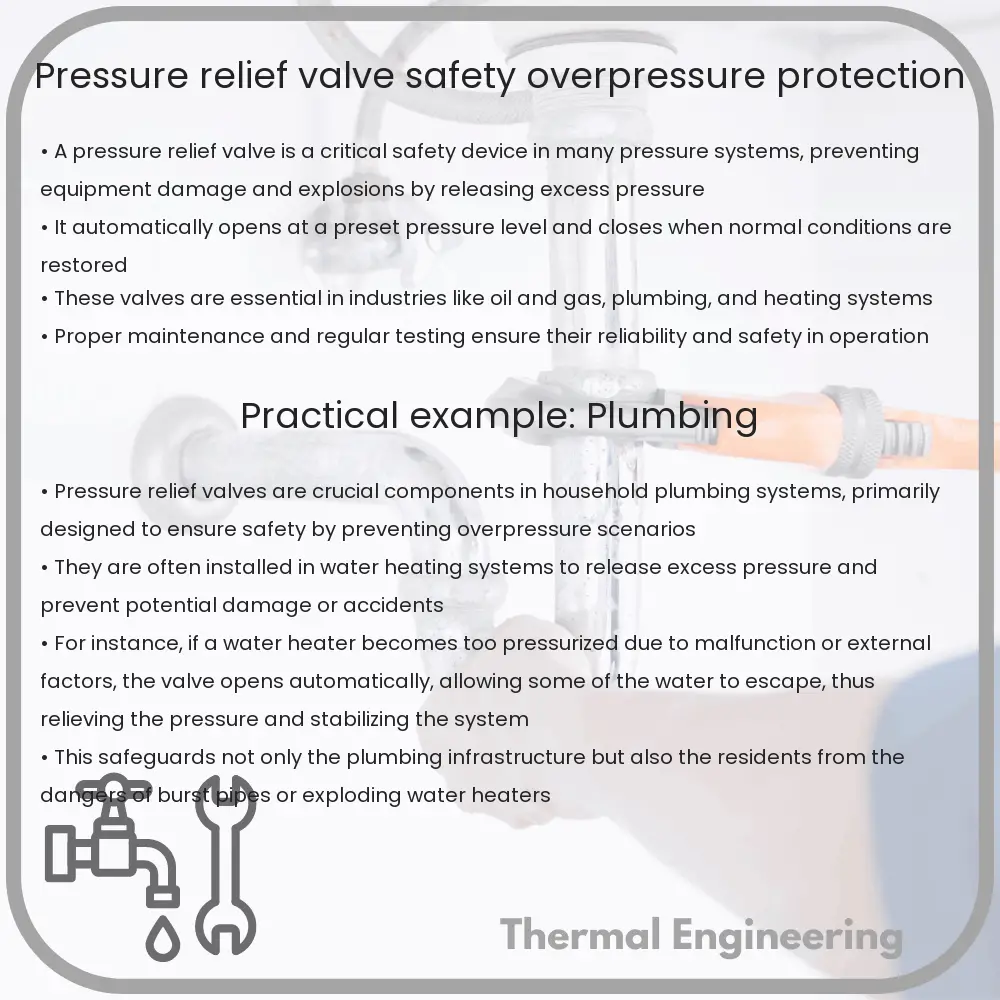
Understanding Pressure Relief Valves: A Key to Safety and Overpressure Protection
Pressure relief valves are critical components in various mechanical systems, helping prevent accidents and ensuring the stability of operations in industries such as oil and gas, chemicals, and thermal power generation. These devices are engineered to provide a safety measure for pressurized systems, automatically releasing gases or liquids when the pressure within a system exceeds a predefined limit.
How Pressure Relief Valves Work
At its core, a pressure relief valve (PRV) is designed to protect equipment and personnel by releasing excessive pressure from a system when it reaches the pressure limit set for safe operations. The mechanism involves a spring-loaded valve which opens allowing the excess pressure to escape, thereby averting potential hazards.
- The set pressure is the predetermined pressure at which the relief valve is configured to open. This setting ensures that the valve activates before the system pressure reaches a critical level.
- The overpressure is typically a small percentage above the set pressure, usually about 3% to 5%, allowing some leeway for the valve to fully open without causing system interruptions during minor fluctuations.
- The blowdown is the pressure drop after the valve opens, required to reset the valve back to its closed position. This is usually a lower percentage, such as 2% to 4% below the set pressure, ensuring the system’s pressure is sufficiently reduced.
Types of Pressure Relief Valves
There are several types of pressure relief valves, each suited for specific applications and operational conditions:
- Safety Valves: Often used in gas or vapor systems, these valves are spring-operated and rapidly open when the set pressure is exceeded.
- Pressure Safety Relief Valves (PSRVs): These can handle both liquid and gas mediums. They start to open at the set pressure and continue to discharge gradually.
- Pilot Operated Relief Valves: Controlled by a pilot valve instead of a spring, these valves are typically more accurate and stable under varying conditions.
Key Features and Materials
Pressure relief valves are constructed using materials capable of withstanding harsh environments and high pressures. Common materials include stainless steel, carbon steel, and brass. They also feature various seals and diaphragms made from elastomers like Viton® and Teflon® to ensure durability and leak-proof operation.
Applications in Industry
PRVs are essential in industries where overpressure conditions are likely. They include:
- Oil and Gas: Used on drilling rigs, production platforms, and refineries to control the pressures of hydrocarbon processing systems.
- Chemical Manufacturing: PRVs guard against the dangerous build-up of pressure in chemical reactors and other enclosed vessels.
- Power Generation: Critical in preventing overpressure in boilers and steam systems.
Maintenance and Testing
Regular maintenance and testing are vital to ensure that pressure relief valves function correctly. This includes routine inspections, testing for correct opening pressure, and checking for signs of wear or corrosion. Utilizing certified technicians to perform these tasks can prevent operational failures and extend the lifespan of the equipment.
Safety and Compliance
Pressure relief valves must adhere to international safety standards and codes, such as those from the American Society of Mechanical Engineers (ASME). Compliance with these standards ensures the reliability and safety of the valves used in industrial applications.
Ultimately, pressure relief valves are indispensable in maintaining the safety and efficiency of high-pressure systems. Understanding their function and ensuring they are properly maintained can help mitigate risks associated with overpressure conditions, safeguarding both personnel and equipment.