Learn about pressure vessels, their design, materials, safety features, and regulatory standards for optimal industrial use.
Understanding Pressure Vessels: High Pressure Storage & Safety
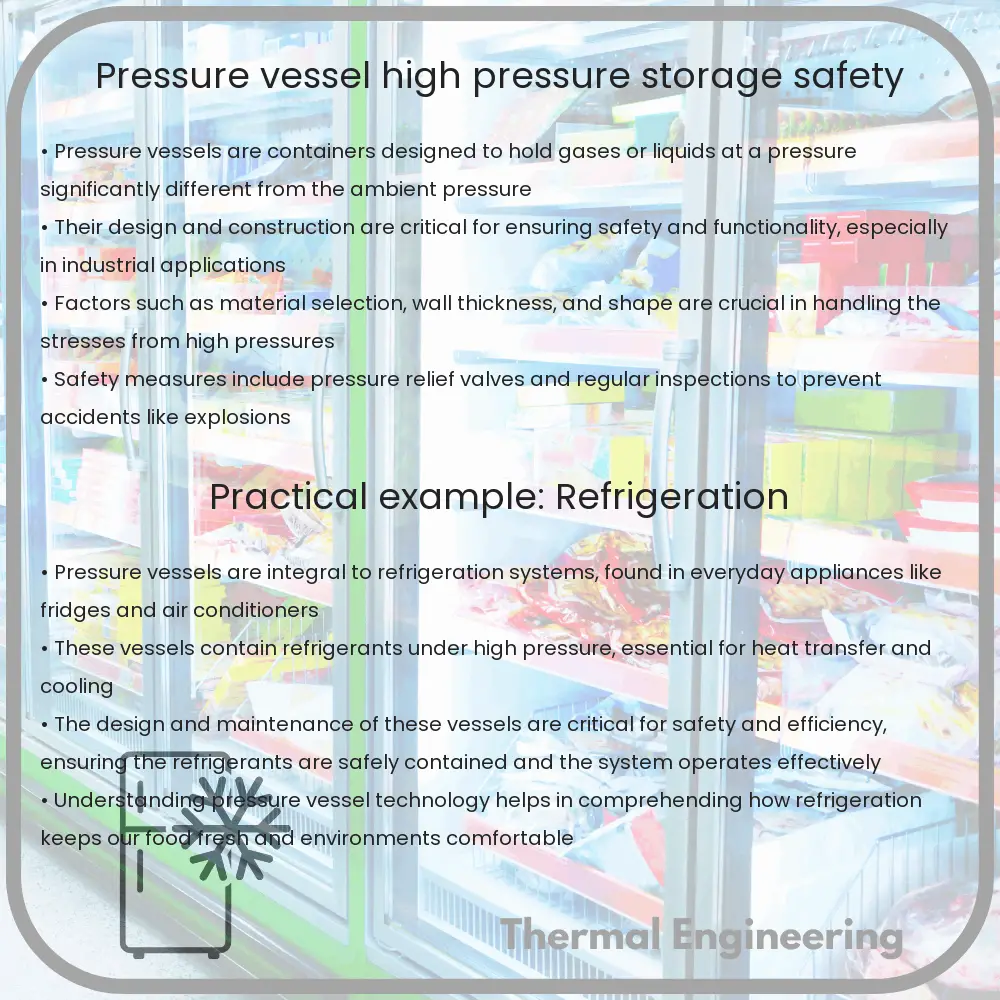
Pressure vessels are containers designed to hold gases or liquids at a pressure substantially different from the ambient pressure. They are a fundamental part of industries ranging from petrochemical to the food and beverage sector. Understanding their design, operation, and safety is crucial for maintaining industrial safety and efficiency.
Basic Design of Pressure Vessels
The design of a pressure vessel takes into account the pressure (both internal and external), temperature, and the properties of the material contained and of the vessel material. Common shapes include spheres, cylinders, and cones. The choice of shape largely depends on the balance of stress, cost, and space considerations.
- Cylindrical vessels: With a circular cross-section, they are selected for their ability to evenly distribute stress throughout the structure.
- Spherical vessels: Spheres are preferred when high pressure is involved as they handle stress more uniformly than any other shape.
- Conical ends or heads: Used in conjunction to cylindrical shapes for better pressure distribution.
Material Considerations in Pressure Vessel Design
The material used to build a pressure vessel can seriously impact its performance and safety. Steel, particularly stainless steel, is a common choice due to its strength and resistance to corrosion. Composite materials, like carbon fiber, are also used where lighter weight or higher strength are required.
Manufacturers frequently conduct tests, including hydrostatic testing and ultrasonic testing, to ensure the integrity of the material and the construction of the vessel.
Common Equations in Pressure Vessel Design
One of the fundamental calculations in the design of pressure vessels is determining the wall thickness required to withstand a specified internal pressure without failing. The formula used is derived from the hoop stress equation:
Thickness (t) = (P * r) / (S * E – P)
- P = internal pressure
- r = inner radius of the cylinder
- S = allowable stress for the material at operating temperature
- E = efficiency of welded joints (typically 1 for seamless construction)
This equation is crucial for engineers to design a vessel that can safely handle the specific pressures to which it will be subjected in operation.
Pressure Vessel Safety Features
The operation of pressure vessels is regulated through engineering standards and codes to enhance their safety and reliability. Key safety components include:
- Pressure relief valves: These automatically release pressure when it exceeds a certain limit, preventing potential explosions.
- Safety shutoffs: They detect unsafe operating conditions and shut down the process to prevent accidents.
- Burst disks: These are designed to rupture and release pressure as a last line of defense if primary safety systems fail.
Regulations and Codes
In the United States, the design, construction, and operation of pressure vessels are governed by codes such as the ASME Boiler and Pressure Vessel Code. Internationally, standards such as the ISO 9001 for quality management ensure that pressure vessels are designed and manufactured to meet safety requirements.
It is crucial for organizations to comply with these regulations not only to enhance safety but also to minimize legal and financial liabilities.
Conclusion
Pressure vessels are integral components across various industries, tasked with safely containing gases and liquids at high pressures. Understanding the engineering behind their design, material choice, and the associated safety protocols is essential for managing industrial risks and enhancing operational efficiency. By rigorously adhering to safety standards and regular maintenance schedules, pressure vessels can be operated safely and reliably, supporting the demands of modern industrial processes.