Learn about propylene glycol, its uses in food, antifreeze, and cosmetics, and its safety as certified by the FDA.
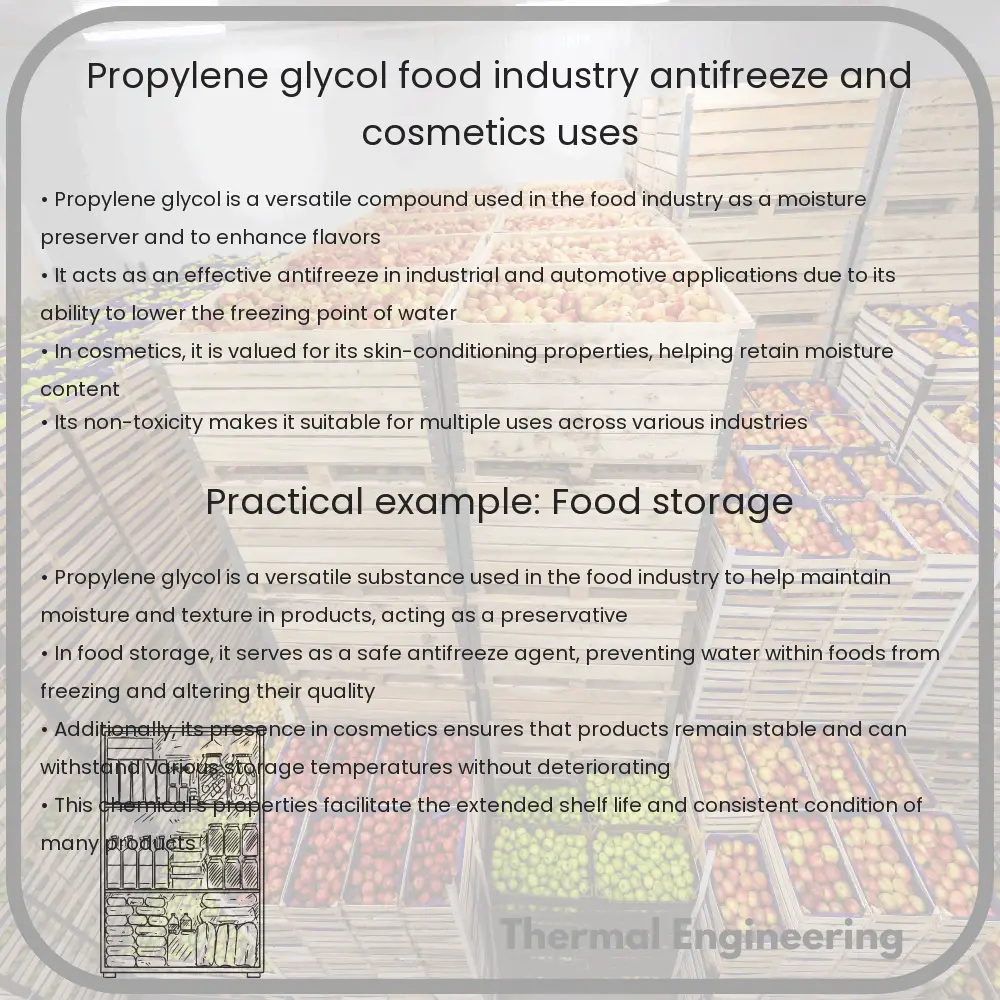
Understanding Propylene Glycol: Its Role and Uses across Various Industries
Propylene glycol is a synthetic organic compound with the chemical formula C3H8O2. It is a viscous, colorless liquid which is nearly odorless but possesses a faintly sweet taste. Chemically classified as a diol, propylene glycol is non-toxic, has low volatility and provides a good balance of properties that make it ideally suited for a variety of applications.
Key Uses of Propylene Glycol in the Food Industry
In the food industry, propylene glycol is primarily valued for its roles as a food additive where it acts as a solvent, humectant, and preservative. Some specific uses include:
- Solvent in flavorings and food colorings, where it ensures uniform distribution without impacting overall food quality.
- Humectant (moisture-preserving agent) in foods, enhancing their shelf life and maintaining moisture in otherwise dry food.
- Carrier in flavor formulations, helping to distribute food flavoring evenly throughout the product.
Propylene glycol is classified by the U.S. Food and Drug Administration (FDA) as “generally recognized as safe” (GRAS) for use in food products, underscoring its safety for consumption.
Propylene Glycol in Antifreeze Applications
Due to its low freezing point and non-corrosive properties, propylene glycol is widely used in antifreeze formulations. This includes both automotive antifreezes and industrial applications, where it is used to lower the freezing point of water and help maintain a liquid state under cold temperatures. Key benefits in antifreeze applications include:
- Non-corrosive nature, which helps in protecting metals and materials within cooling systems.
- Toxicity lower than that of ethylene glycol, making it a safer alternative for environments where leakage might occur.
- Biodegradability, which is advantageous in terms of environmental impact and disposal.
Use of Propylene Glycol in Cosmetics
Propylene glycol is also commonly found in various cosmetic products, serving multiple roles:
- As a skin conditioning agent, it helps in maintaining moisture in cosmetics which is essential for products like lotions and creams.
- It acts as a viscosity-decreasing agent, making products like gels and creams smoother and more easily applicable.
- It serves as a solvent, which ensures that the active ingredients in cosmetic products are evenly distributed and maintain their efficacy throughout the product’s lifespan.
All these qualities make propylene glycol a versatile and valuable component in numerous products, extending across divergent industries from pharmaceuticals to personal care products and the food industry. Ensuring products maintain their stability, usability, and effectiveness, propylene glycol’s role in modern manufacturing is undoubtedly crucial.
Overall, the non-toxic nature and versatility of propylene glycol make it a valuable ingredient in many fields, contributing significantly to the safety, effectiveness, and quality of many products we use daily.