Learn about radiant floor heating, its types, benefits, and installation considerations for efficient, comfortable home heating.
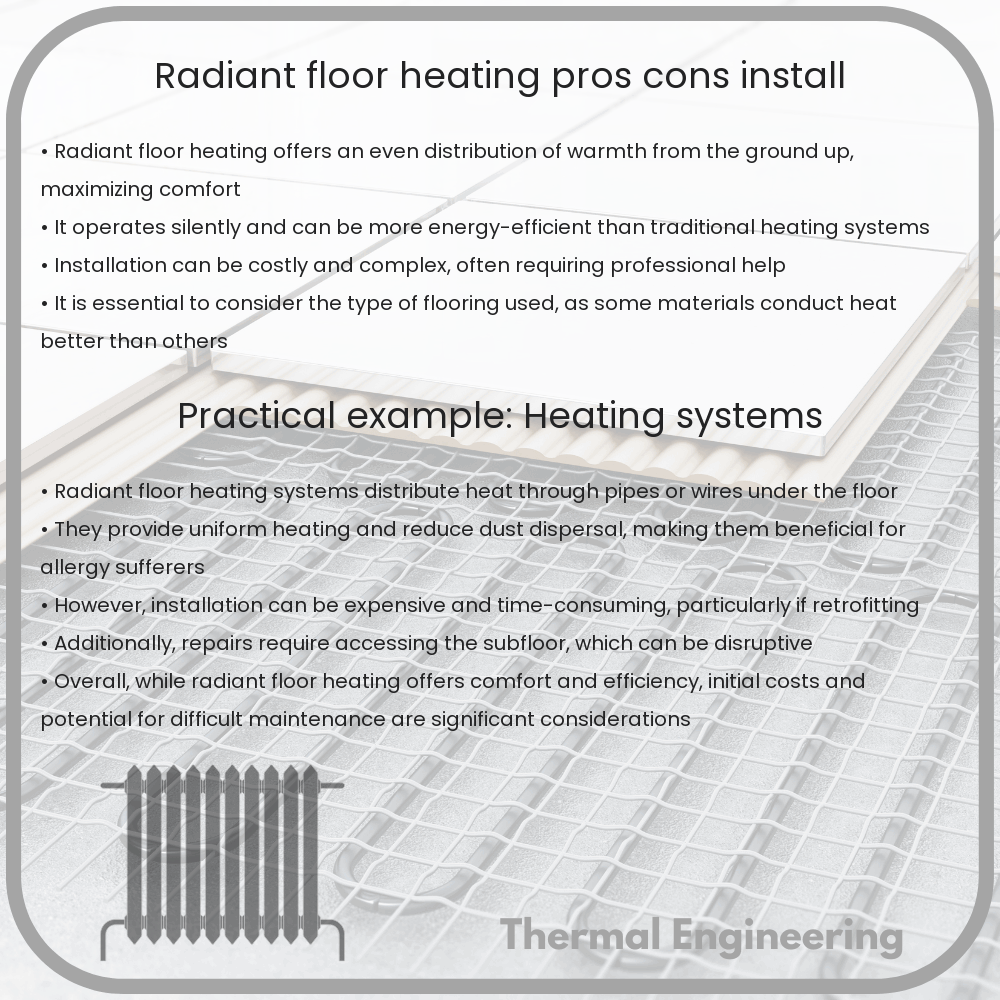
Introduction to Radiant Floor Heating
Radiant floor heating is a system that provides heat directly to the floor of a home. This form of heating, which can be either electric or hydronic (water-based), is considered to be more efficient and comfortable compared to traditional heating methods like forced air systems. The principle behind radiant floor heating is simple: it turns the entire floor into a radiant heat source, warming the room from the ground up.
How Radiant Floor Heating Works
There are two main types of radiant floor heating systems: electric and hydronic. Electric systems use electric cables or heat mats installed beneath the floor surface, while hydronic systems pump heated water from a boiler through a series of pipes laid beneath the floor. Both systems utilize the basic principle of heat rising to naturally and evenly heat a space.
Pros of Radiant Floor Heating
- Comfort: Radiant heating eliminates the cold spots common in forced air systems, providing consistent heat distribution across the room.
- Energy Efficiency: Since radiant floors target heating directly to the living space, they often use less energy than traditional heating systems, contributing to lower utility bills.
- Health and Air Quality: Radiant systems do not circulate air internally, reducing the movement of dust and allergens.
- Silent Operation: Radiant heating offers a quiet alternative to other systems that produce noise during operation.
- Design Freedom: Without the need for radiators or air ducts, room layout and furniture placement are more flexible.
Cons of Radiant Floor Heating
- High Initial Cost: Installing radiant floor heating can be more expensive upfront than other heating systems, especially in retrofit projects.
- Installation Time: Integration of these systems, particularly hydronic ones, can be complex and may require significant construction time.
- Floor Height Issue: Installation can raise the height of the floor, which might be problematic in some renovations or require adjustments to doorways and fixtures.
- Incompatibility with Certain Floor Coverings: Not all flooring materials are suitable for radiant heating, potentially limiting your choices.
Installation of Radiant Floor Heating
Installing a radiant floor heating system typically involves several key steps, regardless of whether it is electric or hydronic:
- Planning and Design: The first step involves determining the type of system best suited for your home and designing the layout according to the rooms’ dimensions and flooring type.
- Subfloor Preparation: This may include cleaning, leveling, or even replacing parts of the existing subfloor to ensure optimal function of the heating system.
- Installation of Heating Elements: For electric systems, this means installing heating cables or mats, whereas for hydronic systems, it involves laying out the network of pipes.
- Connection to Power Source: Electric systems require connection to the home’s electrical grid, while hydronic systems need to be integrated with a boiler.
- Installing Flooring: Once the heating elements are in place, the final flooring material can be installed on top. Special considerations may be necessary for flooring materials sensitive to heat.
- Testing and Commissioning: The system is tested to ensure it operates correctly across all zones and that the temperature controls function properly.
Conclusion
Radiant floor heating offers a high degree of comfort and efficiency, making it a desirable option for many homeowners. However, the costs and installation considerations should be carefully weighed against the benefits. With proper installation and maintenance, radiant floor heating can provide a reliable and satisfying heating solution for a wide range of homes.