Learn how refrigeration units utilize the refrigeration cycle and technological enhancements to preserve food and reduce waste.
Understanding Refrigeration Units and Their Role in Food Preservation
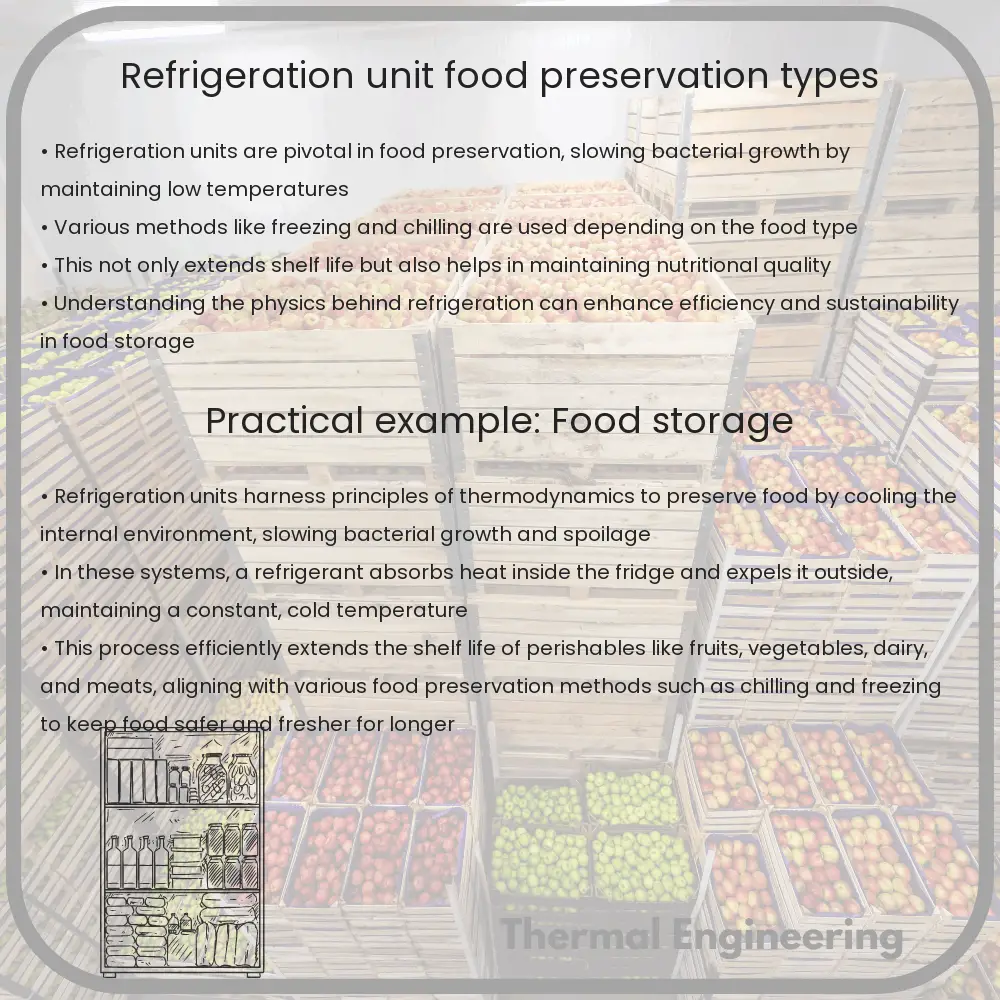
Refrigeration units are essential in modern society, playing a crucial role in preserving food by slowing down the deterioration and growth of harmful bacteria. These units maintain a cold environment where perishables such as fruits, vegetables, dairy products, and meats can be stored safely for extended periods. This article explores the basics of refrigeration technology and the various methods used in food preservation.
The Principles of Refrigeration
At the heart of refrigeration is the basic principle of heat transfer, which involves removing heat from one area and dissipating it to another. This process is achieved through the use of a refrigerant and a cycle of evaporation and condensation, commonly called the refrigeration cycle. Here’s a brief overview:
- Evaporation: Inside the refrigeration unit, the refrigerant absorbs heat from the interior as it transforms from a liquid to a gas.
- Compression: The compressor then squeezes the refrigerant gas, raising its temperature and pressure.
- Condensation: The hot, high-pressure gas then flows through the condenser coils where it loses heat to the environment and returns to a liquid state.
- Expansion: Lastly, the refrigerant passes through an expansion valve where it experiences a drop in pressure, cools down again, and is ready to absorb heat once more.
This cyclical process is what keeps the interior of the fridge and freezer at the desired low temperatures.
Types of Food Preservation in Refrigeration Units
Refrigeration impacts food preservation in several key ways:
- Temperature Control: By maintaining consistently low temperatures, refrigeration slows the growth of bacteria and molds which are prime contributors to food spoilage.
- Humidity Regulation: Many refrigeration units can control the level of humidity, which is vital for preserving the crispness and texture of fruits and vegetables.
- Atmosphere Control: Some advanced refrigeration units modify the composition of the air (like reducing the oxygen level and increasing carbon dioxide) which can further slow down the ripening process of fresh produce.
Technological Enhancements in Refrigeration
Modern refrigeration units have advanced significantly with technology, offering features that improve efficiency and food preservation quality. Innovations include:
- Energy-efficient designs: Modern refrigerators use less electricity and are designed to minimize environmental impacts.
- Smart systems: Some refrigerators can now be controlled via smartphone apps, allowing users to adjust temperatures and settings remotely.
- Specialized compartments: Many units feature different zones for specific types of food that require distinct storage conditions, enhancing preservation and reducing waste.
Through these engineering advancements, refrigeration units not only help in keeping food fresh longer but also contribute to energy conservation and reduce overall food waste.
Conclusion
Refrigeration is an engineering marvel that combines the principles of thermodynamics with innovative technology to preserve perishable foods. By understanding how refrigeration units work and using them effectively, consumers can significantly extend the freshness and nutritional quality of their food, contributing to better health and less waste. It serves as a reminder of how engineering solutions can directly impact daily life and global sustainability.